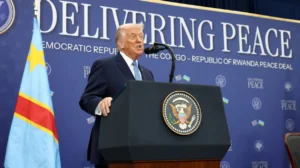
In the brief months since Donald Trump took office, the U.S. president has pursued and failed to bring peace to Gaza and Ukraine. He has conducted bombings in Yemen, initiated a worldwide trade war, and is now focusing on Iran. This has consistently been on the president’s agenda, as Iran represents unresolved issues from Trump’s first term.
How can the World stop Iran from pursuing nuclear weapons?
Iran claims that it doesn’t have any such goal. But other nations believe that the Islamic Republic desires, at least the capability to develop a nuclear warhead. It is something that some worry could lead to an arms race or even full-scale war in the region. In 2015, Iran signed a deal with the US, UK, France, Germany, Russia and China. It was known as the Joint Comprehensive Plan of Action (JCPOA).
Under its terms, Iran would curb its nuclear ambitions – and let in international inspectors – in exchange for having economic sanctions removed. But Trump withdrew the US from the deal in 2018, arguing it paid for terrorism by providing money for Iran’s proxy forces like Hamas and Hezbollah. A new round of sanctions was imposed by the US.
Iran then disregarded some of the restrictions of the agreement and enriched increasing amounts of uranium nuclear fuel.
Experts are concerned Iran will have sufficient weapons-grade uranium to produce a nuclear warhead within a short period of time.
The International Atomic Energy Agency (IAEA) monitor estimates that Iran’s reserve of 60% enriched uranium would produce roughly six bombs if it were enriched to the next and final level. Days after his inauguration, Trump reestablished his previous policy of “maximum pressure” on Iran.
On 4 February, with his signature thick marker, he endorsed a memorandum directing the US Treasury to enforce additional sanctions on Iran and penalize countries breaching existing sanctions, particularly those purchasing Iranian oil. Now the White House is aiming to align that economic pressure with diplomacy.
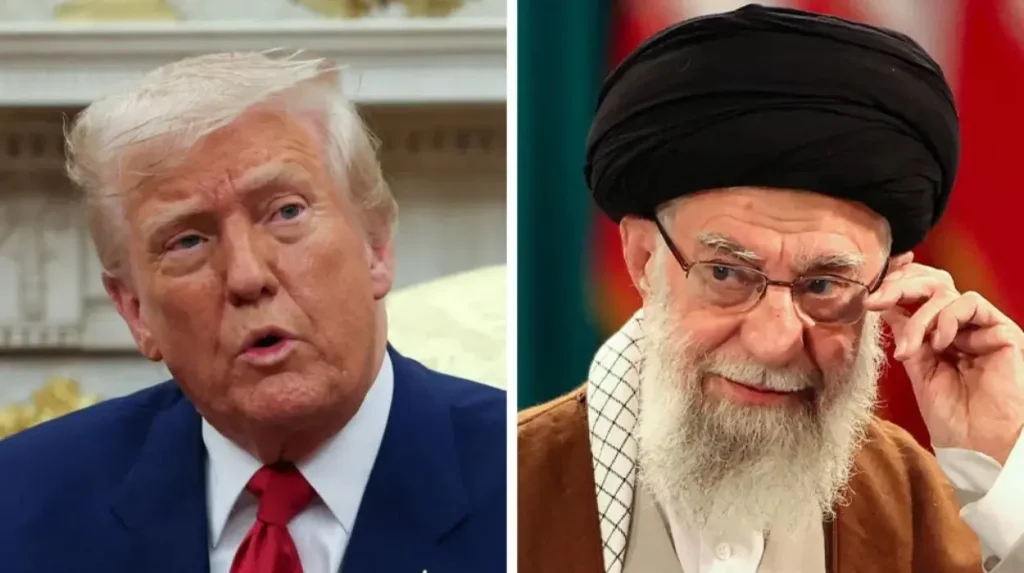
Last month, Trump dispatched a letter to Iran’s Supreme Leader, Ali Khamenei. The president proposed initiating negotiations and aimed for an agreement within a couple of months.
Now he has consented to direct talks between US and Iranian representatives in Oman over the weekend. The US warning to Iran is clear: consent to a deal or confront military action. “If the talks aren’t fruitful with Iran, I think Iran is going to be in serious danger,” Trump said.
How could Iran react?
Some of the policymakers in Iran seem eager to sign an agreement that would lead to sanctions being removed. Iran’s economy is in bad shape, with runaway inflation and a falling currency. But any such agreement could involve concessions some hardliners might find difficult to swallow.
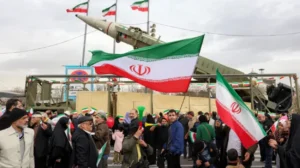
Iran has experienced tremendous setbacks in the past few months, watching its proxy forces hammered by war with Israel and regional ally President Bashar al-Assad of Syria, being removed from power. Some inside Tehran believe that now might be precisely the moment to construct a nuclear deterrent. Both the US and Iran appear far apart. Their negotiating positions are not clearly stated.
But the US has indicated it desires the complete dismantling of Iran’s nuclear programme, including an end to any further uranium enrichment, along with no further assistance to Hezbollah in Lebanon and the Houthis in Yemen. That may be too much for Iran to swallow.
A total ban on any nuclear enrichment, even for civilian purposes, has for a long time been regarded as an absolute red line for Tehran.
There is also the issue of Iranian technological capability: its scientists just know more now about how to produce a nuclear weapon than they did 10 years ago. And then there is Israel. It has made it very clear that it would only accept the total elimination of any Iranian nuclear capability. Prime Minister Benjamin Netanyahu says he would sign up to “the way it was done in Libya”.
This is an allusion to the action of late Libyan leader Muammar Gaddafi to shut down his entire nuclear program in 2003 as a reward for having sanctions removed. But Iran will not follow this example.
What happens if discussions do not succeed?
Israel has long pondered military action to attempt to eliminate Iran’s nuclear program. But most are located deep in underground bunkers. Military experts indicate that Israel would not only require US assistance to bomb Iran, but it may also require special forces on the ground to ensure the destruction of its nuclear facilities.
That implies that military intervention would be perilous and a success by no means assured. Trump also took office pledging not to begin any further so-called “forever wars,” and all-out regional conflict with Iran might end up as one of those.
That has not prevented the US president from reportedly providing Israel with additional air defences and sending additional long-range B2 bombers to the Middle East. So, at least for now, Trump is not running for cover – and in a way that Israel may have to do the same, accepting what it gets as a fait accompli.
But if there is no deal, he is holding the option of using force, the outcome of which can be disastrous. Meanwhile, the president is giving two months to both sides to come to an agreement on a deal. He might have forgotten that it took two years for negotiators to come to terms on the JCPOA. Hurried diplomacy is not always effective diplomacy.