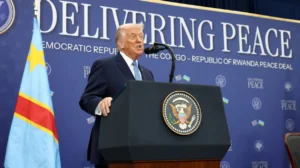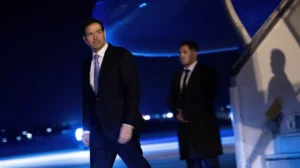
Public messaging from Washington and Tehran increasingly uses the same vocabulary, yet the meaning attached to a ceasefire differs sharply. Leaders in the United States have framed the conflict as a limited campaign expected to wind down within a relatively short horizon. President Donald Trump and Secretary of State Marco Rubio have repeatedly suggested that the current phase of operations should conclude within weeks, reinforcing the idea that the military campaign is bounded and tied to defined objectives.
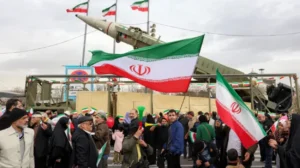
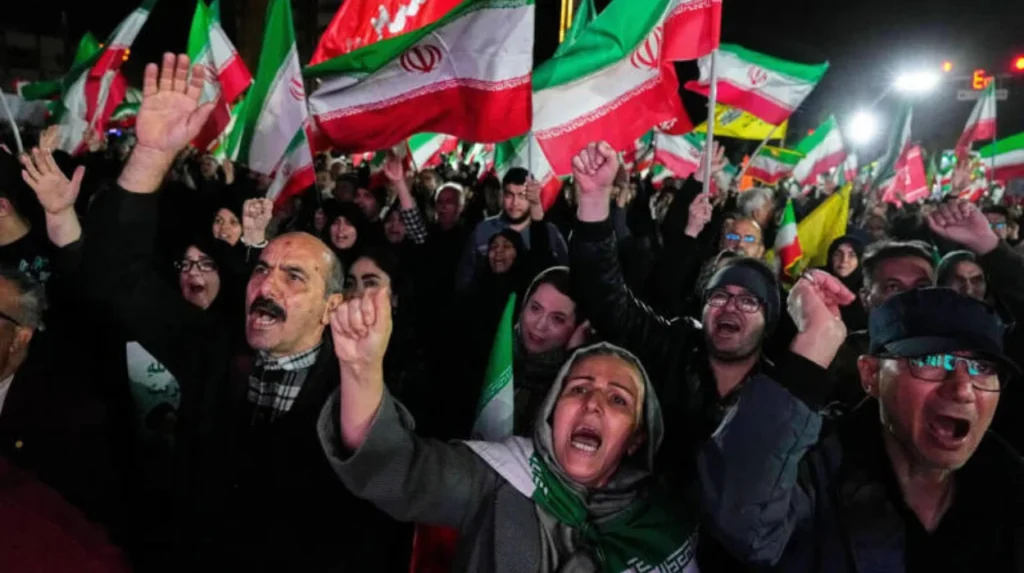
Iranian officials, however, interpret the same moment as part of a longer strategic contest. Public remarks from figures close to the Iranian leadership suggest that endurance and political resilience are central to Tehran’s calculation. Statements indicating that the country is prepared to fight “as long as necessary” reveal a different timeline, one less influenced by external expectations and more shaped by internal strategic considerations.
Washington’s framing of a limited campaign
American officials emphasize that the ceasefire language reflects a readiness to transition from active strikes to diplomatic engagement once core objectives are addressed. The narrative presented to allies stresses that damage inflicted on missile infrastructure and regional networks has altered the strategic landscape, creating conditions for negotiation.
At the same time, U.S. messaging indicates that any de-escalation would depend on Iran acknowledging those changes. This framing effectively links ceasefire discussions with broader security demands rather than treating them as a standalone humanitarian pause.
Tehran’s narrative of endurance
Iran’s messaging focuses on resilience rather than immediacy. Officials close to the government led by Ali Khamenei have portrayed ceasefire references from Washington as tactical signaling aimed at shaping global opinion and alliance cohesion.
Within this narrative, a pause in hostilities would only be meaningful if it also addressed sanctions, military pressure, and perceived attempts to limit Iran’s regional influence. This difference in interpretation explains why the same word “ceasefire” can represent two incompatible expectations.
Competing frameworks shaping stalled negotiations
Diplomatic exchanges over the past year have centered on two contrasting proposals that define how a ceasefire could evolve into a broader political arrangement. Each framework reflects a distinct view of how the conflict should end and what balance of concessions is acceptable.
The United States has circulated a multi-point proposal designed to combine security restrictions with gradual economic incentives. Iranian officials have responded with a more compact counter-proposal that prioritizes sovereignty and the rollback of pressure measures.
The U.S. fifteen-point approach
The American framework links a ceasefire to structural changes in Iran’s military posture. Officials describe the proposal as a phased pathway that could reduce tensions while ensuring that Iran’s missile and maritime capabilities are constrained in ways considered necessary for regional stability.
Supporters of this approach argue that the scale of military operations conducted since 2025 has created leverage that should translate into lasting security arrangements. The proposal therefore treats the ceasefire as part of a broader effort to redefine the regional balance of power.
Iran’s five-point counterproposal
Iranian negotiators have outlined a smaller set of conditions that emphasize reciprocal commitments rather than unilateral concessions. Their framework focuses on ending military operations, easing sanctions, and guaranteeing that external actors will not continue attacks during negotiations.
Officials presenting the plan argue that any durable ceasefire must recognize Iran’s security concerns and political legitimacy. This perspective portrays the American proposal as overly expansive, suggesting it attempts to transform a temporary truce into a permanent strategic limitation.
The logic behind the disconnect
The difference between the two frameworks is rooted in how each side interprets the war’s outcome. Washington views military pressure as a catalyst for structural concessions, while Tehran treats the conflict as a contest over sovereignty and strategic independence.
These competing logics explain why discussions continue but progress remains slow. Each proposal seeks to reshape the post-conflict environment in ways that the other side finds difficult to accept.
Sequencing disputes and verification challenges
Beyond the proposals themselves, negotiations have stalled over the order in which steps should occur. Sequencing questions often determine whether a ceasefire becomes credible or collapses under mutual suspicion.
American diplomats maintain that Iran must first demonstrate willingness to limit certain activities before sanctions relief or broader concessions can be considered. Iranian officials argue that Washington should instead initiate de-escalation as evidence that the ceasefire is genuine.
U.S. emphasis on compliance first
From the American perspective, compliance provides the foundation for trust. Officials believe that observable actions—such as halting missile deployment or limiting regional proxy activity—would signal seriousness about a negotiated settlement.
Monitoring mechanisms are therefore central to the proposal. Western governments and regional partners would likely participate in oversight arrangements designed to verify adherence to agreed conditions.
Iran’s demand for reciprocal steps
Iranian officials see the sequence differently. Their argument is that the country has already absorbed extensive economic and military pressure and that a meaningful ceasefire should begin with the easing of those measures.
This perspective draws partly on past diplomatic experiences, including negotiations surrounding earlier international agreements. Iranian policymakers often cite those precedents as evidence that balanced reciprocity is essential for sustaining long-term commitments.
Verification as a political issue
Verification mechanisms themselves have become a source of disagreement. Western governments emphasize transparency and inspection regimes, while Iran worries that intrusive oversight could be used to gather intelligence or justify future pressure.
These concerns transform technical monitoring questions into political debates about sovereignty and trust. Without a shared understanding of how compliance would be measured, ceasefire discussions struggle to advance beyond preliminary stages.
Regional actors shaping the negotiation environment
The diplomatic landscape surrounding the U.S.–Iran dialogue extends beyond the two principal parties. Regional governments and intermediaries have played a visible role in relaying proposals and encouraging de-escalation.
Countries including Pakistan, Qatar, and Oman have facilitated communications during moments when direct contact was limited. Their involvement reflects the broader regional stakes attached to the conflict’s trajectory.
Mediation efforts and diplomatic channels
Mediators often stress that the success of any ceasefire depends on its perceived fairness. Agreements seen as imposed by one side tend to weaken once external pressure subsides, while those reflecting mutual accommodation have greater durability.
These states have therefore encouraged both Washington and Tehran to clarify objectives and avoid framing negotiations solely in terms of victory or defeat.
Security concerns among regional partners
Regional partners, including Gulf states and Israel, also influence the atmosphere of negotiations. Governments concerned about missile threats and maritime security emphasize the need for enforceable arrangements around strategic waterways.
Such concerns shape how ceasefire proposals are evaluated. For some partners, the key issue is whether a truce addresses long-term security risks rather than simply halting immediate hostilities.
Cease-fire in name not in form
The phrase “cease-fire in name, not in form” reflects the underlying paradox of the current diplomatic moment. Both Washington and Tehran express openness to a halt in fighting, yet the substance attached to that halt remains fundamentally different. The United States seeks a ceasefire that consolidates strategic gains achieved through military pressure, while Iran seeks one that restores political and economic space reduced by the conflict.
As long as these objectives remain unresolved, negotiations may continue to produce partial understandings without a comprehensive settlement. The evolving dialogue reveals how ceasefire language can function as both a diplomatic bridge and a strategic battleground, leaving observers to consider whether the eventual outcome will resemble a temporary pause or a deeper recalibration of regional order shaped by negotiations still unfolding.