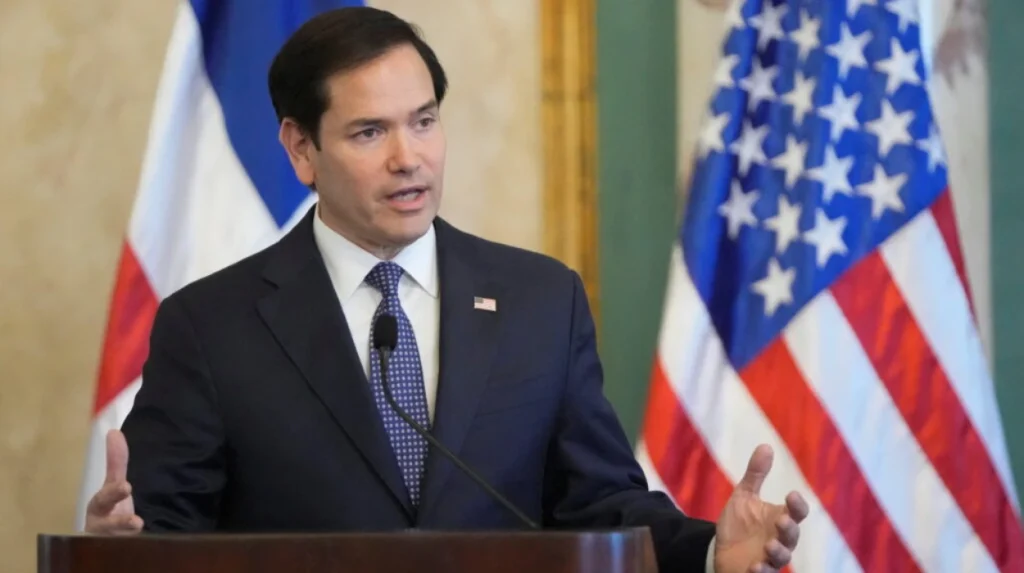
A major Caribbean trip will be made by US Secretary of State Marco Rubio this week, starting in Jamaica before traveling to Guyana and Suriname. The Dominican Republic was Rubio’s first foreign stop after his tour of nearby Central America. However, this week’s visit to the Caribbean is an opportunity to see how the second Trump administration is approaching this important but often overlooked region.
There is a lot of change taking place in the region, both negative and positive. As a result of recent discoveries and energy development, the Caribbean is set to become a powerhouse in the energy sector by the end of the decade.
As Rubio visits this week, Caribbean leaders hope to influence US policy toward the region in the coming four years. In terms of the US, Rubio has an opportunity to add tangible benefits to the region and protect US and Caribbean interests alike.
Potential that has not been explored
Because of its proximity to US shores, the Caribbean is known as the United States’ third border.” There are strong trade, commercial, and people-to-people relations between the United States and Caribbean nations.
In spite of the Caribbean’s importance for US interests, the region has long been neglected and ignored by US foreign policy. As a result, countries have been forced to seek assistance elsewhere, whether from China, India, or African nations. Now that Rubio is early in the second Trump administration, he has the opportunity to design, formulate, and implement a Caribbean strategy that serves US interests as well as regional interests going forward.
An overview of the US Caribbean strategy:
Efforts must be coordinated across the government that leverage and expand existing economic, diplomatic, and security ties with the Caribbean.
In order to coordinate these activities, we will have to develop a coherent strategy. First, a new framework must be developed to integrate current US policy initiatives in the Caribbean across multiple US agencies, so that opportunities can be identified to scale up engagement. The next step is for Washington to allocate resources to US embassies and other US policy instruments in the region, such as the US Southern Command and the State Department’s Caribbean office, so they can implement these measures.
To succeed, US policy must go beyond high-level government-to-government engagement. By this year’s end, five national elections will be held in the Caribbean. When relying solely on national governments, some of which could change soon, the private sector and regional institutions are limited in their ability to implement US-Caribbean policy.
In the energy sector, Caribbean countries are uniquely positioned to benefit from increased US investment in the region. Suriname, Guyana, and Trinidad and Tobago have high natural gas potential, which makes them an ideal location for future investment. Besides US and Western operators in those countries, derivatives from natural gas use, such as ammonia, urea, plastics, and aluminum, also offer opportunities to US companies.
In addition, the eastern Caribbean hosts significant geothermal reserves. Geothermal exploration could benefit from technological advances and financial backing from Wall Street, reducing costs and attracting US companies to make investments.
Because the number of power generation projects in the Caribbean is relatively low compared to those in Latin America, it would be beneficial for Rubio to partner with the US International Development Finance Corporation to subsidize pre-project costs for US companies willing to take the time to determine whether Caribbean energy projects are viable.
Investing resources and time in developing relations with the region is important for the national security and economic interests of the US. During Rubio’s visit, the Trump administration has its first real opportunity to accomplish this. A combination of resources, assistance, and institutionalized engagement will be needed of which will yield tangible benefits for the United States.