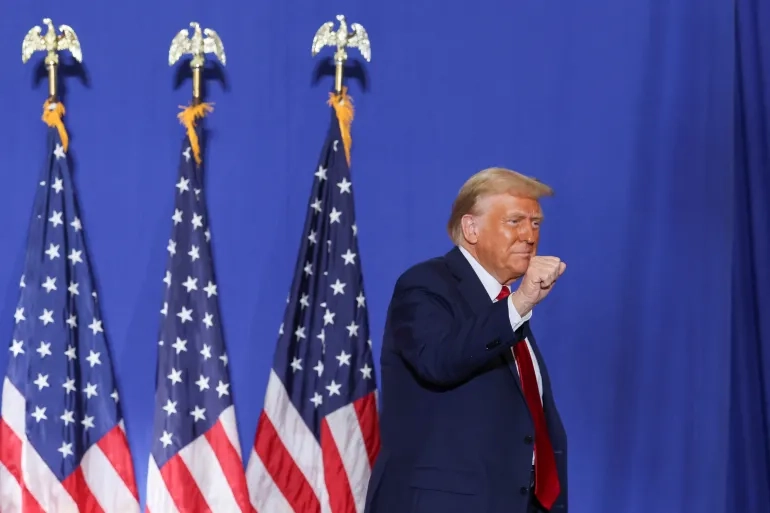
Donald Trump’s return to the US Presidency and his changing decisions about foreign policy have captured global attention. One of the most impactful decisions of Donald Trump was to stop US aid and development programs. This move by the US President has had immediate and severe consequences.
For instance, famine relief efforts in Ethiopia have stalled, leaving food supplies to spoil in African ports as legal disputes over executive authority unfold in Washington. Similarly, many health initiatives have faced disruption under Elon Musk’s Department of Government Efficiency. This includes malaria prevention and HIV/AIDS treatment programs, especially in Africa.
One of the pivotal decisions of Trump was the US withdrawal from the Paris Agreement on climate change. This action reversed various environmental policies from the Biden administration. Furthermore, this action erased references to “climate change” from government platforms. Also, his aggressive trade policy threats such as a 25% tariff on imports from Mexico and Canada and a 10% tariff on Chinese goods could increase consumer costs.
Donald Trump’s foreign relations have also increased tensions across the world. His recent meet-up with Ukraine’s President Volodymyr Zelensky was strongly condemned. This criticism is due to his great support for Russia.
These actions, coupled with controversial stances on Gaza and Panama, highlight Trump’s unorthodox approach to governance, leaving lasting impacts both domestically and internationally.
Leaders across the world do not understand his way of doing politics. Sometimes it seems confusing but it is part of a bigger plan. People feel that Trump does not have a clear plan and reacts aggressively to criticism. This perception has led people to treat him with the “toddler-in-chief” theory. It simply means flattery and diversion are the best ways of dealing with Donald Trump.
However, it is important to keep in mind that the President is not only the personality that runs the matters of the country. Many departments and officials work together. As an example, the US Defense Department, which has millions of employees and operates global military bases, functions with a uniform mentality that goes beyond different administrations.
US foreign policy under the Trump administration is the same as in some past Republican leaders like Ronald Reagan and George W. Bush. He likes to threaten other nations by taking tough action and telling them about the US’s strong military power. However, Donald Trump needs to understand that the US should cooperatively lead the world. Viewing Trump in this manner demonstrates that he aligns with a broader pattern of conservative ideas, while also emphasizing the arrogance of his administration and its lack of complete understanding of global dynamics.
The second term of the Trump administration has shown both familiar patterns and some clear differences in how he governs and handles foreign policy. One of the notable things is his confusing statements. For instance, once he feared North Korea with great destruction and later said he had a good time with Kim Jong-un because of “loving letters.” This kind of mixed statement makes it very difficult to understand his opinion.
Trump just wants something in return for aiding other nations. He often asked, “What can you do for America?” Rather than maintaining strong partnerships with other countries.
In his dealings with lesser nations, he may appear to be indifferent; conversely, his dealings with major powers such as China and Russia evoke a struggle for dominance akin to the “great game” of the 19th century.
Some experts wonder if Trump’s words and actions are fascist. His nationalist tone and divisive rhetoric are like those of previous fascist leaders, but he has not employed government violence against some groups, which makes it more difficult to label him as a fascist. Nevertheless, his authoritarian manner and tough stance are still worrisome.
Just a few weeks into his second term, Trump has already started to enact some of the ideas from the Project 2025 plan, like cutting foreign aid by significant amounts and making big changes in US foreign policies. His pugnacious style and authoritarian approach suggest a troubling trajectory for the future.