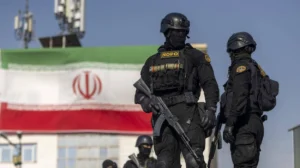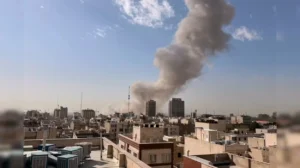
The Iran conflict has quickly become a defining argument within Washington’s strategic community. Biggest blunder or strategic necessity is the central question shaping how lawmakers, analysts, and voters interpret the campaign’s role in modern US foreign policy. By early 2026, as military operations continued into their fourth week, the debate reflected deeper disagreements about risk tolerance, deterrence, and economic stability.
Critics frame the campaign as a costly miscalculation that could stretch American resources and complicate other international priorities. Supporters describe it as a deliberate response to regional threats, emphasizing the need to weaken Iran’s missile infrastructure and influence across the Middle East. These interpretations reveal two different philosophies about how the United States should project power during periods of geopolitical tension.
Competing definitions of success
The disagreement often centers on what constitutes success in contemporary foreign policy. For critics, success means limiting military escalation while preserving diplomatic channels and protecting domestic economic stability. Supporters of the campaign argue that strategic success is measured by whether the operation reduces Iran’s ability to pressure allies or disrupt global energy routes.
Policy analysts observing the debate note that both frameworks reflect long-standing traditions in U.S. strategy. One emphasizes restraint and alliance management, while the other stresses decisive action to maintain deterrence credibility.
Strategic debates rooted in recent history
References to earlier conflicts frequently shape the current discussion. The experiences of Iraq and Afghanistan remain prominent in congressional hearings and policy forums, influencing how lawmakers evaluate the risks of another extended confrontation in the region.
Those memories contribute to skepticism among some policymakers who worry about mission expansion. At the same time, security-focused analysts argue that the regional environment in 2026 differs significantly from past conflicts, requiring updated approaches to deterrence.
Khanna’s critique and the “blunder” label
Representative Ro Khanna’s description of the Iran war as the “biggest blunder” in U.S. foreign policy since the Gulf War has become a focal point for the criticism emerging within the Democratic caucus. His argument emphasizes economic and strategic costs, suggesting that the conflict diverts attention and resources from other global priorities.
Khanna and allied lawmakers have pointed to rising energy prices and shifting geopolitical alignments as evidence that the campaign may produce unintended consequences. In interviews and public remarks, he has suggested that the war risks strengthening rival powers by altering global energy dynamics and diplomatic relationships.
Economic consequences highlighted in criticism
A major element of the critique involves domestic economic pressures. Lawmakers raising concerns about the conflict frequently connect military escalation with rising fuel prices and inflation anxiety among voters. The argument suggests that even limited operations abroad can carry significant financial implications at home.
Analysts studying these claims note that economic narratives often influence public support for foreign policy decisions. When voters perceive a direct connection between overseas conflict and household costs, political tolerance for extended engagement tends to narrow.
A broader challenge to interventionist policy
Khanna’s framing also reflects a wider effort within parts of the Democratic Party to reconsider interventionist tendencies in U.S. strategy. Critics argue that reliance on military tools may overshadow diplomatic and economic alternatives that could produce longer-term stability.
This perspective does not necessarily oppose all military action but questions whether the Iran campaign represents the most effective approach in the current geopolitical environment.
Polling, prices, and domestic reaction
Public opinion has become a central factor shaping the policy debate. Surveys conducted in March 2026 indicate that a majority of Americans disapprove of the military campaign or of how it is being managed. Analysts reviewing polling data observe that skepticism spans multiple demographic and political groups, although partisan differences remain strong.
Economic concerns appear closely linked to these attitudes. As oil markets reacted to tensions in the Gulf region, gasoline prices in the United States moved upward, reinforcing voter anxiety about the cost of living.
Public opinion trends in early 2026
Several surveys show disapproval levels approaching or exceeding sixty percent, reflecting widespread uncertainty about the campaign’s objectives and duration. Among Democrats and independents, opposition levels are particularly high, though some Republican voters also express reservations about further escalation.
Researchers examining these patterns emphasize that foreign policy approval often depends on perceived effectiveness and clarity of purpose. When goals appear ambiguous or costs rise, support can decline quickly.
Energy prices shaping political interpretation
Energy markets have played an influential role in shaping public reaction. Oil prices hovering near or above the one-hundred-dollar range have contributed to increased concern about gasoline affordability, especially among households already dealing with broader inflation pressures.
Political strategists frequently describe fuel prices as one of the most visible indicators of global instability. Because consumers encounter those costs weekly, the economic signal can overshadow complex strategic arguments made by policymakers.
Administration rationale: strategic necessity
The administration has consistently rejected the characterization of the conflict as a mistake. Officials argue that the campaign represents a necessary effort to reduce Iran’s ability to threaten regional partners and disrupt maritime trade routes. From this perspective, the operation is framed as preventive rather than optional.
Government briefings have emphasized the goal of degrading missile systems and limiting the reach of Iranian-backed networks across the region. According to administration officials, early operations have already reduced certain operational capacities, though independent verification of these claims remains limited.
Security objectives emphasized by policymakers
National security advisers frequently highlight the protection of allies and the stability of energy transit corridors as key motivations for the campaign. The Strait of Hormuz remains a particular focus, given its role in global oil transport.
Supporters argue that allowing Iran to expand its regional influence without response could create longer-term risks for international security and global markets.
Arguments for a limited campaign
Administration officials have also stressed that the operation is intended to remain limited in scope and duration. Statements from defense leaders suggest that the campaign is designed to achieve specific objectives rather than expand into a broader regional conflict.
Policy observers note that such assurances aim to address domestic concerns about entering another prolonged war. Whether those assurances hold will likely influence how the campaign is judged in the coming months.
The forever-war question and strategic uncertainty
The debate has revived broader questions about whether the United States risks returning to a pattern associated with the early 2000s, often described as the “forever-war” era. Critics argue that even limited operations can gradually expand as new challenges emerge during conflict.
Supporters counter that the current campaign differs significantly from earlier interventions because it does not involve nation-building or large-scale troop deployments. Instead, it focuses on targeted operations and strategic deterrence.
Lessons from previous interventions
Historical experience continues to shape perceptions of risk. Policymakers frequently reference the prolonged timelines of earlier conflicts when assessing the likelihood that the Iran campaign could evolve into a more sustained commitment.
Those comparisons influence how Congress evaluates funding, oversight, and long-term strategic planning connected to the war.
The thin line between limited and extended engagement
Despite official assurances, analysts point out that military operations in complex regional environments often produce unpredictable outcomes. The presence of naval assets, air operations, and regional alliances can gradually expand the scope of engagement if tensions escalate.
This uncertainty contributes to the ongoing debate about whether the conflict will remain limited or evolve into a longer-term strategic challenge.
Reassessing the boundaries of US power
The argument over whether the Iran war represents the biggest blunder or a strategic necessity ultimately reflects a deeper reassessment of how the United States uses its influence. Critics emphasize economic costs, political backlash, and the possibility of strategic distraction from other global priorities such as the war in Ukraine.
Supporters focus on the importance of demonstrating resolve in regions where adversaries test the limits of deterrence. They argue that failure to respond decisively could weaken alliances and encourage further instability.
As the conflict continues, policymakers and analysts are likely to judge it not only by its immediate military outcomes but also by how it reshapes perceptions of American power. The debate unfolding in Washington suggests that the war’s significance may extend beyond the battlefield, influencing how future leaders define the balance between restraint and force in an increasingly complex international system.