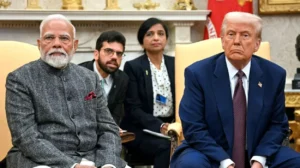
The U.S.-India Relationship under Trump pragmatic realism came to the forefront of the Raisina Dialogue, which will be held between March 3 and six 2026 in New Delhi. This has turned out to be a platform on which major powers express Indo-Pacific strategies more and more annually at the geopolitical forum. The visit of U.S. Deputy Secretary of State Christopher Landau was an indication that Washington was keen on outlining the boundaries of its second-term involvement with India under President Donald Trump.
The worldview the administration condensed into the terse statements made by Landau is that U.S. foreign policy is there to serve our national interests. The wording was no rhetorical flair or diplomatic generalization. It cemented a trend that has been apparent since the January 2025 inauguration of the Trump administration, as transactional lucidity has taken the place of wider ideological contextualization in the language of foreign policy.
The discussion took place through the process of escalated geopolitical readjustment. In India, leaders were able to broker wars in Eastern Europe, Middle East, and the Taiwan Strait. It is against this background that Washington was sending a message to New Delhi that was full of confidence and implicit anticipation.
Economic Momentum In 2025
There was about 10 percent growth in U.S. exports to India during fiscal year 2025 with trade of about 200 billion U.S. dollars which could be attributed to the defense equipment, energy shipment and technology services.
In 2025, Defense contracts were reinforced with the renewal of agreements. Interoperability was strengthened by the U.S. manufactures acquisitions of India systems in the aviation domain such as advanced drones and other maritime surveillance systems. Such economic information so made available has a quantifiable foundation to diplomatic speech.
Europe’s Peripheral Presence
Although the presidency of Finland was headed by Alexander Stubb as the chief guest, the European strategic issues were kept in the back seat to the U.S. India bilateral relationship. The 2026 cuts in foreign aid, as the United States cuts foreign aid by over 63 billion, to the claim levels of less than 30 billion, highlighted a shift to discriminatory partnerships as an alternative to broad multilateral engagements.
Defining Trump’s Pragmatic Realism
The reelection of President Trump in November 2024 solidified what is increasingly being termed as pragmatic realism by analysts. The National Defense Strategy of 2026 focused on short-duration and high-impact interventions and burden sharing with competent partners. It was no longer focused on democracy promotion but strategic alignment and cost effectiveness.
In that regard, India has a unique category. New Delhi is considered by Washington as a counter to the Indo-Pacific without being bound by a treaty as the NATO alliances. This relationship is designed on a basis of mutual benefit instead of legalized security assurances.
Defense As The Anchor
There has been an increase in the level of military cooperation. In 2025, more than 20,000 combined engagements of personnel took place in the annual Yudh Abhyas exercise and coordination of patrols in the Indian Ocean should also rise considerably.
The defense expenditure of India is nearly 2.5% of GDP, and this is in line with the focus of Washington on the role of partners. The remarks of Landau at Raisina were an emphasis on the fact that efficient allies who are prepared to invest in their security will receive willing counterparts in Washington.
Critical Minerals And Supply Chains
One pillar which has resulted is strategic minerals cooperation. In 2025, lithium and cobalt extraction agreements were made to advance joint ventures, which are crucial to the electric vehicle battery and semiconductor production. Reducing dependence on China as a supply chain is a U.S. goal on both sides of the aisle, but during the second term of the Trump administration, it has been faster achieved by bilateral agreements and not multilateral.
In the case of India, this kind of cooperation encompasses capital inflows and transfer of technology. In the case of Washington, it minimizes contact with geopolitical rivals. The set-up depicts the “win-win” framing that is commonly referred to by the U.S. authorities.
Trade Negotiations And Market Access Pressures
Even though the amount of trade increases, there is an imbalance in trade. India has had a surplus of about 40 billion dollars in terms of goods trade with the United States. Deficit sustained under an America First doctrine is usually subject to examination.
The delegation of Landau is said to have paid more attention to the market to American agricultural and digital services companies. Some of the tariff disputes had been solved by mini trade agreements in 2025, although structural barriers were still being negotiated.
Transactional Incentives
The policy formulation of the administration is more connected with incentives based on mutual concession. Procurement commitments or regulatory changes may be the key to access to high-end defense technology, special-purpose financing, or technology alliances.
This model contrasts the previous administrations that defined relationships in common democratic values. Rather, it is adherence to strategic goals that underlies increased engagement.
Strategic Autonomy Balancing
India still underlines the strategic independence, diversified defense acquisition and moderate relations with Russia and Iran, so US-India Ties Under Trump Pragmatic Realism still requires the course of negotiating between alignment and independence.
The balancing act is stressed by the fact that India has been neutral to some of the conflicts in the world. The extent to which Washington puts up with such autonomy could be determined by the overall trend of Indo-Pacific cooperation.
Indo-Pacific Security And The China Factor
To a great extent, the bilateral momentum is motivated by shared issues concerning the maritime position of China. In 2025, Naval patrols and intelligence relations were increased, and Quad coordination was enhanced.
The US is promoting a free and open Indo-Pacific, which Landau repeated. Although it does not make any specific mention of China directly in each of the forums, the strategic implication is clear.
Taiwan Strait And Regional Stability
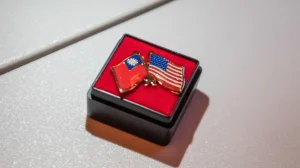
The build-up of tensions in the Taiwan Strait early in 2026 strengthened the strategic rationale of more coordination. India has not made any blunt declarations on Taiwan sovereignty but the Chinese have increased the cooperation in awareness of maritime domains, which indicates converging security evaluation.
The pragmatic realism approach is based on alliances that share regional security loads without involving legal alliances.
Technology And Digital Security
Cybersecurity and semiconductor resilience are already on the high-level discussions. The presence of joint research in artificial intelligence and secure communications is an indication that economic and security aspects cannot be separated.
These initiatives have two functions of insulating the supply chains and strengthening the political alignment.
Aid Reductions And Global Perceptions
The reduction of U.S. foreign aid has reverberated globally. Proposed 2026 allocations suggest further contraction, reshaping how Washington projects influence. India, historically a recipient of development assistance but now a rising donor itself, is less directly affected than smaller states.
Nonetheless, aid conditionality and prioritization of resources sends messages. Joint ventures are also gradually being analyzed in terms of costs and benefits. The observers say that the predictability can be enhanced by the transactional clarity but at the same time this can restrict the flexibility of diplomacy.
This is an opportunity in the case of India. When Washington reinvigorates pledges, competent individuals capable of taking responsibilities come into the limelight. But there also are expectations with that elevation which are equally large.
The U.S.-India Relationships in the Era of Trump and Realism Pragmatism are based on quantifiable dealings and not abstract alignment. The relationship is pegged with defense contracts, mineral supply agreements and trade negotiations in tangible measurements. Meanwhile, the changing world conditions challenge the possibility of the transactional cooperation to maintain the long-term strategic trust. With geopolitical competition growing stronger and economic interdependence growing stronger, the sustainability of this model might depend not on the coincidence of the interests today but on how both capitals understand the concept of reciprocity under the conditions of the inevitability of the divergence of the interests.