The United States has made a major change in its policy towards three West African countries, Mali, Burkina Faso, and Niger, whose military regimes have cut their defense relations with France, aligned with Russia, and are fighting Islamist insurgencies.
The US State Department made it clear that it was changing course by announcing that Nick Checker, the head of its Bureau of African Affairs, would travel to Mali’s capital, Bamako, to “express respect for Mali’s sovereignty” and to set out a “new course” in US-Mali relations that would “move beyond policy missteps.”
The US State Department also stated that the US would strengthen its cooperation with Mali’s allies, Burkina Faso and Niger, on what it called
“shared security and economic interests.”
Democracy Downgraded in US Engagement Strategy
One thing that is not present in the messaging of Washington is the traditional focus on democracy, constitutionalism, and human rights. During the Biden administration, military assistance to all three countries was suspended due to coups that overthrew democratic administrations between 2020 and 2023. The ousted president of Niger, Mohamed Bazoum, is still under house arrest.
This shift represents a clear departure from this stance and is part of a larger trend that has been apparent since Donald Trump came back to the White House.
One of the first signs of this shift was the sudden shutdown of USAID activities—historically a bedrock of US development assistance in the Sahel—that followed shortly after Trump’s inauguration. This was followed by a series of indications that the US would scale back its priorities to include security cooperation and access to strategic minerals, but not development assistance.
Sovereignty as a Political Signal
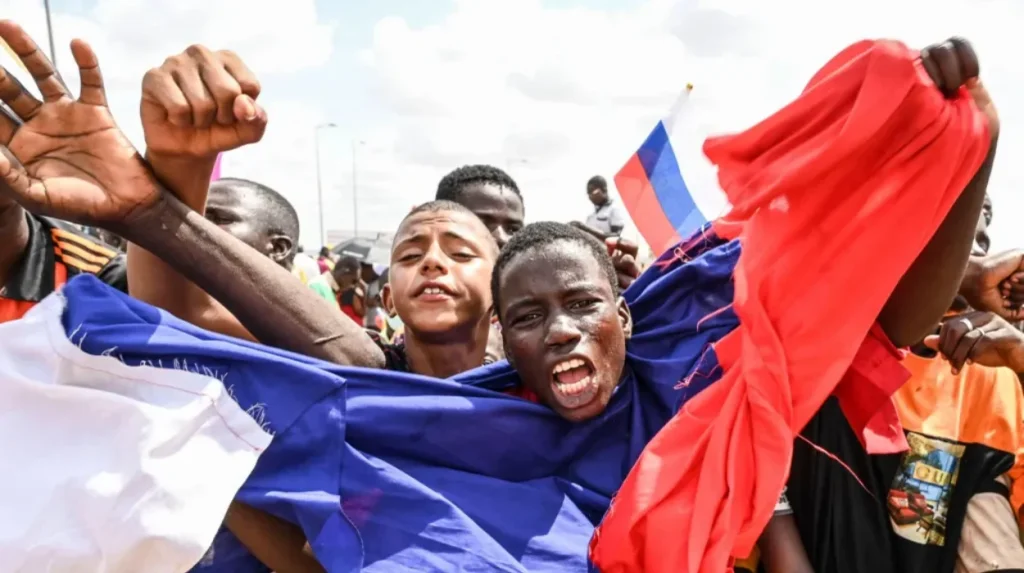
The clear stress on the need to respect the sovereignty of Mali is likely to find a very receptive audience in Bamako and other AES capitals, where military leaders have established their own legitimacy by rejecting Western influence, especially that of France, and instead appealing to pan-Africanist and anti-imperialist ideologies.
The military leader of Burkina Faso, Captain Ibrahim Traoré, is one of the most prominent leaders of this movement. By his aggressive use of social media, Captain Traoré has established a very popular following, especially among the younger generation in Africa and the diaspora, by presenting his leadership as a resistance to “imperialism” and “neo-colonialism.”
Washington’s New Non-Interference Doctrine
The Trump administration has made clear that it is unconcerned with the juntas’ abandonment of European-style constitutional democracy.
Massad Boulos, a senior Africa adviser at the State Department and a close Trump ally, told Le Monde last year:
“Democracy is always appreciated, but our policy is not to interfere in the internal affairs of other countries. People are free to choose whatever system is appropriate for them.”
This stance contrasts sharply with the Biden-era approach, when US Africa Command (Africom) emphasised governance, civilian protection, and environmental resilience as integral to long-term security.
Security First: Africom’s Narrowed Focus
Since Trump’s return, Africom has publicly restated its priorities. General Michael Langley, who headed the command from 2022 to 2025, has admitted that
“counterterrorism has become the number one priority.”
This has been reaffirmed through high-level interactions. US counterterrorism chief Rudolph Attalah reiterated the security-first strategy during a visit to Bamako last year. More recently, Africom’s deputy commander, General John Brennan, has reaffirmed that
“the US remains actively engaged in supporting Mali, Burkina Faso, and Niger in their struggle against jihadist groups, specifically Islamic State affiliates.”
The Sahel as the Epicentre of Global Terrorism
One of the key factors that has driven the policy change for Washington is the deteriorating security environment in the Sahel. According to some estimates, the Sahel region is now home to nearly half of all terrorist-related deaths globally, making it the deadliest zone for jihadist terrorism.
While the majority of these casualties are local civilians, Washington is concerned that the loss of state control could lead to the development of permanent safe havens for extremist groups that have the potential to pose a threat to global security.
The tri-border region where Mali, Burkina Faso, and Niger converge is a hotspot, with Islamic State in the Greater Sahara (ISGS) launching more and more sophisticated attacks. The recent attack on the international airport in Niamey has highlighted the growing capabilities of the group.
Minerals, Resources, and Strategic Competition
Beyond security, the Sahel’s mineral wealth looms large in Washington’s calculations. The region is a major producer of gold, while Mali has emerging lithium deposits—a resource critical for electric vehicle batteries and advanced technologies.
Niger, meanwhile, holds some of the world’s most significant uranium reserves. Its military government has seized control of the country’s main uranium mine from French nuclear firm Orano and is now courting Russia as a replacement partner, a move that underscores the geopolitical stakes involved.
Russia’s Military Footprint and US Pragmatism
The Trump administration also appears determined not to cede the region entirely to Russian influence. Moscow has deployed roughly 1,000 security contractors in Mali, alongside smaller contingents in Burkina Faso and Niger.
There have been repeated allegations—particularly in Mali—of abuses committed by Russian forces and their local partners. However, unlike the EU, France, Ecowas, and the Biden administration, the current White House does not view Russia’s military presence as an inherent threat to regional stability or human rights.
During his visit to Bamako, Attalah indicated that Washington was broadly relaxed about Moscow’s role, signalling a willingness to coexist with Russian security partnerships rather than confront them.
Avoiding “Forever Wars”
Despite renewed engagement, Trump’s administration remains sensitive to domestic political constraints. The US is not seeking to deploy combat troops or reopen the large drone base in Agadez, Niger, which once hosted around 800 American personnel before the junta expelled them over demands for a return to civilian rule.
Instead, US support is expected to remain limited to intelligence-sharing, advisory roles, and possibly weapons supplies—an approach designed to avoid perceptions of another open-ended overseas military commitment.
Ecowas Retreats, Regional Cooperation Adjusts
Following their withdrawal from Ecowas last year, Mali, Burkina Faso, and Niger have focused on consolidating their own confederation, the Alliance of Sahel States (AES). As non-members, they are no longer subject to Ecowas’ governance norms.
This has paradoxically freed the remaining Ecowas states to prioritise practical security cooperation over political conditionality, as jihadist groups increasingly operate across borders into Benin, Togo, Ghana, Ivory Coast, and Nigeria.
Military Solutions and Structural Limits
US intelligence and limited military assistance may help deliver short-term gains against militant groups. But the broader lesson of France’s decade-long intervention—backed by thousands of troops and extensive airpower—remains stark.
High-tech counterterrorism operations alone cannot stabilise the Sahel. Without addressing the region’s deep-rooted poverty, political exclusion, environmental stress, and local grievances, security partnerships—whether Western or Russian—are unlikely to bring lasting peace.