Iran has agreed to restart nuclear talks with the United States, a possible diplomatic breakthrough in the face of rising military tensions and the threat of further bombing. This will be the first nuclear talks between the two countries since the Trump administration launched airstrikes last summer against three Iranian nuclear sites, an attack that effectively derailed the previous negotiating channel.
This appears to be a crisis management effort, as both countries are trying to avoid a wider conflict that could include US forces, Israel, and several countries in the Middle East.
Istanbul Talks: First Direct Engagement Since US Strikes
Iran’s Foreign Minister Abbas Araghchi is set to hold talks with US Special Representative Steve Witkoff and Jared Kushner in Istanbul on Friday, according to three sources quoted by CNN. The role of Turkish mediation has been at the forefront of this process, with Turkey offering itself as a third-party location that could facilitate direct talks.
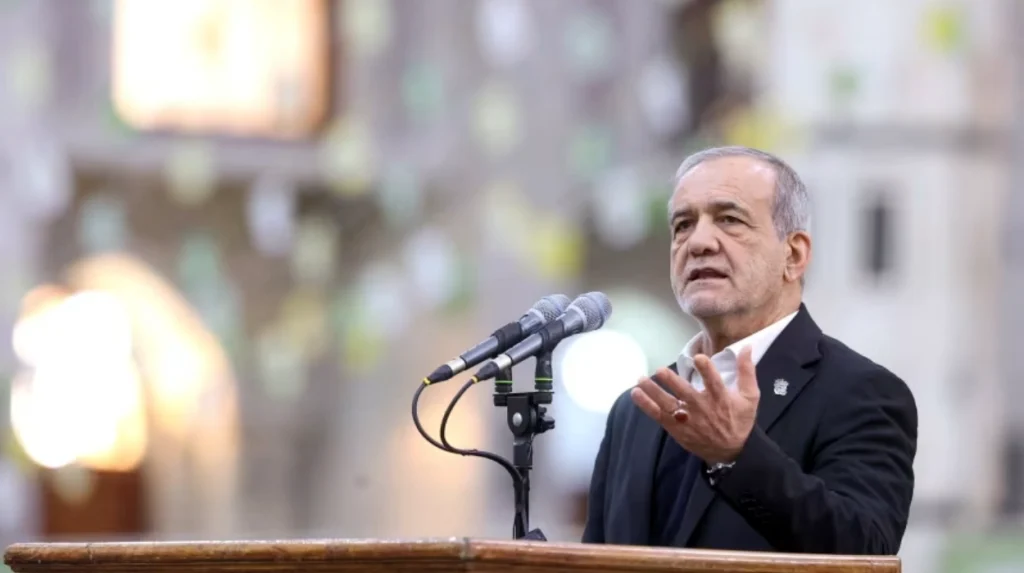
Iranian President Masoud Pezeshkian later confirmed that Iran was seeking to hold talks, but only on certain conditions.
“I have instructed my Minister of Foreign Affairs, provided that a suitable environment exists — one free from threats and unreasonable expectations — to pursue fair and equitable negotiations,”
Pezeshkian wrote on X, adding that talks must respect Iran’s “dignity, prudence, and expediency.”
Pezeshkian said the decision followed requests from “friendly governments in the region,” underscoring the role of regional diplomacy in preventing further escalation.
Supreme Leader’s Shadow Over the Process
However, actual power in Iran is held by Supreme Leader Ayatollah Ali Khamenei. On Sunday, Khamenei’s rhetoric was defiant, saying that any attack by the US would light the fuse of a regional war. This is in line with Iran’s deterrence policy.
Iran’s political system has often made diplomatic efforts complicated, with politicians pushing for engagement while hardline bodies such as the IRGC and the SNSC demand red lines that would not allow much leeway.
Escalating Military Pressure from Washington
The diplomatic gesture comes against the backdrop of heavy military pressure being applied by Washington. US President Donald Trump has sent a US carrier strike group to the region and has publicly stated that Iran may face another round of airstrikes if it does not open talks on a new nuclear deal.
In the early part of this year, Trump had also threatened military action due to widespread protests in Iran that had been brutally crushed by security forces. According to CNN, US intelligence officials said that Trump was considering a variety of options, including airstrikes against Iranian leadership, nuclear facilities, and key government institutions.
Iran, on the other hand, has one of the biggest missile programs in the Middle East, with thousands of short- and medium-range ballistic missiles and armed drones that are capable of attacking US bases in Iraq, Syria, the Gulf states, and Israel. Iranian officials have repeatedly threatened to attack in retaliation if US forces are attacked.
Regional Diplomacy Intensifies to Prevent War
In the past few days, there has been an increase in diplomatic efforts as various players in the region sought to calm the situation. Qatar, Turkey, and Egypt have been at the forefront, with Turkey providing the city of Istanbul as a possible location for negotiations.
Foreign ministers or high-ranking officials from Egypt, Oman, Pakistan, Qatar, Saudi Arabia, and the United Arab Emirates are also expected to attend, according to sources who are familiar with the arrangements. The large turnout is an indication that there is a collective concern that a US-Iran conflict would have the effect of destabilizing energy markets, as well as shipping routes via the Strait of Hormuz, with a potential for retaliatory attacks across the region.
Trump has shown signs of optimism, indicating that Iran was “seriously talking to us.” This was echoed by Araghchi, who told CNN that he was
“confident that we can achieve a deal.”
Deep Divisions Inside Iran Over Nuclear Concessions
While Iranian President Hassan Rouhani and Foreign Minister Mohammad Javad Zarif have made conciliatory gestures, other high-ranking officials have been more adamant. “We have no intention of negotiating” on Iran’s enriched uranium stocks, said Ali Bagheri, the foreign policy chief of Iran’s Supreme National Security Council.
The International Atomic Energy Agency (IAEA) sounded the alarm just before last year’s US strikes, warning that Iran was enriching uranium to 60% purity, a level of enrichment that is far beyond any civilian need and only a fraction of a percent below weapons-grade levels. Iran is the only non-nuclear weapon state to enrich uranium to this level, the IAEA says.
Ali Shamkhani, a high-ranking adviser to Khamenei, indicated this week that Iran would have to see some real concessions from the US if it were to agree to lower its enrichment levels.
Nuclear Rebuilding and Reduced Transparency
As per US intelligence reports quoted by CNN, Iran has already started working on repairing the damaged nuclear facilities by digging them deeper into the ground since last summer’s attack. Iran has also restricted UN nuclear inspectors from visiting some of its major facilities, further reducing transparency.
Iranian authorities claim that the restrictions are a result of Western “politicization” of the IAEA, while critics believe that Iran is rapidly moving towards nuclear breakout capabilities.
A Collapsed Negotiating Track
The current diplomatic effort follows the collapse of indirect US–Iran talks held in April and May 2025. Those discussions ended abruptly after a surprise Israeli strike on Iranian targets in mid-June, followed days later by US airstrikes on nuclear facilities.
Iran subsequently ruled out direct talks with Washington, making the potential Istanbul meeting a notable reversal—albeit one driven by fear of escalation rather than renewed trust.
While the prospect of talks offers a possible off-ramp from war, the path ahead remains narrow and fraught. Iran insists on negotiations without coercion, the US continues to wield military pressure as leverage, and deep internal divisions on both sides limit flexibility.
With regional powers racing to contain the crisis and nuclear risks mounting, the Istanbul talks—if they proceed—may determine whether diplomacy can still compete with escalation, or whether the Middle East is heading toward another dangerous confrontation.