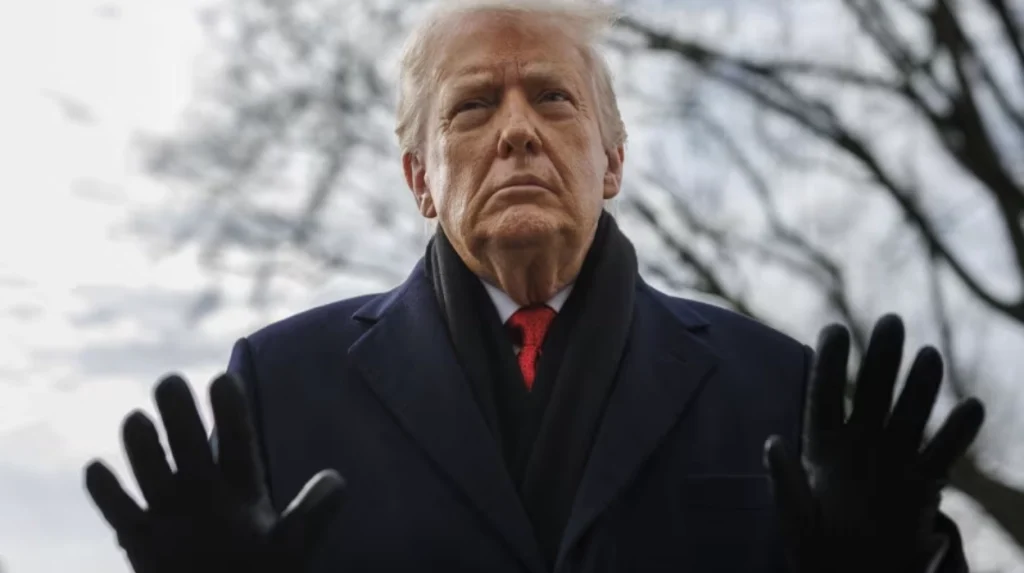
US President Donald Trump is weighing a large-scale military operation against Iran, as initial talks between the US and Iran through back channels on limiting the Iranian nuclear program and the production of Iranian ballistic missiles have not produced any progress, according to sources familiar with the situation.
The threat has escalated significantly after weeks of confusing signals emanating from the US administration, with warnings from Iran of immediate retaliation should the US take any kind of military action.
Tehran Threatens Retaliation, Israel Named as Target
Iran’s response was one of outrage at Trump’s latest threats. A top adviser to Iran’s Supreme Leader, Ayatollah Ali Khamenei, said that any attack by the US would be met with a direct response, including Israel as a target if the attack is carried out.
Iranian Foreign Minister Abbas Araghchi said on Wednesday that Iran’s military is fully prepared to respond “immediately and powerfully” to any aggression against Iran’s territory, airspace, or territorial waters.
“Our brave Armed Forces are prepared — with their fingers on the trigger — to immediately and powerfully respond to ANY aggression against our beloved land, air, and sea,”
Araghchi wrote on X, adding that the warning was issued in response to Trump’s threats.
Our brave Armed Forces are prepared—with their fingers on the trigger—to immediately and powerfully respond to ANY aggression against our beloved land, air, and sea.
— Seyed Abbas Araghchi (@araghchi) January 28, 2026
The valuable lessons learned from the 12-Day War have enabled us to respond even more strongly, rapidly, and… pic.twitter.com/kEuj0dmBaK
Ali Shamkhani, another key adviser to Khamenei, went further, warning that any US military action would be treated as the start of a war and promising an “unprecedented” response, naming Tel Aviv directly.
Trump Escalates Rhetoric and Signals Expanded Military Options
On Wednesday, Trump posted on Truth Social calling on Iran to negotiate what he described as
“a fair and equitable deal – NO NUCLEAR WEAPONS.”
He also warned that
“any attack by the United States will be far worse”
than the summer attack on three Iranian nuclear facilities, which were targeted by US forces last summer.
According to sources, Trump is now considering a variety of military options, which include airstrikes against Iranian leadership figures, security officials who are accused of killing protesters, nuclear facilities, and important government institutions. Although no decision has been reached, Trump believes that US military options have increased since last month.
Carrier Strike Group Moves Closer to Iran
The USS Abraham Lincoln Carrier Strike Group has entered the Indian Ocean on Monday and is continuing to close in on Iran. The USS Abraham Lincoln Carrier Strike Group could provide support to potential US strikes and help protect US allies from Iranian retaliation. US officials have stated that the deployment has greatly improved the operational flexibility of the US during this time of heightened tension.
Back-Channel Diplomacy Fails to Gain Traction
Earlier this month, the US and Iran had exchanged messages through intermediaries, including Omani diplomats and messages between Trump’s envoy Steve Witkoff and Iranian Foreign Minister Araghchi, in an attempt to prevent a US attack after deadly crackdowns on Iranian protesters.
There was talk of a possible face-to-face meeting, but this never happened. According to sources, there have been no serious direct talks between the two sides as Trump has escalated his threats in the past few days.
Nuclear Program Back in Focus Amid Intelligence Warnings
It remains unclear why Trump has shifted renewed focus to Iran’s nuclear program, which he claimed last summer had been “obliterated” by US strikes. US intelligence assessments, however, indicate that Iran has been attempting to rebuild damaged nuclear facilities deeper underground and continues to resist pressure to halt uranium enrichment.
Iran has also barred inspectors from the UN’s nuclear watchdog from accessing its nuclear sites, raising further concerns in Washington.
US Sets Tough Preconditions for Any Talks
Sources say the US has demanded strict preconditions for any meeting with Iranian officials, including a permanent end to uranium enrichment, new restrictions on Iran’s ballistic missile program, and a complete halt to Tehran’s support for regional proxy forces.
The most contentious issue has been Washington’s demand that Iran limit the range of its ballistic missiles—an especially sensitive concern for Israel. During last June’s 12-day war, Israel expended much of its missile interceptor stockpile defending against Iranian ballistic missile attacks.
Pentagon Reinforces Regional Defenses
As tensions rise, the US military is preparing for potential escalation. Air defense systems, including additional Patriot missile batteries, are being deployed to protect US forces from possible Iranian retaliation. Multiple sources say one or more THAAD missile defense systems are also expected to be moved into the region.
Meanwhile, the US Air Force is scheduled to conduct a multi-day air exercise in the Middle East. Lt. Gen. Derek France, commander of US Central Command’s air forces, said the drills will demonstrate that US airmen can operate, disperse, and generate combat sorties under demanding conditions alongside regional partners.
Intelligence: Iranian Regime Weakened but Resilient
Recent US intelligence briefings suggest the Iranian regime is in a historically weak position following US and Israeli strikes on nuclear facilities and proxy forces last year, combined with widespread protests earlier this month.
Trump hinted over the weekend that he favors regime change, telling Politico,
“It’s time to look for new leadership in Iran.”
Secretary of State Marco Rubio echoed that assessment, telling lawmakers the regime
“is probably weaker than has ever been.”
However, intelligence officials caution against assuming that removing Khamenei would lead to regime collapse. Past periods of weakness have not resulted in systemic change, and there are no signs that Iran’s security services are preparing to abandon the government.
“Even if you remove the ayatollah, his successors are all hardliners, too,”
one source said. Rubio also acknowledged uncertainty over who would replace Khamenei if he were removed.
Military Realities and Regional Resistance Complicate Strike Plans
Despite its weaknesses, Iran retains significant military capabilities, including layered air defenses, ballistic missiles, one-way attack drones, and aging but battle-tested US- and Russian-made fighter jets. Tehran’s geography and distance from the coast further complicate any decisive US strike.
Unlike coastal capitals such as Caracas, Tehran lies deep inland, posing additional operational challenges for air and missile campaigns.
Adding to the complexity, key US allies Saudi Arabia and the United Arab Emirates have ruled out allowing their airspace or territory to be used for a US attack on Iran. Their stance reflects broader concerns among Gulf states and Turkey, which have warned both Washington and Tehran against military escalation.
Targeting Iran’s Supreme Leader Remains Elusive
Striking Iran’s Supreme Leader poses unique challenges. After last June’s conflict, Israel’s defense minister acknowledged that Israel never had a viable opportunity to target Khamenei, underscoring the difficulty of decapitating Iran’s leadership even during active hostilities.
Despite the risks and uncertainties, sources say all options remain on the table as Trump weighs his next move.