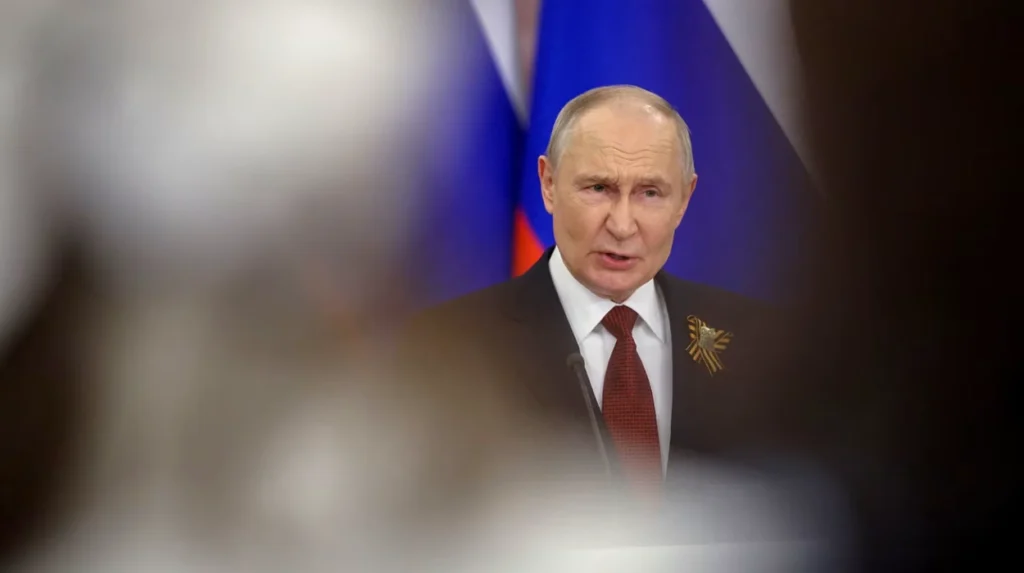
In an intricately staged diplomatic ballet that has drawn worldwide attention, Vladimir Putin’s trip to China shortly after the exit from the White House of former President Donald Trump highlights how the interests and intentions of the two powers have come into play in a very tight diplomatic game. The significance of the timing, whether deliberate or coincidental, makes it difficult not to analyze the implications of such closely timed exchanges at the national level. This piece discusses the political backdrop behind the move, as well as the objectives and probable results of the visit, and its implications for other parts of the world.
The diplomatic choreography — optics and timing
The timing of Putin’s arrival after Trump’s visit places Beijing at a unique junction where the Chinese host two major players on the global stage in a brief period of time. To Beijing, the hosting of the two leaders in such quick succession would highlight its role as a mediator and show that China can handle meaningful interactions with various countries. From the Russian perspective, arriving in Beijing immediately after an important encounter between the U.S. and China allows for an assertion of Russia-China partnership. How the two countries’ official protocol, joint announcements, and media coverage will play out in the coming days would make for interesting observations.
Messaging that matters
What the parties involved say publicly during the meeting will be analyzed with a great deal of subtlety. Both the Kremlin and the Chinese regime are known for their messaging about the consistency of relations and a spirit of goodwill between the two powers, so mentioning terms like “strategic partnership” or “mutual support of each other’s core interests” should come as no surprise. But equally important will be what goes unsaid, including mention of any of the difficult topics such as sanctions, the war in Ukraine, technological constraints, or trade imbalances.
Stated objectives and agenda items
Based on the pattern of recent high-level Russia-China summits, the visit’s official agenda is likely to include detailed discussions and announcements in several core areas:
- Economic and energy cooperation: Russia has used deeper ties with China to mitigate the impact of western sanctions, and state-level agreements on energy supply, long-term gas contracts, and increased use of bilateral currencies in trade settlements are probable points of emphasis.
- Trade, infrastructure and technology: China’s interest in diversified supply and export markets, combined with Russia’s desire for technology transfers and investment, often leads to memoranda of understanding on infrastructure projects, rail and port logistics, and cooperation in select industrial and digital sectors.
- Security and military coordination: Joint statements rarely amount to formal military pacts, but Moscow and Beijing often underscore shared views on strategic stability, non-interference and multipolarity. Coordinated language on regional hotspots and defense cooperation would be significant.
- Diplomatic alignment on global governance: Beijing and Moscow regularly present joint positions at the UN and other multilateral forums, arguing for a greater say in setting global norms and resisting perceived Western hegemony.
What to expect from formal outcomes
The meeting can be expected to feature both a photo-op and some signing of documents on various commercial and inter-governmental deals. This will be accompanied by a communique that reiterates the same general points, not concrete actions as to what was accomplished. Possible details could include multi-year energy arrangements, trade facilitation initiatives, and statements on using bilateral currencies more widely.
Political motivations on both sides
For Putin, such a visit can achieve several objectives: improved access to technology and funds, making it clear that Russia is not isolated and maintaining a strategically important relationship with China which will serve to counter Western influence. For Xi Jinping, such a visit by Russia helps China emerge as an important negotiator while demonstrating its skillful conduct of diplomacy on its own terms. This is also a means for both leaders to shape narratives within their own countries highlighting the strengths of the nations and their capabilities to build strong partnerships externally.
Domestic optics and legitimacy
The state-owned media in each nation as well as any official statements will be used to portray the visit in a manner that suits the domestic audience. The Russian press will concentrate on success in diplomacy and concrete economic advantages for their country, while Chinese media will focus on mutual respect and practical cooperation. It is significant in that it preserves legitimacy at home as well as abroad.
Reactions from Washington, Europe and regional players
The visit’s proximity to Trump’s departure inevitably invites reactions from Washington and allied capitals. U.S. officials will weigh whether the meetings produce concrete steps that undermine sanctions regimes or shift global energy dynamics. European governments, already sensitive to Russia’s actions in Ukraine and reliance on Russian energy in past years, will closely monitor any arrangements that make Moscow less vulnerable to Western economic pressure.
Regional states in Asia, Central Asia and Indo-Pacific would also pay attention to the announcement made by the two powers. The reason behind this is because states like Japan, India and Southeast Asian countries would have their security equations become complicated as well as their foreign policy and military strategies due to closer coordination between Russia and China. Central Asian nations, who are close to both Beijing and Moscow, would take notice of anything regarding economic corridors.
Statements and posture — a balancing act
Look for the US administration to make careful statements about the need for stability and compliance with international rules, while encouraging disclosure concerning any new business agreements which could weaken the effectiveness of sanctions or export controls. The statements from Europe will follow a similar vein to that of the US, but with more of an emphasis on accountability for involvement in regional conflicts.
Economic implications and energy markets
Energy continues to be an important aspect of Russia-China interaction. Long-term agreements for natural gas, fuel products, and oil would have consequences for global energy markets, especially in instances where those agreements divert supplies from Western customers or come up with payment systems that would limit the impact of any sanctions imposed by the West. Agreements that use the currency of the countries in question, or alternative payment systems, should also be closely monitored.
Trade, technology and sanctions evasion risks
While China has incentives to avoid overtly violating sanctions, complex trade arrangements and the private sector’s involvement can create avenues that effectively blunt the impact of Western measures on Russia. Commitments to facilitate trade, investment in critical industries, or technology cooperation — even if framed as benign economic development — can have strategic consequences if they enable Russia to sustain sectors that otherwise would suffer under sanctions.
Military and security dimensions
The likelihood of formal military alliances is low, although there may well be instances where Russia and China coordinate more closely with regard to their security messaging. Military drills, intelligence-sharing arrangements, as well as agreements on arms purchases, are among the possible avenues for further cooperation. Even limited actions along these lines would raise concern in those capitals that consider the growing military partnership between Moscow and Beijing as a threat to the status quo.
Red lines and escalation risks
It would be extremely delicate for any cooperation on security issues if such is seen as being in direct support of Russia’s military actions overseas. On the other hand, carefully crafted statements that emphasize strategic stability and non-interference can be meant to placate the international community even as they enhance security cooperation between the two nations.
International legal and normative considerations
The visit will generate debate about international law, sovereignty, and the responsibilities of major powers. Critics may argue that closer Russia-China alignment undermines efforts to uphold international norms on territorial integrity and the peaceful resolution of disputes, while proponents will emphasize state sovereignty, multipolarity and the legitimacy of diverse development paths.
Multilateral forums and voting patterns
Watch for coordinated voting patterns and joint initiatives in the UN and other multilateral institutions following the visit. Such coordination can influence contentious international processes, from sanctions regimes to peacekeeping decisions, and it will reveal shared priorities in how Beijing and Moscow seek to shape the international order.
Media framing and information warfare
State-controlled and sympathetic media ecosystems in both countries will shape narratives that emphasize friendship, common cause, and mutual benefit. At the same time, Western and independent outlets will interrogate the visit’s practical impacts and its implications for global security. The competing narratives will matter: they set expectations for publics and can either soothe or inflame diplomatic tensions.
The role of official quotes in shaping perception
Official quotes — whether from the leaders themselves or from foreign ministries — are carefully crafted and will be amplified across media channels. For instance, a statement emphasizing shared commitment to a multipolar world will be used by official outlets to reinforce a vision of an international order less dominated by Western capitals. In contrast, Western critiques will likely highlight any evidence of sanction circumvention or military coordination.
Short-term and long-term impacts
In the short term, the visit will likely produce ceremonial declarations, economic memoranda and reaffirmations of strategic partnership. Markets may react modestly to energy deals or currency-settlement announcements. In the long term, the cumulative effect of repeated Russia-China alignments could gradually reshape trade networks, financial practices and geopolitical alignments, particularly if Western policies fail to adapt to new economic configurations.