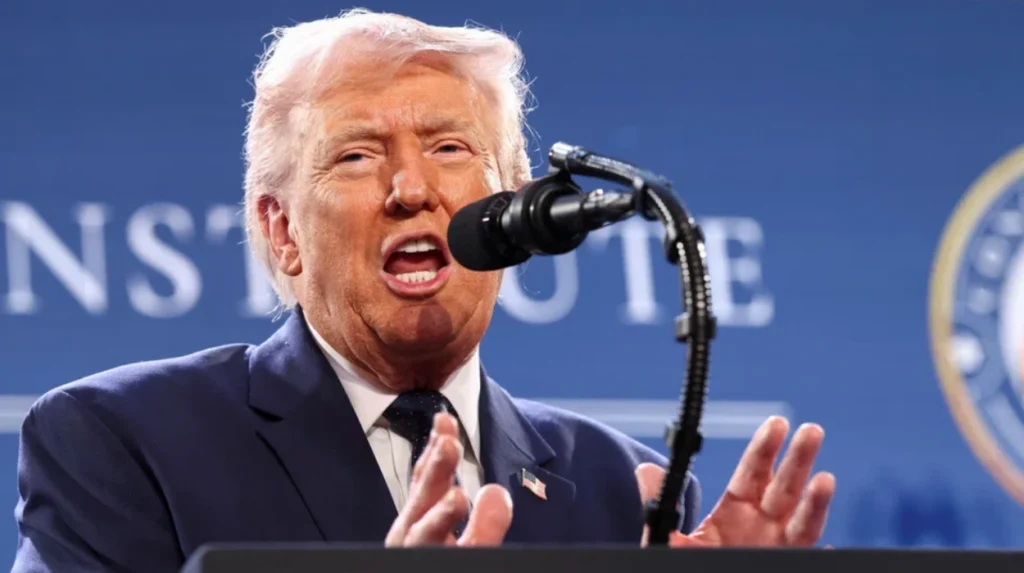
US President Donald Trump has called off his country’s plans for airstrikes against Iran, following “serious talks” and “direct appeals,” from his Gulf Arab allies, giving diplomacy an extra opportunity to work. In a twist of events for the day, which started off with a series of threats and rising fear of impending war, the situation has been momentarily held at bay.
In light of how the situation unfolded, Trump’s choice, as reported, seems to be linked to an intended military operation which was supposed to take place on Tuesday. He made it clear that the planned strike had been stopped due to the request from Gulf countries’ leadership, including Qatar, Saudi Arabia, and UAE, who asked to hold off from doing so pending ongoing diplomatic talks. This means that while military power remains a real option, diplomacy is offered only a very narrow window.
What makes the event noteworthy is the typical approach taken by the US president when dealing with foreign policy issues. Namely, it looks like he has once again combined tough rhetoric with the possibility of retreat under certain circumstances. Here, it seems that the use of force was leveraged as a means of getting stronger position in the negotiations, while Gulf countries tried to avert regional conflict.
A Threat, Then a Retreat
What stands out in terms of the episode is the swiftness with which the tone was changed. According to reports, Trump was said to have issued threats against Iran on one hand and then announced that he had called off the strike operation within the day. This could be seen as a strategy designed to create an atmosphere of pressure with a possible exit through diplomacy as the situation unfolds.
In doing this, Trump reportedly referred to the abandoned mission as a huge strike and emphasized the readiness of U.S. forces in case of failed negotiations. What this clearly indicates is that calling off the mission was not intended as giving up; instead, it is seen as creating space for successful negotiations.
That approach reflects a broader Trump doctrine that has appeared in previous crises: issue a hard deadline, raise the threat level, and then negotiate from a position of visible military readiness. For supporters, it can look like strategic flexibility. For critics, it can appear erratic and dangerous, especially when the stakes involve a direct clash with Iran.
Gulf States Step In
One of the major factors in the current developments is that of Gulf State involvement. Trump noted that the U.S. decision to pause was at their request. Media reports indicate that some of the countries requesting the United States to halt its military campaign include Qatar, Saudi Arabia and the United Arab Emirates. This factor is important in light of the fact that the involved parties are not bystanders in any sense. They form a core part of the regional security structure.
The statements from the governments in the Gulf are also suggestive of their realization that there might be an opportunity to benefit from diplomatically. Should the talks have proven serious, the attack would have ended the last hope for making a deal. In other words, it can be argued that the Gulf message to Trump seems quite clear in this regard – do not make any hasty moves because there is still a chance to reach an agreement.
These, however, are not the first attempts by the Gulf governments to influence Washington in terms of its stance towards Iran through diplomatic means. The point is that Trump’s public mention of the Gulf governments as the reason for the delay in the attack adds significant legitimacy to those efforts in the present case.
The Negotiating Track
In the heart of the situation lies the idea that there are “serious negotiations” going on. The term “serious negotiations” carries much weight. It means that any discussions are not purely ceremonial in nature, but there is common ground for postponing the attack. Nonetheless, the presence of “serious negotiations” does not mean that peace talks will come soon.
It has been revealed in the press that the discussions are about drafting a sort of agreement or memo in order to mitigate tensions. The issue is being discussed regarding sanctions, nuclear problems and the Strait of Hormuz. According to some reports, the memo is going to be short and narrow, but politically important enough to postpone the fight.
That said, the negotiating picture remains fluid. There is no indication that any deal has been finalized. Instead, the language used by Trump and the reporting around the situation points to a provisional opening: a chance to test whether diplomacy can work before military action resumes. In international crises, that kind of window can close quickly.
The biggest question is whether the talks are being used to genuinely resolve the conflict or merely to shape the next phase of pressure. Trump has made clear that any pause is conditional. If the negotiations fail, the threat of strike remains alive. That gives diplomacy a chance, but under the shadow of force.
Trump’s Message and Political Style
Trump’s handling of the episode fits a familiar political style: strong public threats, followed by a dramatic pivot that he can frame as proof of strength. The wording matters here. By saying he “called off” or “held off” the strike, he is not only signaling restraint, but also claiming control over escalation. The message to domestic and international audiences is that he is willing to act, but also smart enough to stop when circumstances change.
That framing is politically useful. It allows him to appear tough on Iran without immediately plunging the U.S. into a new war. It also enables him to present diplomacy as something that happens only because the other side recognizes the seriousness of American power. In that narrative, the strike threat is not a contradiction; it is the reason negotiations are happening at all.
Still, the volatility of the sequence raises concerns. Threatening military action and then pausing it within the same day can create uncertainty among allies, markets, and military planners. It can also complicate deterrence if foreign governments are unsure whether U.S. threats represent imminent action or tactical messaging.
What the Reports Say
The reporting on this episode has broadly aligned on the central facts: Trump says he halted a planned strike, Gulf leaders urged restraint, and negotiations with Iran are continuing. Different outlets emphasize different parts of the story, but the core message is consistent.
Some reports focus on the Gulf states’ role and the diplomatic pressure they applied. Others highlight the fact that the attack was reportedly scheduled for Tuesday, making the pause especially dramatic. Still others stress the phrase “serious negotiations,” suggesting that the administration sees a real chance for a deal if the sides can move quickly.
There are also variations in how the proposed agreement is described. Some accounts refer to a short memorandum or compact covering ceasefire terms, sanctions relief, and regional security concerns. Others emphasize broader strategic questions, including the future of maritime access through the Strait of Hormuz. What all of these descriptions have in common is that they portray the talks as incomplete, urgent, and highly consequential.
Why This Matters Now
The immediate significance of Trump’s decision lies in what it prevents for now: an escalation that could have drawn in multiple regional players and destabilized the Gulf. Even a limited strike on Iran can trigger retaliation, disrupt energy shipments, and widen into a broader military cycle. By stepping back, Trump has reduced the chance of immediate escalation, though not removed it.
There is also a broader geopolitical implication. Gulf states are signaling that they want to shape the terms of de-escalation rather than simply react to it. Their role in this episode suggests that Arab capitals may prefer managed diplomacy to open confrontation, even if they remain wary of Iran’s influence. That could matter if negotiations move from temporary restraint to a more structured agreement.
For Iran, the pause may be read as both an opportunity and a warning. On one hand, it suggests that pressure is having some effect and that talks are not meaningless. On the other hand, it confirms that the threat of force is real and that diplomacy is being conducted under intense coercive pressure. That is not a comfortable place to negotiate from, but it may be the only place available right now.
The Road Ahead
The next phase will depend on whether the negotiations produce something tangible quickly enough to keep the military option dormant. If the talks advance, Trump may present the pause as evidence that strength opened the door to peace. If they stall, he may revive the threat and argue that Iran missed its chance.
For now, the most accurate reading is that neither war nor peace has been settled. A planned strike has been delayed, not canceled in principle. The diplomatic channel is alive, but fragile. And the region’s most powerful players are trying to prevent a short-term crisis from becoming a broader conflict. In that sense, the episode is less a final turning point than a stress test for regional diplomacy. Trump’s move has bought time. Whether that time is enough to produce a deal remains the central question.