The latest Ebola outbreak has triggered a quick response from international health agencies, who are working hard to prevent the spread of the virus from one country to another. The current crisis has also led to the United States considering imposing travel restrictions from the region of the outbreak, showing how fast fears about importation of the disease can change immigration policy.
As expected, efforts to curb the Ebola virus have followed a familiar strategy: isolation of patients, contact tracing, improvement of infection control measures, and administration of vaccines, if available. However, the need for immediate action regarding the current Ebola outbreak is driven by the fact that the virus has dangerous connotations, as well as far-reaching implications.
Outbreak Raises Fresh Alarm
Epidemics involving Ebola usually start off quietly but become more intense very quickly when the virus starts spreading through communities with poor monitoring or poor healthcare facilities. It is the latter part about the speed at which news about the disease has caused global concern and discussions about travel restrictions that makes the current epidemic more worrying.
The term “global scramble” sums up the situation rather aptly. The governments, aid organizations, and other health officials now have to work within a very tight timeframe to avoid an epidemic scenario where it spreads so much that it ends up forcing many countries to change their travel policy.
The health care response is usually centered around case identification and isolation. After identification of the infection, the main problem that arises is the identification of possible contacts before the onset of the disease. Here comes the importance of contact tracing since the spread of Ebola may be escalated in case of failure of infection prevention techniques.
U.S. Moves Toward Limits
The attempt by the United States to restrict access to its borders by people from the region under threat is not new in outbreak management. The challenge facing the policymakers is how to minimize the danger of importing infected individuals while avoiding fear among citizens. It can entail increased screening on entry points, health monitoring, and in some instances restricting travel.
This strategy has been employed before in similar outbreaks where importation was thought to be high. It sounds simple enough: minimize exposure opportunities, screen incoming individuals, and buy time for containment operations in other countries to have an effect. However, it also carries with it the usual baggage of travel bans, which could disrupt family ties, business, aid operations, and health professionals.
Clearly, this response by the United States is about more than just controlling its borders. It also shows how seriously the authorities take this situation, and how fast the government can act on policy when there is an outbreak of a virus like Ebola in their sphere of influence.
Why Ebola Still Terrifies
The Ebola virus disease still ranks among the deadliest viral infections due to its severity and rapidity of destruction of individuals and whole health facilities. Transmission of this disease occurs via contact with body fluids; therefore, it is not as easily contagious as respiratory infections. Once the chain of infection is established, however, stopping it becomes incredibly difficult.
The virus is also defined by past outbreaks, which have revealed fundamental vulnerabilities in the health infrastructure and in the public communication process. In areas where there is a lack of protective gear, a poorly resourced hospital facility, and poor relations between the authorities and the population, the virus spreads quicker than containment efforts can be mounted. This is the reason why public information is as important as medical intervention: it is necessary to inform about signs, reporting procedures, and proper burial protocol.
It is expected that in the present epidemic, the public health experts will try to find a balance between the two extremes: the former may lead to undermining public confidence, while the latter may have tragic consequences for many people.
Containment Is the Priority
Containment measures typically rely on certain principles. First, there is aggressive surveillance, which involves searching for and testing suspected cases. Second, there is isolation of the confirmed cases in locations that have the capacity to contain the spread of infection. Third, contact tracing and monitoring for 21 days may be carried out, considering the period of incubation of the virus.
Another very useful measure is vaccination, if any is available. During previous outbreaks, ring vaccination was done for health care workers, contacts of the infected individuals, and people in the surrounding areas. When done early enough, it can prove very effective.
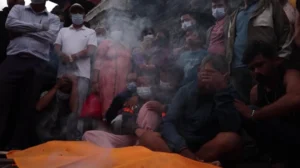
Burial practices that are safe and dignified are also important, considering that cultural funerary rituals can inadvertently increase the risk of infection among relatives in case the dead had been infected with the virus. Health care teams have resorted to working with community leaders to modify these traditions rather than outright banning them.
Regional Risk Matters
The major worry in all outbreaks of Ebola virus is not just the number of cases present in a particular community but the spread of the disease beyond the initial location. This is due to the fact that people travel from one place to another within a region on account of commerce, work, family reasons, and medical treatment among others.
This is the reason why countries bordering an area where an outbreak occurs are likely to take up surveillance measures and exchange data with their health partners. Regional cooperation can be the key to containing the outbreak or allowing it to spread in multiple countries. It also ensures that vaccines, diagnostics, and response teams are not confined to a particular country.
International health organizations typically support this effort by helping governments set up testing networks, infection prevention measures, and public communication systems. The response is often a mix of local action and external assistance, because no country confronting Ebola alone can afford to be slow or fragmented.
The Numbers That Matter
In any Ebola outbreak, the most important figures are not just total cases, but how those cases are classified. Confirmed cases, probable cases, and suspected cases each tell a different part of the story. A rise in probable cases may signal a weak testing system, while a plateau in confirmed cases may show that containment is beginning to work.
Fatality rate is another major indicator. Ebola is known for a high case fatality ratio, but the exact number varies by outbreak, strain, speed of treatment, and the strength of supportive care. Better hydration, earlier diagnosis, and quicker isolation can improve outcomes, which is why the quality of the health response matters almost as much as the virus itself.
Geographic spread also matters. A few cases in one district are very different from multiple chains of transmission across several regions. The wider the spread, the harder it becomes to trace contacts and prevent new infections. That is why reporters and officials alike watch for changes in location, not just changes in totals.
Politics And Public Health
Any travel restriction in place because of an Ebola outbreak will inevitably have some kind of political dimension alongside the health considerations. First, there will be pressure on the government to appear proactive in its approach. At the same time, there is always the danger that a policy decision will be too wide-ranging, emotional, or even misguided.
There are many examples in history to show that the policies meant to protect one country may actually end up causing more problems for others. Travelers are stigmatized, the process of transporting aid is delayed, and diasporic populations feel singled out. This is precisely why health experts recommend targeted rather than blanket travel restrictions.
At the same time, governments cannot afford to appear passive when Ebola makes headlines. The disease’s association with severe illness and high mortality means even limited exposure can produce strong public anxiety. That pressure often pushes officials toward visible action, including tighter screening and public advisories.
What Comes Next
The next phase of the outbreak will likely depend on whether public health teams can rapidly identify the source of transmission and stop it from spreading to new contacts. If vaccination campaigns are deployed efficiently and community cooperation remains strong, containment is possible. If not, the outbreak could expand and force broader international measures.
It will also matter whether health authorities can sustain transparency. Clear updates on case numbers, affected locations, lab results, and response capacity help reduce rumor and panic. In fast-moving outbreaks, silence is often filled by speculation, and speculation can be as damaging as the virus in undermining trust.
For the U.S. and other countries, the challenge is to stay vigilant without overcorrecting. Entry restrictions, if used, should be matched with public health logic and paired with support for the frontline response in the affected region. The best defense against Ebola remains not isolation from the world, but rapid containment on the ground.
The current outbreak is a reminder that even in 2026, a virus first known for remote and devastating flare-ups can still force global institutions to react quickly. The outcome will depend on speed, coordination, and public trust — the three things every outbreak tests first.