The Pakistan-led Iran talks have emerged as a fragile channel in a region dominated by military posturing and mutual suspicion. While former President Trump has publicly asserted confidence in a potential deal with Tehran, the broader context suggests that diplomatic optimism is constrained by persistent war pressures. Israeli military activity, U.S. deployments in the Gulf, and Iran’s entrenched mistrust collectively narrow the space for compromise, leaving any negotiation vulnerable to sudden derailment.
The talks offer a rare avenue for indirect communication at a time when direct US-Iran engagement remains politically complicated. Pakistan is coordinating with Saudi Arabia, Türkiye, and Egypt, creating a multilateral framework that lends legitimacy to the effort. Yet the very need for mediation underscores the depth of mistrust: diplomatic openings can be quickly overshadowed by battlefield dynamics, and any temporary alignment may collapse under renewed regional pressure.
Trump’s optimism versus negotiating constraints
The current phase of negotiations illustrates the contrast between public signals and substantive challenges. While the U.S. projects confidence, underlying expectations and demands complicate the path toward an agreement. This section examines both sides’ approaches to the talks and the structural limits that shape outcomes.
Washington wants momentum
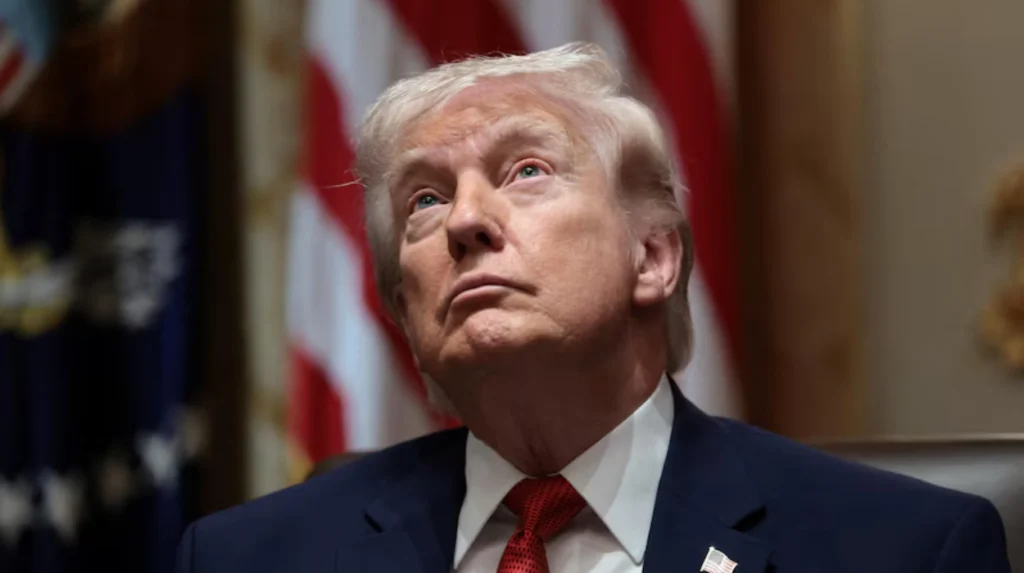
Trump’s statements are crafted to signal progress and executive control. By describing negotiations as “going extremely well,” the administration aims to reassure allies, maintain leverage, and project stability to domestic audiences. Such rhetoric also serves a strategic purpose: demonstrating activity in the diplomatic sphere helps prevent adversaries from interpreting U.S. policy as reactive or disorganized.
Despite this public display, the messaging does not necessarily indicate convergence on the substantive elements of a deal. Confidence-building in diplomacy often coexists with persistent gaps in expectations, particularly when the issues touch on core strategic concerns like nuclear capability and regional influence.
Bridging expectations and reality
Reports suggest that the U.S. has communicated ambitious requirements via Pakistani intermediaries, covering nuclear restrictions, missile development, and regional military behavior. These demands go beyond minor technical adjustments; they strike at the heart of Iran’s strategic identity. Closing such gaps would require a high degree of trust, carefully sequenced reciprocity, and credible verification measures—conditions that are currently absent.
Any misalignment between U.S. expectations and Iran’s willingness to compromise could create the perception that diplomacy is being used to constrain rather than genuinely engage Tehran, limiting the effectiveness of the Pakistan-led channel.
Tehran is reading pressure, not partnership
Iran’s strategy is informed by skepticism over the process itself. Officials are concerned that talks may be leveraged to manage escalation rather than produce meaningful concessions. The presence of ongoing military buildup in the Gulf reinforces this suspicion, making trust-building a central obstacle.
For Tehran, a deal perceived as stripping leverage without offering security guarantees would be politically unacceptable. Hardline constituencies closely monitor negotiations, and any perceived capitulation could destabilize domestic consensus. This emphasizes that successful diplomacy must preserve Iran’s strategic dignity alongside technical compliance.
The regional setting is working against compromise
Before subtopics, it is important to understand that regional dynamics compound the difficulties of negotiation. The Gulf’s security environment is highly sensitive, with military signals and alliances shaping perceptions as much as formal dialogue. The next section explores these pressures and the influence of regional actors.
Military pressure changes perceptions
The U.S. military buildup, intended as deterrence, can simultaneously appear coercive to Iranian decision-makers. In such a climate, the incentives to negotiate in good faith are weakened, as parties fear that concessions could be exploited. The events of 2025 have left the Gulf more militarized and politically distrustful, meaning the talks begin from a disadvantaged baseline relative to previous U.S.-Iran engagement rounds.
Even minor movements in troop deployments or naval exercises are interpreted strategically, further complicating the diplomatic environment. Negotiation under these conditions requires careful signaling to prevent misreading of intentions.
Israel remains a spoiler risk
Israel’s involvement adds another layer of complexity. While Washington may seek limited agreements to prevent immediate conflict, Israel’s approach often emphasizes sustained pressure to reduce Iran’s capabilities. This divergence creates strategic incoherence, as any U.S.-Iran understanding may be undermined by Israeli contingency planning.
Iran observes these dynamics closely. Awareness of potential misalignment between Washington and Tel Aviv fosters skepticism about the durability of any deal, reinforcing the need for a negotiation framework that provides Tehran credible assurances against external disruption.
Pakistan’s role is useful, but limited
Even in a constrained environment, Pakistan provides essential mediation capabilities. Its involvement is shaped by regional access, credibility, and the practical need to prevent escalation from spilling over into neighboring states. This section examines why Islamabad matters and the limits of its influence.
Why Islamabad matters
Pakistan’s access to both Gulf states and Iran positions it as a viable intermediary. Direct U.S.-Iran communication is politically sensitive, making third-party mediation critical for message transmission and engagement continuity. Islamabad’s ability to maintain working relations with multiple parties allows it to serve as a stabilizing influence, particularly when tensions escalate.
Practical incentives for mediation
Beyond diplomatic facilitation, Pakistan has strong national interests in limiting Gulf instability. Escalation threatens energy security, economic stability, and regional trade routes. By hosting ministers and supporting backchannel diplomacy, Pakistan demonstrates an active interest in reducing the risk of broader conflict while positioning itself as a credible mediator.
Limits of mediation
However, Pakistan cannot resolve the underlying strategic contradiction between U.S. pressure and Iranian security priorities. It cannot force the U.S. to provide guarantees that Tehran will trust, nor compel Iran to accept demands perceived as disarming. Its role is therefore constrained to managing early-stage dialogue, reducing miscalculations, and creating minimal structures that allow the parties to continue engagement without immediate escalation.
What to watch next?
The immediate months will determine whether the talks remain a stabilizing factor or collapse under pressure. Timing, signaling, and credibility will define outcomes more than optimistic public statements.
Timing over language
The effectiveness of the talks will depend on the continuation of backchannel contacts and the ability to manage the perception of progress. If Iran consistently rejects core proposals, the gap between public optimism and private bargaining may widen. Yet, if Pakistan can preserve engagement over time, it may create the crucial element of crisis diplomacy: strategic pause.
A fragile pause, not a settlement
At present, the talks are more likely to create a temporary pause in escalation rather than a comprehensive agreement. While slowing confrontation, they do not fundamentally alter strategic incentives. The next rounds will test whether both sides still perceive negotiation as less costly than silence, and whether incremental progress can create political space for broader, more durable solutions.
As the Pakistan-led Iran talks continue, the interplay between public optimism and structural constraints highlights the complexity of diplomacy in a militarized region. Even incremental pauses carry significance, shaping the trajectory of Gulf security and influencing the decisions of states that remain vigilant against rapid escalation. The next phase will reveal whether this fragile channel can maintain momentum long enough to prevent miscalculation from hardening into conflict.