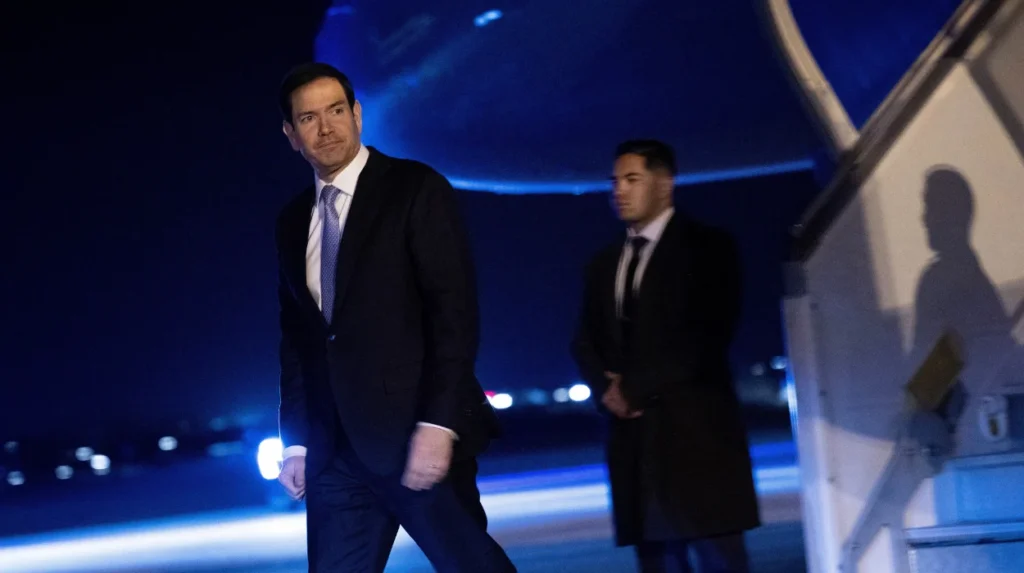
Secretary of State Marco Rubio’s visit to Paris occurs amid intensifying scrutiny of the U.S.–led war against Iran. As the conflict enters its fourth week, the administration seeks to secure firm political backing from core European and Asian partners. At a G7 foreign‑ministers’ meeting, Rubio is tasked with framing the conflict as necessary for safeguarding global energy flows, degrading Iran’s coercive capabilities, and stabilizing a volatile region. Yet European officials remain skeptical about Washington’s strategic planning and the campaign’s open‑endedness, reflecting the ongoing tension between U.S. unilateralism and allied caution.
The trip underscores the administration’s urgent need for political cover and potential operational support. European capitals, grappling with rising energy prices and the social fallout from regional instability, are wary of being drawn into what they perceive as a US-driven initiative lacking a clearly defined exit strategy. Analysts note that Rubio’s mission is as much about reassuring allies as it is about legitimizing U.S. military choices, highlighting the delicate balance of coalition diplomacy in a rapidly evolving conflict.
U.S. framing and the Strait of Hormuz
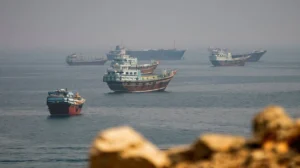
A central pillar of Rubio’s diplomatic pitch emphasizes the security of the Strait of Hormuz as a global, rather than solely American, interest. He has reportedly told European officials that “very little of our energy comes through the Strait of Hormuz. It’s the world that has a great interest in that, so they should step up and deal with it,” signaling Washington’s intent to share or shift the burden of Gulf security. The administration is keen on obtaining a G7 posture that combines naval presence, coordinated sanctions, and diplomatic pressure, which would distribute both financial and political responsibility across the alliance.
The Trump administration has also framed an urgent deadline for Iran: reopen the Strait by April 6, or face the destruction of key infrastructure, including energy and power facilities. European leaders, however, remain concerned that this ultimatum may escalate the conflict without ensuring a sustainable political outcome. Analysts in Paris and Berlin highlight that rigid timelines and punitive measures often reduce diplomatic flexibility, creating friction between U.S. military objectives and allied risk thresholds.
European skepticism and de‑escalation demands
Across capitals, European governments have voiced significant reservations. France, Germany, Italy, and the United Kingdom have emphasized that they were not consulted before the initiation of the war and are reluctant to commit forces without a clearly defined endgame. Germany’s defense minister has expressed blunt criticism, warning that Washington appears to have “no exit strategy,” a sentiment reflecting broader European apprehension about repeating the costs of open-ended Gulf operations.
At the same time, the European Union has highlighted the global economic and humanitarian consequences of sustained conflict. Kaja Kallas, EU foreign-policy chief, stressed that “the G7 will focus on how to drive de-escalation in the Middle East,” signaling a divergence from U.S. priorities, which emphasize military pressure to achieve Tehran’s compliance. Energy-market volatility, disrupted supply chains, and regional civilian risks weigh heavily on allied calculations, reinforcing the perception that de-escalation may be both urgent and necessary.
Iranian retaliation and U.S. vulnerability
Rubio’s diplomatic effort coincides with a spike in Iranian retaliatory activity. On March 27, 2026, Iranian missiles and drones struck Prince Sultan Air Base in Saudi Arabia, wounding at least a dozen U.S. personnel, with two in serious condition, and damaging KC‑135 aerial refueling aircraft. The attack highlighted the vulnerabilities of even heavily defended U.S. installations and underscored the ongoing risk posed by Tehran’s regional capabilities.
For European allies, these incidents illustrate the human and material costs of U.S. policy. Capitals weighing participation in the conflict are increasingly attentive to risk exposure, particularly as attacks threaten wider regional escalation. Analysts note that Tehran’s calibrated retaliation is intended to reinforce the perception of U.S. overextension while signaling that escalation carries consequences, complicating coalition building and potentially constraining further support from reluctant partners.
The asymmetry of de‑escalation demands
A key tension at the G7 talks is the differing definition of de-escalation. For the United States, it is a post-concession phase: Tehran must first demonstrate compliance by reopening the Strait of Hormuz and altering regional behavior before Washington reduces military pressure. By contrast, European leaders frame de-escalation as a priority that should commence immediately to limit human, economic, and geopolitical costs.
This divergence reflects broader differences in strategic culture and operational expectations. U.S. officials operate within a coercive framework that prioritizes achieving defined outcomes before easing pressure. European officials, however, emphasize risk mitigation, civilian protection, and political sustainability. The resulting asymmetry means that even if consensus emerges on the need for dialogue, sequence and timing remain contested, potentially slowing cooperative responses.
The deeper test of U.S. leadership
Rubio’s mission in France also functions as a test of Washington’s capacity to sustain coalition leadership in a fractured global environment. The administration seeks allies to share the operational and political burden, echoing past coalition logic from Iraq and Afghanistan. Yet European governments are reluctant to engage in high-risk operations without clarity on objectives, timelines, and domestic accountability. Analysts in London and Brussels note that the willingness of allies to support the war materially or politically is increasingly contingent on Washington’s ability to demonstrate strategic coherence.
The G7 discussions in Paris may thus determine not only the short-term trajectory of the Iran war but also the longer-term credibility of U.S. leadership among traditional partners. If European support remains limited, Washington may be forced to shoulder the most intense phases alone, highlighting the broader challenge of coalition management in multipolar security environments. How Rubio navigates these dynamics will shape perceptions of U.S. influence, alliance cohesion, and the feasibility of sustaining military campaigns in politically sensitive theaters.
Navigating a complex strategic landscape
As the Iran war continues to unfold, Rubio’s diplomatic efforts are revealing the structural pressures inherent in U.S. foreign policy. The administration must reconcile the imperative to maintain credibility in Gulf operations with the political and operational limitations of its European partners. Rising casualties, regional attacks, and the economic impact of energy-market disruption intensify pressure on allies, complicating coalition-building efforts. Analysts emphasize that the interplay between military strategy, political endurance, and alliance management will be as consequential for the conflict’s outcome as the operations on the ground.
The challenge facing Rubio in Paris exemplifies the broader strategic paradox confronting the United States: pursuing coercive objectives abroad while maintaining alignment with partners whose priorities may differ sharply. How effectively Washington navigates this delicate balance may define both the trajectory of the Iran war and the durability of U.S. alliances in an era of increasingly complex, multipolar security competition.