The United States has long demonstrated unmatched capability in launching military operations with speed and precision. From rapid deployment logistics to advanced airpower, its forces consistently achieve early tactical success. These strengths have been evident across multiple conflicts, where initial objectives are often met within weeks.
However, this operational dominance frequently contrasts with difficulties in concluding engagements. The absence of clearly defined political end states has led to prolonged involvements, where early victories transition into complex stabilization missions. This recurring gap between battlefield success and sustainable outcomes remains a defining feature of modern US military engagements.
Strategic planning and the absence of clear end states
The challenges in war termination often originate at the planning stage, where offensive strategies are prioritized over long-term political outcomes. This imbalance shapes the trajectory of conflicts from their inception.
Limited focus on termination strategies in doctrine
Military doctrine has historically emphasized decisive action in the opening phases of conflict. While operational planning is detailed and resource-intensive, exit strategies are often underdeveloped or deferred. This creates a structural weakness, as post-conflict scenarios require as much preparation as initial engagements.
In many cases, planning for stabilization and governance begins only after combat operations are underway. This reactive approach complicates efforts to transition from military control to sustainable political arrangements.
Mission creep and expanding objectives
Mission creep has repeatedly altered the scope of U.S. interventions. What begins as a targeted operation frequently evolves into broader ambitions, including state-building and institutional reform. These expanded objectives extend timelines and increase resource demands.
The shift from counterterrorism to nation-building illustrates how initial goals can transform under changing political and security conditions. Without clearly defined limits, operations risk becoming open-ended commitments.
Historical patterns shaping present-day military engagements
Past conflicts continue to inform current strategic debates, highlighting persistent patterns in how the United States approaches war and its aftermath.
Lessons from Vietnam and Iraq
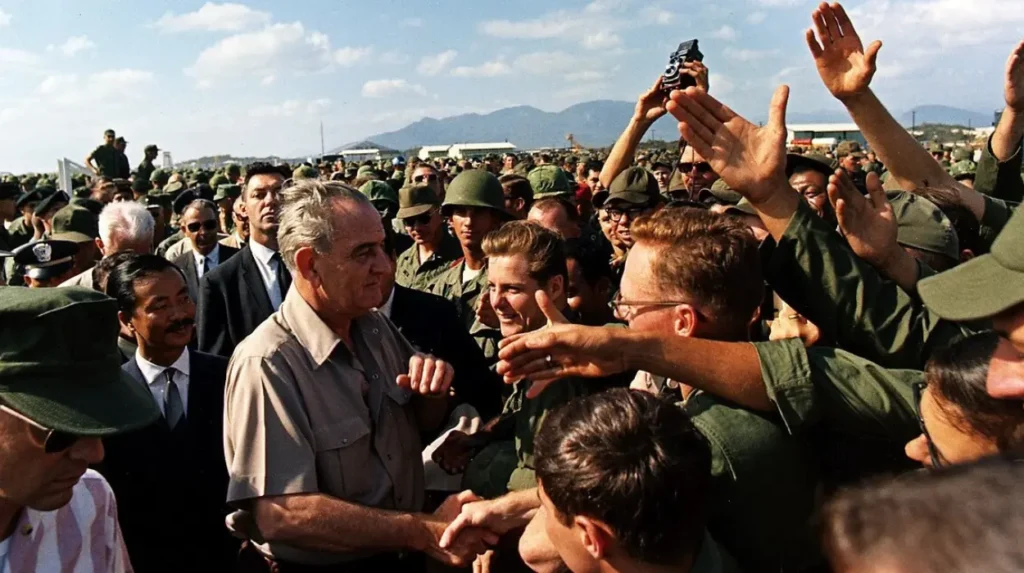
The Vietnam War and the Iraq War remain key reference points in understanding the challenges of war termination. In both cases, early military success did not translate into stable political outcomes.
Insurgencies, sectarian divisions, and governance failures prolonged these conflicts, demonstrating the limits of military power in achieving political objectives. These experiences continue to shape strategic thinking, yet similar patterns have re-emerged in more recent engagements.
Afghanistan and prolonged stabilization efforts
The War in Afghanistan further illustrates the difficulty of transitioning from military victory to lasting stability. Initial operations successfully disrupted existing power structures, but long-term governance challenges persisted.
Even after formal withdrawal, the legacy of extended involvement has influenced policy debates into 2025 and beyond. The scale of investment and limited durability of outcomes have reinforced concerns about planning deficiencies.
Domestic political dynamics and their impact on war endings
Internal political considerations play a significant role in shaping how and when military engagements conclude. These dynamics often complicate efforts to establish clear exit strategies.
Congressional constraints and public fatigue
War fatigue among the public and legislative scrutiny from Congress have become increasingly influential. By 2025, debates over authorizations for military force reflected growing reluctance to sustain indefinite operations.
This environment creates a paradox where leaders seek to reduce commitments while avoiding perceptions of strategic retreat. The result is often a partial disengagement that lacks a definitive endpoint.
Balancing credibility and withdrawal risks
Maintaining credibility with allies and deterring adversaries remains a central concern for policymakers. Decisions to withdraw are weighed against the potential impact on global perceptions of reliability.
This balancing act can delay or complicate exit strategies, as leaders attempt to preserve strategic positioning while managing domestic expectations. The interplay between these factors contributes to prolonged engagements.
Resource allocation and interagency coordination challenges
The distribution of resources across military and civilian institutions significantly influences the ability to conclude conflicts effectively. Imbalances in this area have been a recurring issue.
Emphasis on military spending over stabilization tools
Defense spending in 2025 continued to prioritize offensive capabilities, reflecting the United States’ focus on maintaining military superiority. However, investments in diplomacy and reconstruction have not kept pace.
This disparity limits the capacity to address post-conflict challenges, where civilian expertise is essential. Without adequate support for governance and development, military gains are difficult to sustain.
Coordination gaps between key institutions
Effective war termination requires coordination between the Department of Defense, State Department, and development agencies. Yet institutional silos often hinder collaboration.
Reports from 2025 highlighted instances where military successes were not consolidated due to insufficient civilian follow-through. Bridging these gaps remains a critical challenge for future operations.
Global shifts complicating U.S. war termination strategies
The international environment has evolved significantly, introducing new variables that affect how conflicts are initiated and concluded.
Multipolar competition and strategic constraints
The rise of competing powers has created a more complex strategic landscape. Engagements are no longer isolated, as actions in one region can have broader geopolitical implications.
This multipolar context limits flexibility in war termination, as decisions must account for the reactions of other major actors. Strategic calculations have become more intricate, influencing both entry and exit strategies.
Hybrid threats and evolving conflict dynamics
Modern conflicts increasingly involve nonstate actors, cyber operations, and indirect engagements. These factors blur the line between war and peace, complicating traditional notions of victory and termination.
In 2025, assessments of hybrid conflicts emphasized the difficulty of defining clear endpoints. Without identifiable conclusions, engagements risk استمرار becoming indefinite.
Technological advances and doctrinal adaptation requirements
Emerging technologies are reshaping how wars are fought, but their impact on war termination remains uncertain. While offensive capabilities have improved, translating these advances into strategic outcomes requires doctrinal evolution.
Precision warfare and its limitations
Advances in precision targeting and intelligence have enhanced the effectiveness of initial operations. These tools enable rapid disruption of adversary capabilities, reinforcing the United States’ offensive strength.
However, precision alone does not resolve underlying political or social dynamics. The gap between tactical success and strategic resolution persists, highlighting the limits of technological solutions.
The need for integrated strategic planning
Addressing war termination challenges requires integrating military, political, and economic considerations from the outset. This includes developing multiple end-state scenarios and aligning resources accordingly.
Efforts in 2025 to incorporate scenario planning and predictive analysis represent steps in this direction. Yet implementation remains uneven, suggesting that doctrinal adaptation is still in progress.
Evolving expectations for future U.S. military engagements
The pattern of strong offensive capability combined with weak war wrap-up continues to shape perceptions of U.S. military strategy. As global conditions evolve, pressure is mounting to address this imbalance.
Future engagements are likely to be judged not only by their initial success but by their ability to achieve sustainable outcomes. This shift reflects a broader recognition that military power must be integrated with political strategy to be effective.
The trajectory of U.S. military operations raises fundamental questions about how success is defined in contemporary conflict. If early victories no longer guarantee lasting stability, the emphasis may shift toward designing endings as carefully as beginnings, leaving open whether future strategies will finally align decisive force with durable peace or continue to navigate the same unresolved tensions.