The United States Armed Forces and the Israel Defense Forces had allegedly launched operations against missile installations, naval targets and the strategic infrastructure in various provinces in Iran. The use of long-range bombers such as the Northrop B-2 Spirit stealth aircraft was used to attack hardened military installations.
According to statements of Donald Trump, the campaign was tailored to have a destabilizing effect on the military command structures of Iran and prevent the possibility of a protracted conflict on the ground. Nevertheless, during the third week, analysts found the conflict to be bigger geographically and politically than previously thought.
The neighboring nations were also involved in the conflict into an unstable security situation with retaliatory attacks and proxy wars being conducted in various regions of the Middle East.
Casualty patterns highlight human and military toll across region
The human effect of the conflict grew even more apparent in the third week when the casualty numbers of various countries started to appear.
Civilian and military losses in Iran
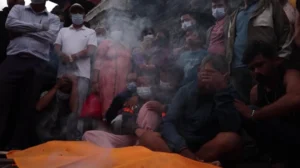
By early March 2026, the Iranian authorities announced their death toll in the thousands with hundreds being civilians. Health officials reported that kids and the non combatants were a large proportion of the airstrike victims that were subjected to military installations in the cities.
Destruction of infrastructure in the eyes of humanity weighted in. Several cities reported disruption in hospitals and medical centers and emergency responders had difficulties functioning under the continuous air raid warning.
The attacks, as defined by the Iranian officials, were considered as assaults on national sovereignty, since the intensity of bombardment was well beyond the mentioned goals of incapacitating military capabilities.
Regional casualties and coalition losses
There were also casualties on the part of coalition forces. It was also reported that a number of U.S. military members were assassinated in retaliatory attacks, which were done in the form of retaliatory missiles launched on installations in the Kuwait region.
The surrounding countries were also affected through civilian populations. Border-based rocket and missile fire resulted in the deaths of people in sections of Israel and other neighboring states.
The topicality of these losses showed how fast the localization of military operations would transform into a more comprehensive humanitarian crisis when the actions of the main powers and the regional actors coincide.
Military strategies driving the third week escalation
The tactics that were used in the campaign show how the new warfare incorporates traditional airpower with precision strikes and information superiority.
Air campaign targeting critical infrastructure
The initial stages of the campaign were very intense on the missile storage sites and naval bases of Iran. The U.S. and Israeli planners aimed to counter the capability that can pose threats to the shipping routes and military bases of the allies in the region.
Defense analysts were releasing satellite imagery that indicated that dozens of missile launch platforms and naval assets along the coastline were destroyed. A number of Iranian ships sailing in the Persian Gulf were allegedly sunk after co-ordinated attacks.
These operations were the reflection of the degradation strategy towards the capabilities of Iran to maintain the long-term military retaliation when the use of direct ground operations was minimized.
Iranian missile and proxy retaliation
Iran answered by firing ballistic and cruise missiles to targets of strategic locations in the region. The air defense systems were able to intercept some of the projectiles but they caused damages in the populated areas.
Another aspect that Iranian military planners used to mount pressure on coalition forces is the use of regional proxy networks. These organizations launched attacks on military bases and supply lines in adjacent states expanding the area of operation.
Military analysts noted that this approach enabled Iran to respond without sending its full conventional military strength hence maintaining strategic depth.
Global order strains emerging from the conflict
Outside the developments on the battlefield, the third week of hostilities revealed the beginning of tension in the international system.
Divergent positions among major powers
The United Nations Security Council members had a hard time coming to an agreement regarding diplomatic solutions to the conflict. Various resolutions that demanded ceasefires or investigations would not go through due to geopolitical differences.
The big players like China and Russia were worried of the increase without involving themselves in the actual war. The two governments insisted on negotiations but condemned unilateral military intervention.
These rifts highlighted the fact that strategic conflicts between the permanent members of the Security Council may make international conflict management trickier.
Shifting alliances and economic considerations
Another effect on diplomatic positioning was energy markets and economic connections. Iran was a significant source of energy to various emerging economies and the western states considered the war in the context of regional security alliances.
Some of the economic statistics of 2025 showed that certain nations had broadened trade with Iran despite sanctions, which indicates that geopolitical groups are breeding economic pragmatism, alongside political alignment, in their creation.
The war hence was being fought in an international context that was already marked by multipolar rivalry and alliances.
Regional spillover across Middle Eastern states
Week three of war demonstrated how the geopolitical position of the neighboring states was prone to the indirect effects of the significant power clash.
Lebanon and militia involvement
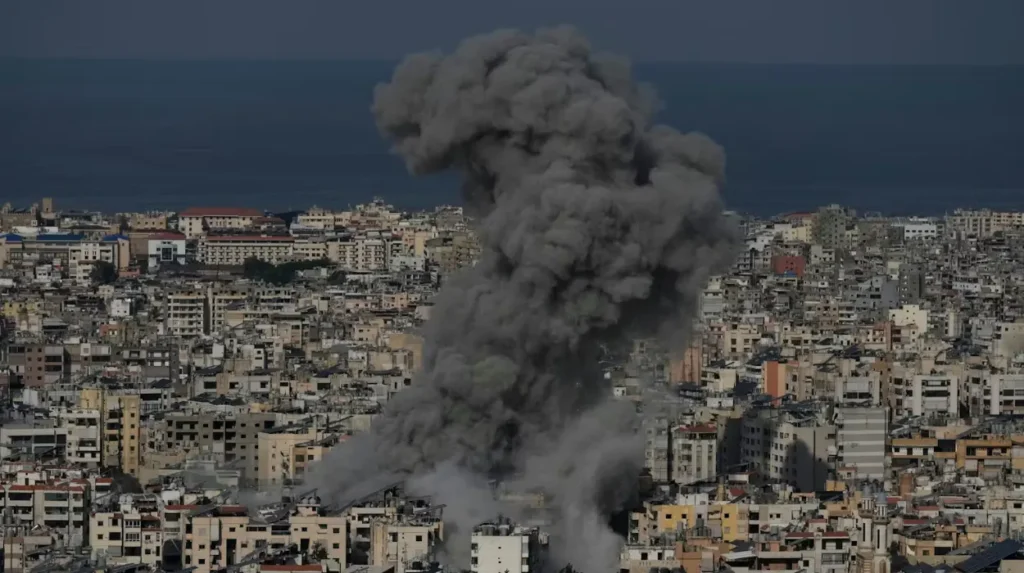
The situation worsened in Lebanon when Islamic extremists who were affiliated with Iran fired rockets at Israeli soil. Israel retaliated by airstriking alleged launch bases and logistical facilities.
Such interactions threatened to rekindle a wider conflict along the Lebanese border, which led to the concern of diplomats that regional war could arise as a result of a limited conflict.
Dislocations of human population and humanitarian issues grew in the regions along the frontier as the civilians fled the violence.
Security risks for Gulf states
Host countries to the Western military bases were also at increased risk throughout the war. The vulnerability of the strategic infrastructure in the Gulf region was evident with missile attacks against the installations of the coalition.
Other states like Bahrain and Jordan tightened their air defense to intercept the projectiles coming in and the protection of the civilian population.
These events showed how regional security structure may be tense in case the major powers undertake military missions in the regions of states that are closely intertwined.
Diplomatic stalemate and failed mediation efforts
The campaigns to halt the conflict have faced considerable challenges with the diplomatic efforts failing to gain traction.
Collapse of negotiation frameworks
Attempts to revive negotiations through international mediation faced resistance from both sides. Earlier diplomatic frameworks established during talks in 2025 had already weakened due to disputes over nuclear monitoring and sanctions relief.
Negotiators in Geneva attempted to organize dialogue sessions aimed at de-escalation, but disagreements over preconditions prevented meaningful progress.
The absence of a widely accepted diplomatic framework complicated efforts by neutral states seeking to facilitate negotiations.
Neutral states and shifting diplomatic roles
Several countries attempted to maintain neutrality while encouraging dialogue. Nations with economic ties to both Western powers and Iran sought to position themselves as potential intermediaries.
These diplomatic efforts underscored the difficulty of balancing strategic relationships during periods of intense geopolitical confrontation.
Strategic implications of third week realities for global stability
The concept of Third week realities encapsulates more than battlefield statistics. It represents the moment when the broader implications of a conflict begin to reshape international relations, economic alignments, and regional security calculations.
As casualties mount and military operations continue, governments around the world confront difficult questions about escalation, deterrence, and the sustainability of prolonged conflict. The evolving situation demonstrates how quickly localized military objectives can intersect with larger geopolitical rivalries.
Whether diplomatic channels can regain momentum before further escalation occurs remains uncertain. The unfolding dynamics suggest that the third week of fighting may ultimately be remembered less for individual strikes and more for revealing how fragile the current global security order has become and how many competing interests now influence the path toward either de-escalation or deeper confrontation.