Military buildup changed the regional tensions into multi-front conflict too quickly. Air and missile attacks by the United States and Israel on nuclear plants and command posts in and around Tehran were one of the most direct military actions the nations had ever had with each other in decades.
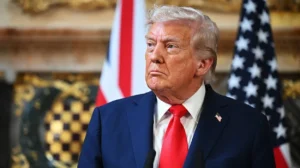
Publicly characterized by Donald Trump as Epic Fury, the operation marked a major change to the undercover competition that had characterized much of 2025. At the time, the strategic contention would involve cyber operations, sabotage attacks and few drone attacks instead of massive military ones.
During seventy-two hours, Iranian launches of ballistic missiles and drone attacks made hostilities go outside of Iranian territory. Tehran-allied armed groups opened further fronts and this indicated that retaliation was not going to be just a one front affair. The fast growth proved that the alliances and proxy networks at the regional level were going to predetermine the course of the confrontation.
Iran’s retaliatory strategy reshapes regional military dynamics
The reaction of Iran showed that the country has adopted a multiplied approach to include missile attacks, drone attacks, and mobilization of allied military formations in multiple nations. This method is commonly referred to as asymmetric warfare by security analysts, which is intended to deal with technologically better enemies by expanding the battlefield.
The retaliation was also centralized, which was based on lessons learned in previous conflicts in 2025, as Iran was boosting military drills and extending the scope of its missile testing systems but also under mounting economic sanctions.
Missile and drone arsenal deployment
The initial phase of retaliation involved the deployment of a few ballistic missile systems by Iran with some of its variants like the Fateh-110 and Khorramshahr. They fired these weapons at various strategic sites in the Gulf region which hit military installations and facilities connected to the allied troops.
It was reported that the locations in Kuwait and the United Arab Emirates were targeted by missile salvos. Residential towers and commercial buildings were reported to be damaged in various cities, which damage assessments indicate can reflect how one can barely distinguish a military and a civilian space in the warfare of modern times.
These attacks came after Iranian military drills that were held in 2025, as the authorities tested the capabilities of new types of missiles and extended drones. The accumulation indicated that Tehran had been working towards an escalation situation way before the open hostilities.
Proxy networks activation across the region
The mobilization of local proxy organizations became some of the notable aspects of the retaliatory campaign in Iran. Hezbollah fighters attacked northern Israel with massive rocket attacks in southern Lebanon which put Israeli air defense systems on round the clock operations.
At the same time, American bases occupied by militia groups were attacked in Iraq. These attacks were indicative of the wider policy of spreading the pressure more into a number of geographic fronts rather than targeting retaliation in one theater.
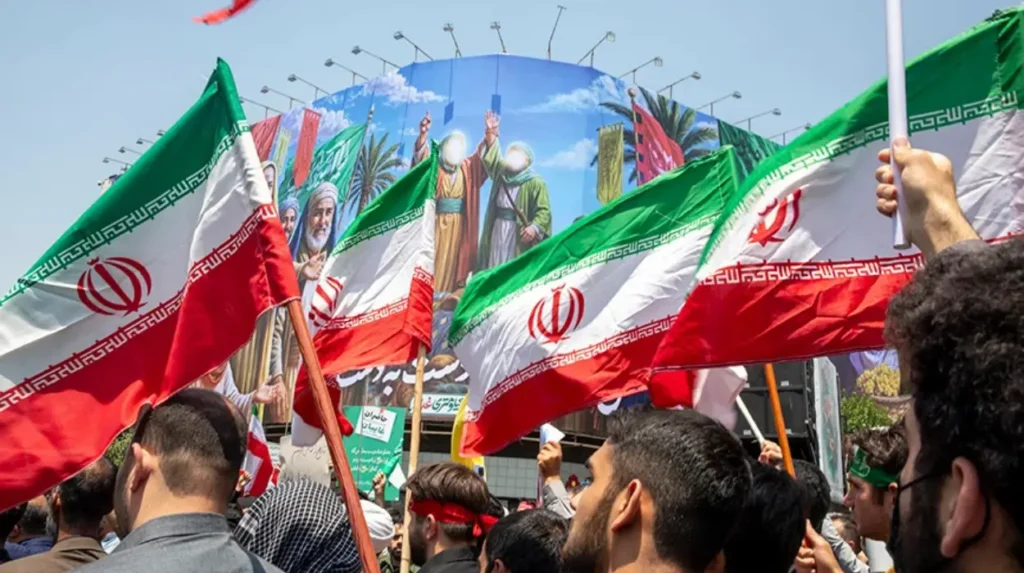
The Iranian leadership presented the campaign as a well-organized counter to external aggression. Ali Khamenei was reported to have made a call to mobilize fully before his alleged death in an Israeli strike by unifying all state military forces with allied non-state actors in the region.
Gulf states confront new strategic pressures
The extension of enmity against the Gulf states compelled the governments of these regions to review their security position. Some of the nations that enjoyed a historical status of financial centers were suddenly confronted with the threat of becoming direct participants in an escalating conflict.
The alert of missiles, air defense interceptions, and drone incidents highlighted the instability of infrastructures being close to the key shipping lines and energy export routes.
Defensive posture of Gulf monarchies
The governments of the United Arab Emirates and Kuwait announced the loss of civilians as a result of missiles, attacks by drones. Those events caused the much-needed security talks between the Gulf states and their foreign counterparts.
The Bahrain leadership termed the attacks as a national sovereignty violation and hastened measures to form regional defense cooperation. This was followed by joint air patrols and wider missile defense deployments, which built upon security partnerships that have been established under the Abraham Accords.
Such nations are becoming more concerned with their developed infrastructure (ports, airports, and financial centers) as the possible strategic aims of any future confrontation.
Saudi Arabia’s strategic calculations
Saudi Arabia responded very well to events, although it did not face the first wave of retaliation. The Houthi forces drone and missile attacks mentioned earlier in 2025 by the officials disrupted the oil exports of the Saudis, at least temporarily.
The leadership in Riyadh has indicated its reservations into taking action against the influence of Iran without necessarily intervening into the rising military game. According to analysts, this stance is indicative of the dual interests that the kingdom has in ensuring that the region is stable and at the same time securing the critical energy facilities.
Israel confronts a multi-front security challenge
The strategic environment of the country shifted drastically with hostilities spread out in the north of Israel and further. Fire of rockets in southern Lebanon caused a response of air defense and the Israeli troops reinforced its activities against the Hezbollah positions.
The confrontation has extended the Israeli military resources to multiple theaters at the same time.
Northern front escalation
Citizen deaths and property damage were the results of rocket attacks fired out of Lebanon that hit the communities of the north of Israel. With this, the Israeli forces responded with airstrikes on weaponry stores and logistical systems associated with Hezbollah.
The Israel officials threatened that with continued rocket attacks, the confrontation would escalate to a wider scope along the Israel-Lebanon border. Military strategists are worried that the engagement in prolonged warfare may involve more participants in the conflict.
Strategic messaging from Israeli leadership
Prime Minister Benjamin Netanyahu positioned the escalation as a demonstration of the bigger regional interests of Iran. Israeli leaders claim that they need to deal with the proxy organizations of Tehran in order to ensure national security in the long run.
It is the same view as that of Israel in making strategic changes after the Gaza ceasefire in 2025, which enabled it to devote more military presence to the northern defense and deterrence of the region.
Global powers respond to widening regional conflict
The response world reaction towards the escalation is a sign of internal conflicts between the world powers on how the right course of action should be taken. Governments in Europe, Asia, and North America have raised alarm over the fact that the conflict has been in a position to disrupt the global markets and security arrangements.
The inclusion of a variety of regional actors also increases the chances of localized conflicts developing into a bigger geopolitical conflict.
Russia and China’s cautious diplomacy
Russia and China officials made cautious statements asking all parties to restrain themselves. Moscow was also reported to have been speeding up military equipment deliveries to Iran without engaging in military action.
Beijing was concerned with defending its economic interests in the area, especially infrastructure projects which are related to the Belt and Road Initiative. As the tension rose, Chinese citizens were also evacuated in thousands in the Gulf countries.
Western alliances and NATO monitoring
NATO members augmented sea patrols in the eastern Mediterranean and in the waters nearby. The western governments were alarmed by the possibility of destruction of the nuclear installations in Iran, especially those around the coastal town of Bushehr.
The surveillance is in line with warnings by the International Atomic Energy Agency in 2025 that military attack around the nuclear facilities is everything that would affect the environment in a negative manner.
Humanitarian and economic toll spreads across the region
The conflict has already produced significant humanitarian consequences. Casualty estimates suggest thousands of deaths across Iran and neighboring countries during the first weeks of fighting.
Civilian infrastructure has also suffered extensive damage. Schools, hospitals, and residential districts in multiple cities have been affected by missile strikes and counterattacks.
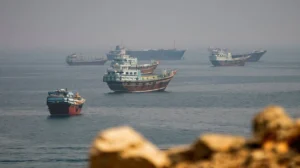
Economic repercussions are equally severe. Energy markets reacted sharply to the escalation, pushing global oil prices toward $150 per barrel amid fears of disruptions to shipping routes in the Strait of Hormuz.
Infrastructure damage in several Gulf ports further complicated trade flows, raising concerns about long-term economic instability across the region.
The widening confrontation highlights how quickly localized conflicts can transform into region-wide crises. Iran’s retaliatory strategy, built around missile capabilities and proxy alliances, has altered the strategic calculations of nearly every government in the Middle East. As military operations continue and diplomatic channels struggle to regain momentum, the emerging geopolitical landscape suggests that the new battle lines stretching from Tehran to the Gulf may shape regional security for years to come unless an unexpected opening for negotiation emerges before the conflict hardens into a prolonged regional standoff.