The latest quarterly findings from the International Atomic Energy Agency have sharpened concerns surrounding what many diplomats now describe as escalating IAEA Verification Gaps. In its February 27, 2026 report to the Board of Governors, the agency detailed continued limitations on inspector access to multiple Iranian facilities, including an underground enrichment complex near Isfahan revealed in mid-2025.
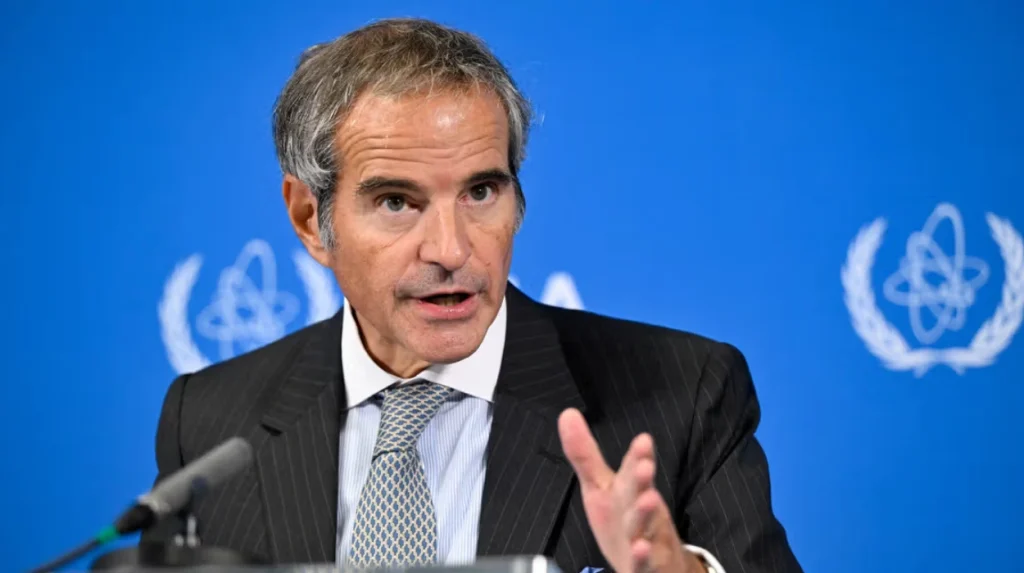
Director General Rafael Grossi warned that the agency has experienced what he termed a “loss of continuity of knowledge” regarding certain nuclear materials since monitoring disruptions intensified after the June 2025 US-Israeli strikes. According to pre-strike data, Iran possessed approximately 440 kilograms of uranium enriched to 60 percent purity. While not weapons-grade, that level significantly shortens the technical distance to 90 percent enrichment.
Satellite imagery continues to show vehicular movement and infrastructure reinforcement at the Isfahan tunnel entrances. However, without on-site inspections, the agency cannot verify whether enrichment has resumed, been suspended, or relocated. The resulting opacity lies at the core of the present standoff.
Post-Strike Monitoring Breakdown
The 12-day conflict in 2025 targeting Iranian nuclear and missile infrastructure altered the inspection landscape. Physical damage to facilities was followed by political decisions in Tehran to restrict certain monitoring measures, compounding existing tensions.
Isfahan and Underground Complexes
Isfahan’s underground tunnel network has emerged as a focal point of concern. While Iran maintains that its nuclear activities remain within peaceful parameters under the Nuclear Non-Proliferation Treaty, inspectors have not regained routine access to confirm stockpile composition or centrifuge operations.
The IAEA has emphasized that monthly verification is standard practice for highly enriched material. That continuity has not been restored. Satellite observation provides indicators of activity, but as Grossi noted in Vienna, “satellites cannot replace inspectors.” The absence of physical access leaves questions about material accounting unresolved.
Fordow and Natanz Uncertainty
The enrichment sites at Fordow and Natanz, both previously subject to strict monitoring under the 2015 nuclear accord, now present similar verification challenges. Although there is no public evidence of active enrichment to weapons-grade levels, inspectors cannot definitively confirm suspension.
These facilities carry symbolic and strategic weight. Fordow’s hardened design makes it particularly sensitive in military planning scenarios. In the absence of verified data, worst-case assumptions increasingly shape diplomatic and defense calculations.
Stockpile Accounting Gaps
Before the 2025 strikes, inspectors tracked Iran’s 60 percent enriched uranium stockpile with relative precision. The interruption in surveillance systems and reduced access since then have created a technical vacuum.
This breakdown complicates breakout timeline assessments. Without verified figures, analysts rely on extrapolation rather than measurement. That distinction has practical implications: deterrence policy depends heavily on accurate intelligence estimates.
Geneva Talks Under Verification Shadow
Diplomatic efforts resumed in Geneva in late 2025, with indirect U.S.-Iran discussions facilitated by European intermediaries and Oman. Yet IAEA Verification Gaps have become central obstacles.
Grossi attended February 2026 sessions to outline the technical prerequisites for restoring monitoring confidence. U.S. officials reportedly insisted on enhanced verification as a baseline condition for sanctions relief. Iranian representatives, meanwhile, framed expanded access as contingent on security guarantees following the 2025 strikes.
Zero-Enrichment Demands and Iranian Red Lines
President Donald Trump reiterated in early 2026 that Washington seeks to prevent any pathway to weaponization. U.S. proposals reportedly include transferring enriched stockpiles abroad and dismantling advanced centrifuges at key sites.
Tehran has publicly rejected zero-enrichment demands, asserting its right under international law to peaceful nuclear technology. Iranian officials argue that enhanced monitoring cannot occur in an environment they describe as hostile and militarized.
This impasse highlights how verification and sovereignty claims are intertwined. Each side views concessions on monitoring as linked to broader strategic positioning.
Vienna Technical Channels
Follow-up technical meetings scheduled in Vienna aim to address safeguards compliance separately from political negotiations. The logic is procedural: resolve accounting disputes before attempting comprehensive diplomatic breakthroughs.
Yet technical progress remains tied to political will. Without restored access to declared facilities, the agency cannot certify material balances. Diplomats privately acknowledge that confidence-building measures must precede any durable settlement.
Historical Context of Monitoring Disputes
The current verification challenges did not emerge in isolation. Iran’s nuclear file has long oscillated between transparency phases and restriction periods.
Under the 2015 Joint Comprehensive Plan of Action, inspectors enjoyed expanded access, including continuous surveillance at key enrichment facilities. Following the U.S. withdrawal from the agreement in 2018 and subsequent Iranian steps to scale back compliance, monitoring provisions were gradually curtailed.
In 2021, Tehran suspended implementation of certain additional protocols, limiting snap inspections. By 2025, cumulative restrictions and technological disruptions had already strained the agency’s oversight capacity. The post-strike environment accelerated that erosion.
Iran maintains that its program remains peaceful and denies any active weapons effort. Western governments counter that the technical capability to rapidly weaponize constitutes a strategic threat regardless of declared intent. Verification gaps amplify that ambiguity.
Regional and Strategic Ramifications
IAEA Verification Gaps extend beyond Vienna conference rooms. Regional actors interpret uncertainty through their own security lenses.
Israel, which has previously conducted covert and overt actions against Iranian nuclear infrastructure, views incomplete oversight as a potential precursor to unilateral decisions. Gulf states monitor developments closely, concerned about proliferation cascades should Iran’s capabilities remain unchecked.
China and Russia, both signatories to earlier nuclear frameworks, have advocated for renewed diplomatic compromise while criticizing unilateral military actions. Their positions add complexity to potential United Nations Security Council deliberations if the IAEA Board escalates compliance concerns.
Energy markets also respond to heightened uncertainty. Oil price volatility in 2025 underscored how quickly regional tensions translate into global economic ripple effects. Verification stability is therefore linked not only to nonproliferation norms but to broader financial predictability.
Nonproliferation Norms at a Crossroads
The IAEA’s mandate rests on credibility. Persistent blind spots risk weakening confidence in international safeguards more broadly. If declared facilities cannot be routinely inspected, the deterrent value of monitoring diminishes.
Board members have discussed the possibility of formal censure or referral mechanisms should access restrictions persist. Such steps could trigger renewed sanctions or diplomatic isolation, further complicating negotiation pathways.
At the same time, Iranian officials argue that security threats justify protective measures around sensitive sites. This tension between transparency and security concerns underscores the fragility of verification regimes in conflict-prone environments.
Diplomacy now hinges on sequencing. Restoring monitoring might unlock sanctions relief, while continued opacity could reinforce military contingency planning. Each incremental step carries disproportionate symbolic weight.
As satellite imagery continues to offer partial glimpses into fortified tunnels and centrifuge halls, the unresolved accounting of enriched material remains the central variable shaping strategic forecasts. Whether renewed access can be negotiated before uncertainty hardens into confrontation will determine not only the trajectory of the Iran file but also the resilience of global nonproliferation mechanisms in an era defined by mistrust and compressed decision timelines.