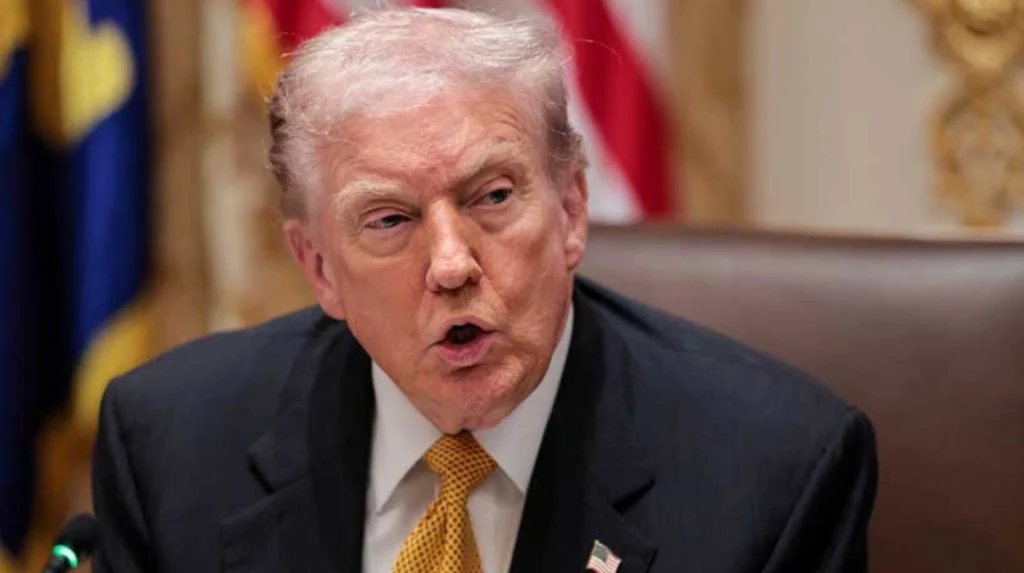
President Donald Trump has entered his second term with a markedly different governing philosophy from traditional Republican administrations. Rather than rebuilding the foreign policy establishment after the turbulence of his first term, he has accelerated a structural shift that places trusted loyalists in pivotal diplomatic and national security roles. The emphasis on personal allegiance over technocratic expertise reflects a broader strategy to consolidate decision-making authority within the Oval Office.
The National Security Council, once designed to coordinate interagency consensus, now functions with reduced autonomy. Secretary of State Marco Rubio is widely seen as exercising expanded oversight across foreign policy portfolios, while career officials report diminished influence in shaping deliberations. This reconfiguration aligns with long-standing Trump critiques of what he calls entrenched bureaucratic resistance.
The result is a system where policy formulation often flows from presidential directives rather than institutional process. Supporters argue this eliminates delays and mixed messaging. Critics contend it reduces strategic depth at a time of mounting global volatility.
Restructuring institutions and sidelining career expertise
Since early 2026, more than a hundred NSC staff members have reportedly been placed on administrative review, with several offices consolidated or dissolved. Observers note that interagency policy papers—once a cornerstone of US foreign policy planning—have become less frequent. Decision-making has shifted toward smaller, loyalty-vetted teams.
This approach mirrors recommendations outlined in the Heritage Foundation’s Heritage Foundation Project 2025 framework, which advocated for a streamlined executive branch more directly accountable to presidential priorities. While proponents describe the move as restoring democratic accountability, others warn it weakens the deliberative safeguards embedded in the post–World War II security architecture.
Ambassadorial appointments and personal networks
Key ambassadorial nominations in early 2026 reinforced perceptions of a loyalty-driven model. Business figures and long-time Trump associates have been tapped for major diplomatic posts, including missions in Europe and the Indo-Pacific. Some nominees have received ethics waivers or exemptions from traditional disclosure expectations, drawing scrutiny from congressional committees.
Administration officials argue that personal trust enhances diplomatic agility. They point to business experience and private-sector negotiation skills as assets in transactional diplomacy. Yet former diplomats caution that complex alliance management often depends on institutional memory and nuanced regional knowledge rather than personal rapport alone.
The focus keyword, loyalists over experts, encapsulates this tension between personal authority and bureaucratic continuity.
Sanctions policy and financial intelligence under strain
One of the most consequential shifts has occurred within the Treasury Department’s sanctions apparatus. Staffing reductions and hiring freezes have affected the Office of Foreign Assets Control, the primary enforcement arm for economic sanctions. Analysts note that 2025 saw expanded sanctions targeting Russia and Iran, but enforcement bottlenecks have emerged amid personnel changes.
Financial intelligence experts warn that weakening technical capacity risks undermining deterrence credibility. Sanctions require sustained monitoring, compliance outreach and investigative coordination. Reduced institutional depth can slow designation processes or complicate follow-through on asset freezes.
The administration counters that sanctions should be calibrated tools serving strategic bargaining, not automatic instruments of punishment. This reframing aligns with a broader preference for dealmaking over prolonged regulatory confrontation.
Balancing economic leverage and geopolitical signaling
Sanctions remain central to US strategy toward adversaries including Iran and Russia. However, the integration of economic diplomacy with personal negotiation style has altered messaging consistency. Markets often respond as much to presidential statements as to formal policy releases, increasing volatility.
In 2025, the Treasury Department’s National Illicit Finance Strategy highlighted ransomware networks and fentanyl trafficking as emerging priorities. Maintaining focus on these transnational threats while navigating geopolitical rivalries demands institutional coordination that some analysts fear is eroding.
Muscular foreign policy gestures and transactional diplomacy
The administration has paired institutional restructuring with assertive external postures. Military strikes in the Middle East and expanded naval deployments in the Pacific were framed as demonstrations of resolve. Trade measures targeting Chinese technology firms intensified in late 2025, reinforcing economic competition narratives.
At the same time, President Trump revived controversial proposals regarding Greenland and signaled hardline bargaining positions toward Mexico and Canada in trade negotiations. While some rhetoric appears designed to extract concessions, it has unsettled traditional diplomatic channels.
This blend of unpredictability and leverage reflects what supporters describe as strategic ambiguity. They argue that rivals are less able to anticipate US responses. Critics counter that allies, too, struggle to interpret signals, potentially weakening coalition cohesion.
Withdrawal from multilateral commitments
Another defining feature of the second term has been reduced participation in multilateral institutions. The United States has scaled back engagement with certain UN-affiliated bodies and reexamined funding commitments linked to climate and health frameworks. These moves echo first-term withdrawals from the Paris climate agreement and the World Health Organization, though some steps have been recalibrated rather than fully reversed.
Advocates for retrenchment contend that multilateral forums often constrain American sovereignty. Opponents argue that absence diminishes Washington’s ability to shape global norms, particularly as China expands its diplomatic footprint.
Administration rationale and systemic risks
White House officials defend the loyalists over experts’ approach as a corrective to what they describe as entrenched resistance within the federal bureaucracy. By placing trusted allies in key posts, the administration seeks faster implementation of campaign promises and tighter message discipline.
Secretary Rubio has testified that foreign policy must reflect electoral mandates rather than internal consensus. This perspective emphasizes responsiveness over continuity, aligning with voters who favored disruptive change in 2024.
Yet experienced foreign service officers warn that diplomacy relies on networks cultivated over decades. Abrupt turnover can sever relationships critical during crises. In volatile regions such as the Taiwan Strait or Eastern Europe, miscommunication risks escalation.
International perception and alliance management
Allied governments are adapting to the evolving US model. European leaders have increased defense spending in response to persistent American pressure, while Asian partners hedge by deepening economic ties with Beijing. Strategic competitors may perceive institutional disruption as an opportunity to test US resolve.
The Chicago Council on Global Affairs noted in its 2025 survey that American public support for alliances remains relatively stable, even as executive rhetoric fluctuates. This divergence between domestic opinion and executive posture complicates long-term alliance planning.
Whether personalized diplomacy enhances leverage or generates unpredictability fatigue remains uncertain. Much depends on tangible outcomes in negotiations over Ukraine, Indo-Pacific security and trade realignments.
The trajectory of this foreign policy revolution will be measured not by internal restructuring alone but by external results. If streamlined authority delivers durable agreements and deters adversaries, critics may reconsider concerns about institutional erosion. If miscalculations accumulate, the costs of sidelining expertise could become more visible. As global tensions intersect with domestic political expectations, the balance between agility and institutional resilience will define the durability of this experiment in executive-driven statecraft.