The Quad project, which is centered on the alignment with the United States, Saudi Arabia, the United Arab Emirates, and Egypt re-arose in late 2025 as the main diplomatic instrument of deliberating the conclusion of a civil war in Sudan. The plan, which was first tabled in September 2025, was a vision of a three months humanitarian truce preceding a structured political negotiation. The Quad wanted to regain some trust when the updated proposal was offered by the U.S. envoy Massad Boulos in late November and after months of battlefield reversals and frozen mediations.
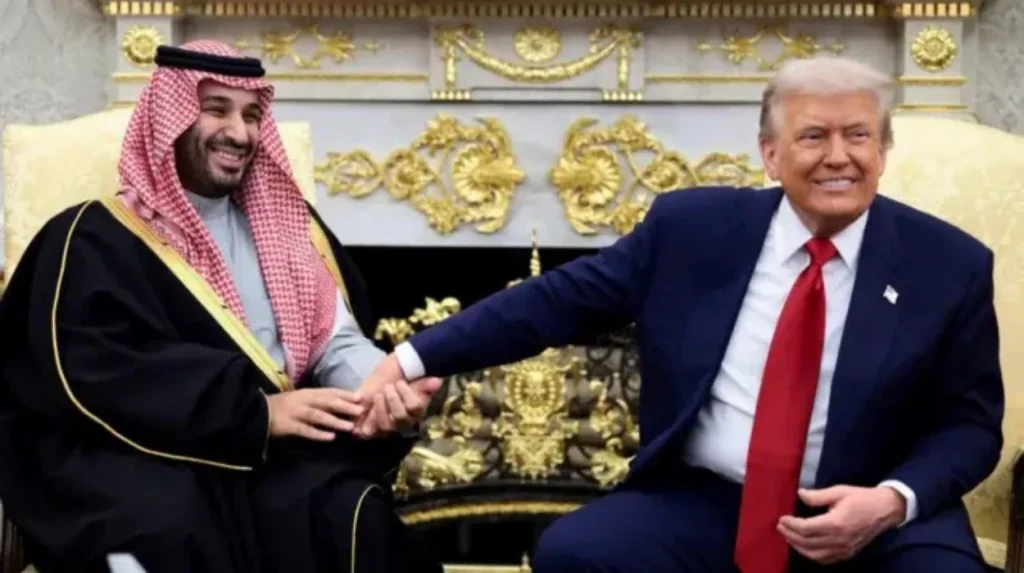
Both the leader of the Sudanese Armed Forces (SAF) Abdel Fattah al-Burhan and the Rapid Support Forces (RSF) commander Mohamed Hamdan Dagalo did not approve the plan without any conditions. SAF responded that RSF ceasefire commitments were not genuine and used alleged RSF assaults such as the Babanusa onslaughts, RSF portrayed its humanitarian pauses in November as a sign of goodwill. Trump’s decision to intervene personally at the request of Saudi Crown Prince Mohammed bin Salman on November 20 was meant to unlock the deadlock, but early December developments showed no measurable shift in the core positions of either faction.
Trump’s Entry And Shifting U.S. Posture
Trump’s Sudan Pledge marked a visible pivot from months of limited U.S. engagement. His outreach followed sustained Saudi lobbying, emphasizing that American involvement could catalyze acceptance of the Quad roadmap. Secretary of State Marco Rubio reinforced this line on December 4, claiming the former president was “the only leader” capable of pushing both parties toward compromise. Yet Trump’s entry also magnified perceptions of external pressure, complicating efforts to portray the Quad as a balanced mediator.
SAF And RSF Conditions
The SAF insisted that any truce must first require RSF withdrawal from civilian areas and contested urban zones. RSF countered with demands for accountability mechanisms addressing alleged SAF war crimes. These entrenched positions underscored the structural difficulty Boulos referenced when denying accusations of bias on November 25 in Abu Dhabi, arguing that the roadblock lay not in the terms themselves but in SAF’s insistence on extensive prerequisites that the Quad deemed incompatible with immediate humanitarian relief.
Humanitarian Collapse And Conflict Escalation
The civil war in Sudan, that started in April 2023, has transformed into the displacement crisis in the world. As many as 400,000 individuals were killed by December 2025 with 12 million displaced across the borders or in Sudan. Humanitarian consequences of the conflict deteriorated further when in late-October the RSF seized control over al-Fasher exacerbating conditions of famine in North Darfur.
Scale Of Hunger And Displacement
Food insecurity is acute in more than 25 million people with 635,000 in IPC Phase 5 famine categories. U.N. spokespersons once again clarified that true goodwill in a ceasefire negotiation must be gauged by undertaking civilian security and re-establishment of aid corridors, neither of which is in good health. The surrounding of El Fasher puts humanitarian agencies at a disadvantage, and the weaponisation of hunger as a weapon of war can be seen through the frequent attacks of convoys.
Civilian Voices And Expectations
The civilian accounts of El Fasher and Port Sudan tell of exhaustion and lack of fulfilled ceasefires and increasing mistrust with each of the armed groups. As much as the November humanitarian gestures of RSF were recognized by the international actors, SAF allegations of RSF violations helped in fueling doubt regarding a short-term stabilization. In the absence of explicit enforcement mechanisms, civilians feel that the Quad plan threatens to repeat the temporary truces that occurred in earlier years of 2024 and 2025.
Diplomatic Complexity And Regional Power Balances
The activities of the Quad are developed in the context of a triple-tiered regional space where there are alliances of the past. The fact that Egypt supports the SAF and that the UAE relations with the RSF make it more complicated to see the country as a neutral party of the mediation platform. Despite the fact that both states officially uphold the Quad text, domestic disputes regarding the order of sequence and the level of security do not allow exercising the power collectively over the warring sides.
Regional Influences On Mediation
Egypt’s role has become more direct since President Abdel Fattah el-Sisi pressed Burhan toward renewed engagement in October. According to diplomatic sources in Sharm el-Sheikh, Cairo’s approach hinges on securing SAF institutional continuity. The UAE’s informal links to RSF logistical channels create parallel expectations that Abu Dhabi can influence Dagalo, although Emirati officials reject claims of ongoing material support.
External Aid And Sanctions Pressure
Boulos emphasized that halting external military and financial support to both factions is essential for de-escalation, yet avoided naming specific providers. U.S. officials signaled that broader sanctions targeting senior SAF and RSF figures are under review, potentially rolling out before year-end if no progress occurs. These prospective measures follow earlier 2024 sanctions that yielded limited behavioral change.
International Tracks And Coordinated Pressure
While the Quad seeks a military pause, Norway hosts a parallel initiative focusing on governance restoration and transitional frameworks. The Norwegian channel gained momentum into December 2025, presenting itself as a complement rather than competition to Quad efforts. Oslo’s approach emphasizes reconstituting civilian authority while avoiding direct entanglement in ceasefire verification.
Compatibility Of Norwegian And Quad Initiatives
Coordination between both tracks remained cautious but constructive. Diplomats involved in the Oslo process argued that civilian governance planning cannot wait for perfect military conditions. The Quad, by contrast, sees a verified truce as a prerequisite for political sequencing. Despite these differences, both tracks reflect the broader fragmentation of international mediation attempts since the collapse of the earlier Jeddah process.
Precedents And Obstacles In Ceasefire Talks
Past truces have collapsed swiftly, undermined by contested control zones, unclear monitoring frameworks, and competition among regional patrons. Analysts from the Hudson Institute argue that although temporary pauses are feasible, long-term stabilization remains elusive without structural changes in command hierarchies and militia financing. Kholood Khair of Confluence Advisory noted in late November that the odds of a year-end ceasefire remain low without a recalibration of battlefield strategy or external patronage.
Strategic Risks And Future Scenarios
As December 2025 unfolds, the Quad’s plan faces growing scrutiny. SAF framing of the proposal as diminishing its legitimacy remains a central challenge. RSF’s military confidence following territorial gains further reduces incentives for compromise. The humanitarian imperative, however, intensifies international calls for immediate action.
The combination of starvation, displacement, and military buildup provide the situation where even the small gestures of diplomacy can be of a disproportionately large importance. The Sudan Pledge of Trump, although symbolically impactful, faces the limits of structure of personalized diplomacy in a war of regional interests, disorderly chain of command, and massive humanitarian devastation.
The Sudan Pledge of Trump has now reached a pivotal point on the interface of the influence of international mediation and the inelasticity of local actors. With sanctions looming and with Norway engaging in more political consultations, the question is now more pivotal, can external pressure alter the incentives of commanders locked in a brutal conflict or will Sudan become even more afflicted with famine and fragmented sovereignty into 2026?