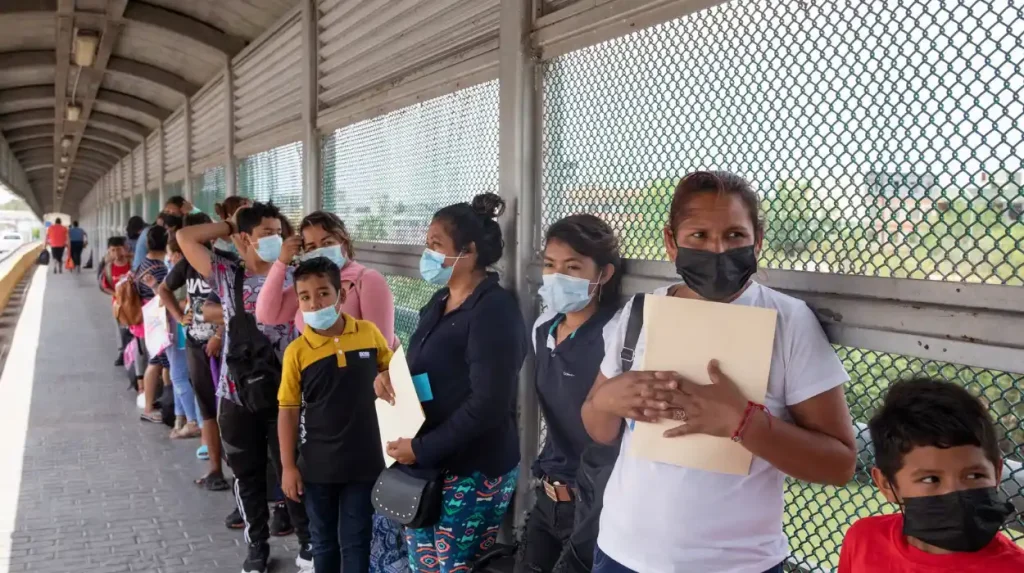
The topography of US relations to the Latin American migration policy in 2025 also demonstrates a combination of structural pressures, humanitarian facts, and political limitations. The hemispherical movements are also high which is due to the continued violence, entrenched poverty, climate based cataclysms as well as the failure of governance in certain components of Central America and South America. These drivers do not just end at short run emergencies but are gradually becoming more of a long run systemic condition that will constantly influence mobility patterns toward the United States.
The percentage of migrants that are family members, unaccompanied children and asylum seekers continues to increase, and they tend to cross the United States border. This demographic change puts pressure on the systems of adjudication of asylum originally tailored to the more manageable and less high caseloads. The delays in backlog processing, which hit a record of more than two million cases at the beginning of 2025, are an example of the structural imbalance between humanitarian requirements and administrative capacity. With US border officials trying to cope with the changing arrivals, the situation is aggravated by the discussions about the ratio between the enforcement and protection requirements under the international law.
Bilateral and regional cooperation efforts
The Biden administration has made close cooperation with Mexico and the Northern Triangle an ongoing concern of Guatemala, Honduras, and El Salvador knowing the pressures of migration are much farther west than the geographical boundary. Assistances in economics, governance, and crime prevention programs continue to be the pillars of US policy. Washington promises 2025 involve increased investment on rural development programs in Guatemala and a focus on gang violence through increased security programs in Honduras.
There is, however, an obstacle to implementation. Guatemala is politically unstable with judicial wrangles and corruption claims making implementation of US-backed governing changes difficult. In El Salvador, the continued criticism of President Nayib Bukele due to his security crackdown that is highly praised in the country and very questioned abroad creates diplomatic tension that shapes migration debates. These political facts constrain the capacity of Washington to bring about a quick, tangible change in root causes, even with long term involvement.
Regional multilateral frameworks and emerging coordination
The US gives more and more importance to multilateral cooperation in the form of Organization of American States and regional organizations like the Central American Integration System. These forums encourage collective responsibility in protecting refugees, collaborating in addressing trafficking networks and provision of legal avenues to labor migration.
Such commitments are however hard to operationalize. The budgetary pressures within the Latin American governments, as well as local political sensibilities within countries with regards to migration, sluggish efforts on the expansion of the reception capacity, intensify asylum systems, or the formalization of temporary work programs. The national interests of the respective countries, especially the transit countries which are trying to control their national migration pressures are another obstacle to successful policy implementation.
Domestic us political environment and its influence
The domestic politics are still a decisive factor that will determine the direction and credibility of the US relations towards the Latin America migration policy. Polarization of issues regarding the management of the border, access to asylum, and humanitarian safeguards are still informing congressional debates. As the immigration policy remains stuck in 2025, policy is alternating between executive moves and judicial backlash, leaving regional collaborators uncertain about their long-term course of action.
The administration is under both pressure to allow more people to access asylum and pressure to implement the strict enforcement of it. These opposing forces generate a patchy environment of policy, which makes it difficult to deliver diplomatic messages and undermines the US bargaining power in regional politics. To the governments of Latin America, the US is an unpredictable challenge and therefore it is hard to make a commitment to long term cooperation efforts without knowing the direction the policy is going to take.
Impact on diplomatic credibility and regional perceptions
Latin American diplomats and civil society organizations continue to raise anxieties in 2025 that domestic political circles in Washington take precedence over humanitarian demands in the region. Views that the US treats migration as an electoral issue have been a challenge to the process of building trust. The utterances of regional leaders show impatience with what they perceive to be the changing standards of cooperation especially on enforcement agreements and safe mobility programs.
This lack of credibility dilutes the diplomatic power that the US used to exercise on the formulation of migration governance in the region. Cooperation at the functional level despite the continued exchange of intelligence, coordination of efforts at the border security level, however, the overall political relationship does not seem to be working out as well, particularly when the US acts unilaterally and involves migrants who may be passing through partner nations.
Emerging challenges and potential policy innovations
Climate change has emerged as one of the greatest pacesetters of migration in Latin America. Continued droughts in the Dry Corridor, heightened hurricane activities in the Caribbean, and frequent floods in southern Mexico are among the factors that have been driving rural and coastal populations to internal and cross-border displacement. There is a growing use of environmental disturbances in asylum claims but the international systems to protect against climate are still in the underdeveloped stage.
In 2025, the US and its regional allies initiated exploratory talks on the need to identify climate displacement as a specific category that needs specific humanitarian response. This also involves the possible investment in climate resilience initiatives linked to the migration reduction objectives, but the discussions are still going on concerning jurisdiction, legal definitions, and the distribution of resources.
Expanding legal pathways and humanitarian mechanisms
Washington is looking into increased legal avenues in order to minimize irregular migration whilst satisfying domestic labor demands. Governments in Central America have taken an interest in pilot programs of temporary agricultural and service-sector visas, but little has been implemented. Humanitarian parole programs have alleviated the situation of some nationalities in the short term, but the number of those in demand is much higher than the capacity.
The backlog has been addressed with the efforts of strengthening the systems of adjudication of asylum such as new hiring of immigration judges and asylum officers. The administration is also considering using alternatives to detention in order to ease overcrowding and save on expenses in the long run. These reforms are however major, and they need political follow up to be effective in the long run.
Evolving geopolitical context of US–latin America migration relations
The scope of geopolitical processes interferes with the migration policy and affects diplomatic activity. The growing presence of Chinese economic presence in the Latin America region influences US strategic decisions, particularly in the nations where China funds infrastructure or offers aid in developing the nation. In the meantime, the rising transnationality of criminal networks, such as human smuggling and narcotics movement, makes migration control more difficult, as well as raises the security issues on a regional level.
The US regional approaches of 2025 combine migration with a greater goal of resilience in the US economy, anti-corruption, and security cooperation. Policymakers have seen migration as a singular problem but as a broader governance and development problem that needs concerted actions in different sectors.
Prospects for stability in an evolving migration landscape
The future trend of US relationship with the Latin America migration policy depends on whether political realities and duties of governments in the hemisphere are able to balance humanitarian concerns. The continuation of the structural migration drivers such as violence, inequality, climate disruption and governance fragility are indicative that mobility will continue to be a characteristic of the US-Latin American relations in the foreseeable future. Diplomatic involvement, though sometimes tense, is necessary in the management of the pressures that cannot be managed by an individual country.
As regional governments and international institutions refine responses to evolving migration trends, the question shaping 2025 and beyond is whether emerging policy initiatives can keep pace with shifting human mobility patterns. The ongoing interplay of geopolitics, domestic politics, and humanitarian challenges ensures that the future of hemispheric migration governance will continue to evolve in ways that test both regional cooperation and long-standing assumptions about how migration is managed.