With the United Nations celebrating its 80th anniversary in 2025, the future of the institution has become the focus of attention in the world. The United States is the centre of this spotlight whose leadership position has continued to be crucial yet more challenged. Since its inception in 1945, the US has remained the largest funder of the UN as well as a permanent member of the Security Council. It forms a pillar in international diplomacy and decision-making as it makes contributions, its influence, and its veto power.
The involvement of America, has, however, always been accompanied with expectations. The US government has weathered different administrations that have conditionalized their funding and support to transparency, efficiency and policy congruence. This conditionality usually puts the US on one side as a reformer and the other as a thorn in flesh particularly when the unity among member states is weak or politically expensive.
UN80 Reform Initiative And Washington’s Conditional Backing
In March 2025, the UN80 Initiative was introduced by the Secretary-General Antonio Guterres, with three priority reforms, including maximizing operational effectiveness, reviewing the position of thousands of current mandates, and structural alignment between UN agencies. These objectives are meant to bring the system into the modern world and enhance delivery in an age of decreasing resources and increasing demands.
The United States delegation at the 2025 General Assembly agreed with these destinations in principle but provided a focus on financial accountability and implementation metrics. Following congressional lines, the US demanded specific reforms which will have quantifiable effects, a course of action aimed at reassuring domestic stakeholders that multilateral contributions can be used to fulfill specific strategic objectives.
Austerity Amid Elevated Expectations
The conflict between the support and restraint of the US is best exemplified through the 2026 proposed budget which was based on UN80 recommendations. The budget is meant to reduce administrative redundancy by 20 which is in line with the demands of leaner governance by Washington. However, these reductions would undermine such important aspects as the Office of the High Commissioner to Human Rights and the UN development programs, especially those ones that rely on multilateral assistance.
Experts such as Richard Gowan from the International Crisis Group describe this duality as “doing less with less” expecting transformative results while limiting the means to achieve them. The US thus reinforces its role as a critical but exacting partner, shaping reforms through conditional engagement.
Security Council Veto Power And Institutional Gridlock
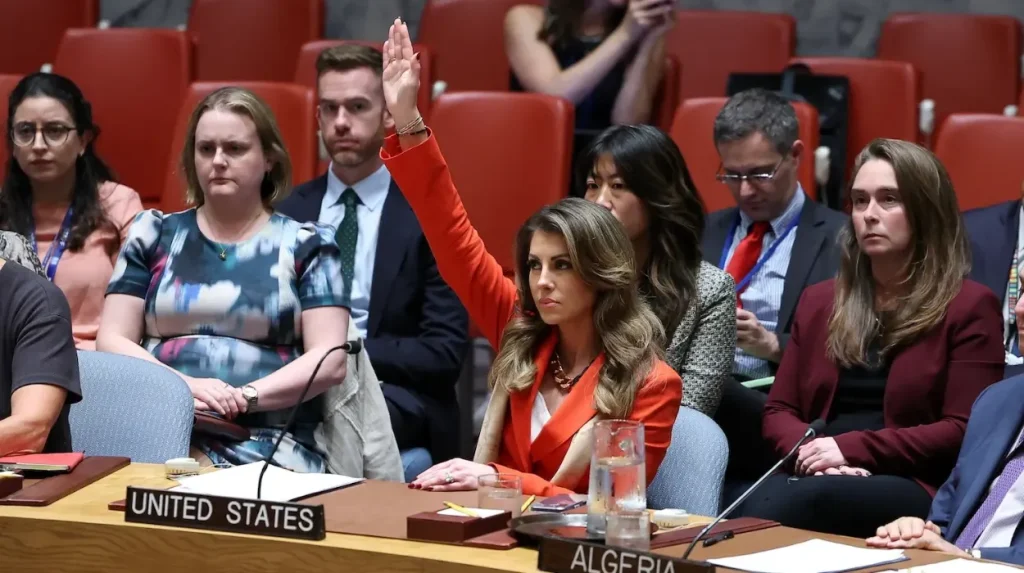
The Security Council’s permanent members: China, France, Russia, the UK, and the US retain the controversial veto right. The US, while less prolific in its use of the veto compared to Russia, has exercised this authority selectively, often regarding Middle East resolutions, humanitarian interventions, or matters concerning allies.
These vetoes significantly influence reform dynamics. Any structural change requiring Security Council endorsement such as expansion or procedural reconfiguration faces immediate limitations. The veto functions both as a tool of statecraft and an impediment to collective action.
Consensus Under Pressure
Former UN official Michael W. Doyle has likened the current environment to “a diplomatic stalemate under a Cold War shadow,” where veto politics thwart global cooperation. Reform proposals that challenge this balance are often sidelined, not on merit but due to strategic inertia. The US, navigating tensions with China and Russia, tends to defend existing frameworks while calling for selective adjustments.
In this context, Washington’s influence is both empowering and constraining. It sustains the institution but complicates its adaptability, particularly on contentious matters like council reform or enforcement mechanisms.
Balancing Budget Oversight With Global Commitments
The US Congress remains a decisive actor in shaping American contributions to the UN. Frequently, the requirements of the congress involve budgetary cuts, conditional releases of funds, or audit prior to disbursements being approved. These budgetary limitations indicate a more general political distrust of international organizations and the fear of administrative ineffectiveness.
In 2025, the proposal to defund some agencies including the UN Relief and Works Agency was discussed in the US legislature. Even though the outcome of such debates was unsuccessful, they mirror the domestic pressures that have influenced the multilateral diplomacy of America.
Strategic Investment In Key Areas
The US is dedicated to the UN-led peacekeeping, pandemic preparedness, and climate resilience despite the tightening of the budgets. The recent US funding of peace operations in South Sudan and donations to COVAX are selective yet strategic investments.
Following the increase in AI governance and cyber diplomacy in the UN agenda, the US has also increased its role in discussions of norm-setting. It advocates protection that would encourage innovation and individual liberties contrary to regulatory paradigms that some authoritarian regimes prefer. Such discriminative involvement highlights how the priorities of the US influence and in some cases divides consensus in reform negotiations.
America’s Diplomatic Posture In A Fragmented World
Although the US has already pulled out or downgraded its interest in the forums like UNESCO and UN Human Rights Council, recent developments indicate that it is re-examining its diplomacy. The policies of Biden and the further administrations have predicted the resurgence of multilateralism, being conditioned by the national interest and domestic political consensus.
The expected appointment of the new US ambassador to the UN (Ambassador Mike Waltz) is symbolic of this re-tuning. Waltz is characterized by a conservative approach to China and a track record of defense experience, which is a combination of aggressive diplomacy and conservative reformism. His appointment will reinstate American leadership as well as counter the concerns of bipartisanity regarding the effectiveness of the UN.
Navigating Emerging Global Risks
Multilateral response is needed to address global challenges of climate volatility to mass displacement and disinformation. This is a need that the American policymakers are aware of yet find themselves wary of extending mandate or allocating new funds without tangible payback.
The example of AI regulation is that in the US, the dominant approach is a decentralized approach with a focus on privately-led innovation and data rights; this is incompatible with the idea of centralized international regulation. These differing visions pose strain in the reform discussions particularly as the UN tries to respond to evolving technological threats which are fast changing.
Influence On Global Governance Structures
The United States takes a leading position not only in the domestic affairs of the UN but in the development of more general norms in institutions of the world. The US policies affect development funding, health equity, and crisis response, as seen in the world bank to the world health organization.
The conditionality that Washington has made in its reform of the UN together with its fiscal discipline and selective leadership has its influence on the manner in which other countries have positioned themselves in the multilateral system. Democratization of the world institutions has been demanded by rising powers including India, Brazil and South Africa among others partly because of the Western perceived gatekeeping.
This is an environment in which extends a multifaceted rivalry of legitimacy in which the American leadership is a stabilizer and a source of conflict. How the traditional influence plays with the new demands of equity characterizes the changing architecture of global cooperation.
The ongoing controversy around the reform of the United Nations is like a peephole into the dualistic position of the United States as an indispensable participant of the family preaching efficiency and accountability and as a gatekeeper who tends to demand nothing short of a strictly limited number of interests in order to allow any progress. With the UN evolving to respond to the atmosphere of the 9th decade, the issue as to how American leadership can be changed without compromising multilateral legitimacy grows even more pressing. The outcome of the future reforms in reconciling this tension might be the key to the future of global governance.