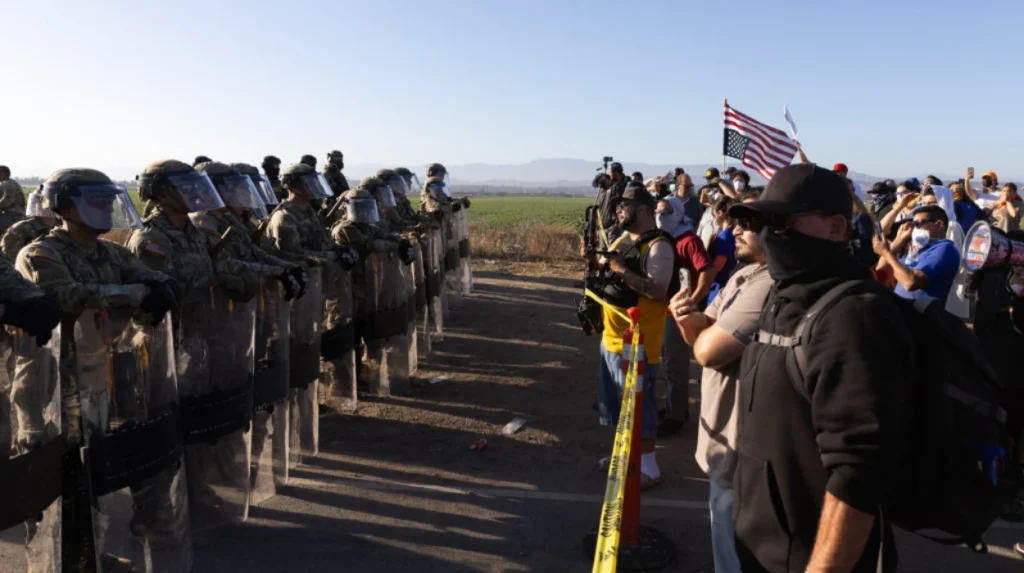
The 2025 year will be one of the monumental steps toward changing the immigration governance in the USA. The course of policy is becoming more indicative of humanitarian obligations versus the political need to have stricter border controls. With cross gridlock between Congress and all-encompassing reform, executive power has been the leading tool in rebalancing the enforcement and processing systems. The effect of this dynamic has been a mixture of continuity of the old policies and specific changes in the sphere of priorities.
The adoption of selective deterrence strategies is one of the most evident ones. The Department of Homeland Security has increased use of data-driven forecasting to align the migration flows with regional partners especially Mexico and central American states. The change redefines migration as a challenge to the hemisphere, associating domestic enforcement with the increased stability of geopolitics. As DHS officials suggested in briefings in February 2025, the department is aligning the concept of regional coordination instead of unilateral enforcement as one of the cornerstones of the strategy.
Legislative Deadlock And Executive Action
The legislative change remains in stasis through the intensifying partisan conflicts on the standards of asylum, funding of border security and legal migration routes. Several bipartisan bills put forward early in 2025 did not get chances of floor votes. This has been the roadblock forcing the White House to seek administrative changes, especially refining some asylum requirements criteria besides broadening expedited adjudication procedures to some humanitarian cases.
One of the most significant shifts was made in March 2025, when DHS adjusted the parole programs, making them tighter considering the categories that are considered less dangerous to humanity, but more available to those that face direct risks. This two-way strategy is an expression of the desire to show seriousness in enforcement without compromising on the fundamental principles of refugees. Such developments are also indicative of the increase.
Coordination With State-Level Policies
There is increased intervention of state governments in border and immigration enforcement. The state of Texas, Arizona in specific and Florida in particular has passed laws that increase the powers of the local authorities in the process of detention or transportation of migrants and this has raised questions on federal preemption.
The lawsuits and negotiation limits by the federal government signify the fact that immigration enforcement has become a conflicting area between the sovereignty of the states and national government. Such tensions still determine the presence of the federal personnel and assets along the important border paths.
The Evolution Of Border Security Enforcement
In 2025, the process of border enforcement is becoming more characterized by technological modernity. The DHS and Customs and Border Protection have implemented more comprehensive biometric tools, remote sensing, and AI biometric risk evaluation along the U.S.-Mexico border. The goal of such tools is to decrease the effectiveness of physical patrols, which involves enhancing the accuracy of the detection and real-time coordination.
Technology And Multidomain Deterrence
The existing enforcement system is based on the creation of the smart border architecture. Online surveillance has penetrated the physical borders into internal transit hubs, airports, ports, and employer authentication systems. This multi level system is meant to ensure continuity of deterrence between the entry and settlement levels.
These systems have not been that effective. Although the effectiveness of detection has also increased, the proponents of civil liberties fear that algorithmic decision-making can also disfavor some migrant groups. In May 2025, a Brennan Center report claimed that AI-enhanced enforcement would introduce opaque assumptions into key adjudications and thus brought up transparency and accountability issues.
Cross-Border And Multilateral Cooperation
The US has heightened its collaboration with the governments in the region involving migration. Joint intelligence sharing and combined patrols have increased throughout Guatemala, Mexico, and Panama based on promises at the Washington Migration Dialogue in April 2025. The mobility-management pocket negotiated under such discussions is meant to minimize the irregular movement using regional visa programs and managed migration centers.
In spite of these developments, political instability between partner governments is a challenge. The internal disagreements between the enforcement of migrants in Mexico have already posed a challenge to cross border coordination. According to analysts, the regional migration model is characterized as leader-dependent and institutionally weak, and the question is whether it will be sustainable in the long run.
Humanitarian Dynamics And Asylum System Recalibration
The focus on humanitarian concerns has been kept but redefined in the context of a capacity-based paradigm that puts the priority on efficiency, deterrence, and legitimate movement. Modernization of the asylum system is underway, with case management improvements going digital, increased staffing in adjudication, and new timelines in place to clear a backlog of more than two million cases before the beginning of 2025.
Refugee Caps And Processing Priorities
The United States has established the maximum number of refugees to be 135,000 in 2025, which is the highest in years. The prioritization of the admissions has been changed to those areas, which are affected by crises, including Haiti, Sudan, and Ukraine. These are strategic options based on humanitarian assurances and foreign policy imperatives. Meanwhile, an interim decision by the Ninth Circuit in June 2025 restricted the interpretation of credible-fear to gender-based violence and gang-related violence claims, which supports a more restrictive interpretation of definitions of refugees.
Humanitarian Parole And Private Sponsorship
Humanitarian parole programs have blossomed and become a major relief valve, with a compromise between sympathy and limited supply. The frameworks of private sponsorship which were introduced in late 2024 received national momentum in mid-2025, allowing local communities to sponsor the temporary admissions of high-risk people. This is viewed as a practical way of addressing capacity issues by supporters, but is objected to by opponents due to the decentralization and lack of uniform standards of implementation.
Political Implications And Public Opinion
The issue of immigration is very prevalent in the political world as the country is closer to the midterms of 2026. According to a survey released by Pew Research Center in October 2025, 61 percent of Americans would prefer to demonstrate a more aggressive border enforcement, 54 percent are in favor of increasing migration legal routes. This two-sided feeling demonstrates a rather complicated public position that aims at being firm without being closed.
Republican leaders package increasing border encounters of more than two million during the fiscal year as signs of federal incompetence. In turn, the administration highlights the gains in processing times, higher numbers of repeat crossers being deported, and now officially established regional enforcement alliances. Immigration therefore remains an artificially kept proxy conflict to larger controversies of national identity, economic policy and humanitarian leadership.
Media Framing And Global Perception
The U.S. migration policies are observed by international observers. The European policymakers have made similar comparisons between deterrence policies in the US and externalization policies by the EU especially when it comes to regional processing centres. Washington asserts that its policy is based on humanitarian order over exclusion pointing out to expansions in H-2 visa categories and regional work permits worked out with Central American governments.
Human rights organizations, however, warn that excessive use of deterrence can dwarf systems of long-term integration and protection. In November 2025, the International Organization for Migration recommended that the United States enhance rights-based control of new technologies at the border.
Looking Ahead To Structural Reform
By the end of 2025, U.S. immigration governance stands at a crossroads defined by technological innovation, regional cooperation, and assertive executive action. Homeland Security’s budget projections for 2026 indicate plans to expand digital border infrastructure and explore regional processing models inspired by international migration platforms.
Whether these developments lay the foundation for sustainable reform or reinforce cyclical enforcement pressures remains an open question, one that will influence the trajectory of global migration governance long after 2025.