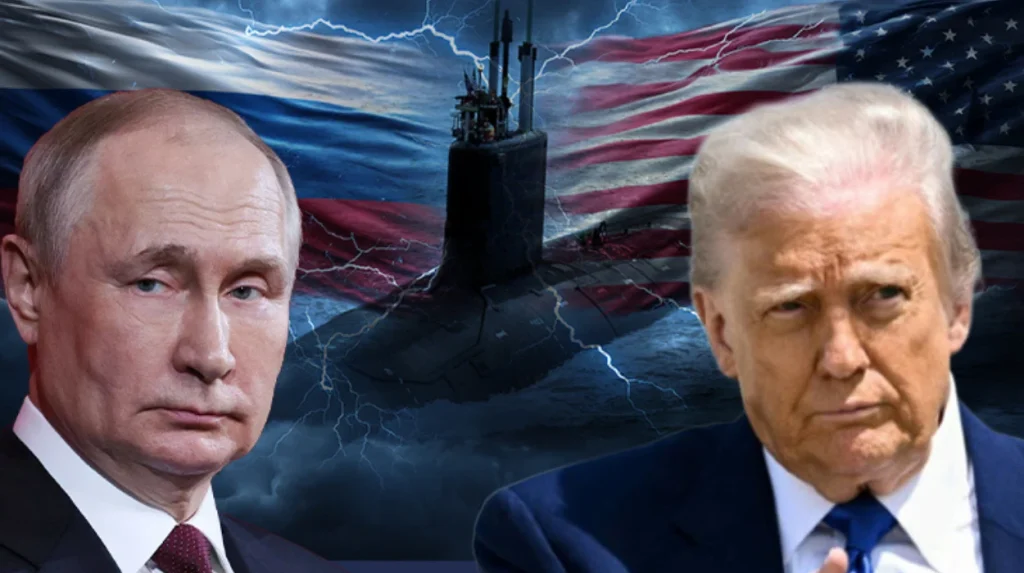
The US National Security Strategy 2025 will present a significant change in the way Washington frames Russia, which is indicative of a redefinition of antagonism and strategic will. Published at the end of November 2025, the document will take Russia off the list of immediate threats, which is very different from how Moscow was described in 2017 as a geopolitical competitor and how the Biden administration focuses on combating Russian aggressiveness. The strategy redefines the US approach to one of its most significant competitors by prioritizing conflict management in Ukraine as a core issue of interest and presents the necessity of strategic stability.
This repositioning is accompanied by changes in the dynamics in battlefields in Ukraine and the new diplomatic overtures in European capitals gaining momentum. The 33-page doctrine emphasizes the concept of de-escalation, arms control structures and measured diplomatic actions-factors that had been diminished in past years of policy weighted with sanctions. The Kremlin took this tone positively with the spokesperson Dmitry Peskov saying that the change was mostly consistent with our vision, which was a positive omen that would lead to a possible collaboration.
Omission Of Threat Designation
One of the main peculiarities of the doctrine is that Russia was left out as a direct enemy. The reading claims that many Europeans view Russia as an existential threat, which puts Washington outside of the danger perception of Europeans. This stance is suggestive of the US as a possible peacekeeper in the war, despite the ongoing instability in the region because of Moscow.
Reactions From Moscow
The emphasis on strategic stability as a key factor was pointed out by the Russian officials as a positive sign and conformed to the long time Russian demand to have arms control discussions. Such agreements as New START that are mentioned in the document are most critical nowadays when the nuclear signaling increases, as it is claimed in the 2025 US Annual Threat Assessment.
Reactions From Washington
Critics have disputed the absence of any explicit condemnation in the US, saying that it sends a bad signal on deterrence. The domestic divisions in this policy shift can be highlighted by congressional issues, such as the comments by Representative Jason Crow characterizing the strategy as catastrophic to US standing.
Reactions From Europe
The European governments took a stance of concern, with regard to the perceived understatement of the Russian aggression. EU authorities cited the continued run of security incidences and disinformation campaigns as an example that a subtler strategic voice may weaken general resilience.
Strategic Stability As Central Pillar
The element of strategic stability holds the high position in the 2025 strategy, which shows the effort of Washington to reinstate guardrails on the risks of escalation. By defining stability as a shared interest, the doctrine prioritizes organized discussion that may host crises especially in the high-risk setting in Europe.
Arms Control Considerations
We can find references to the well-known frameworks to show that an attempt has been made to revive the mechanisms that have been weakened over the recent years. Analysts have cited the current anxieties regarding the modernization of the Russian nuclear system and testing practices, as reflected in the 2025 intelligence evaluations, as reasons to reinforce the need to engage in diplomacy.
Ukraine As A Stabilizing Lever
The idea underpinning the strategy is that Ukraine stabilization would be the key to restoring European security. It focuses on making Ukraine a viable state, which is a criterion that fits the present-day battlefield conditions where the power of politics is more and more prominent than military ones.
European Reactions And Transatlantic Strain
The tone of the document poses problems to transatlantic cohesion. European policy makers interpret the US repositioning as some implied criticism of their approach to Russia, especially because the strategy chastises EU policies concerning migration, regulation and governance of speech. These aspects reflect the stories frequently inflated by the officials in Russia, so the ideological alignment becomes a matter of concern in Brussels.
This has created tension in NATO debates, with the issue of burden-sharing and long term commitment being difficult. Various commentators believe that the focus of strategy on curtailing the expansionist image of NATO can undermine the deterrence message especially in frontline countries.
Critique Of NATO Dynamics
The doctrine reaffirms the necessity of the allies taking more responsibility of their own defense, and cautions against arrangements that create effective dependency on the US resources. As a framing choice that denies NATO is everlastingly growing, the strategy is consistent with larger endeavors to rebalance the promises in the context of world competition.
According to some experts, such a stance puts the US in the position of mediating between Russia and Europe, which has the possible effect of making Moscow look less like a systemic challenger. There is also the sign of redirection of strategic focus by Washington on the Western Hemisphere and the Indo-Pacific where resource demands are on the rise.
Migration, Regulation, And Policy Disputes
The criticism presented in the document regarding the EU migration and regulation policies has implications to transatlantic political coordination. Russian leaders have stressed the fact that such common interests open possibilities of positive communication. Analysts, however, caution that they also reflect themes that are employed in the influence operations reported by various European intelligence services in early 2025.
These differences in policy highlight how difficult it is to coordinate the responses to hybrid threats, especially when both democracies and authoritarian actors are involved in the process of forming public discourses.
Geopolitical Reorientation Priorities
The further restructuring of the strategy is not limited to Europe. It describes enhanced security engagements in the Western Hemisphere that revolve around drug trafficking, Caribbean sea routes, and the possibility of instability in Venezuela. At the same time, it is urging allies in the Indo-Pacific like Japan and South Korea to enhance their defense spending to offset the aggressiveness of China.
In this international readjustment, Russia is rather a counterpart than a rival, particularly following the war fatigue and financial strains that have diverted the focus of the Europeans towards politics.
Ukraine As Negotiation Lever
The termination of the war in Ukraine is also presented as a prerequisite in terms of overall stability. The doctrine is much more critical of European unrealistic expectations than of Russia and makes Washington a pragmatic negotiator and not a bloc actor. Analysts observe that the defense industrial production by Moscow has grown much in 2025, making it more powerful in negotiation, which makes the chances of a final settlement challenging.
Implications For Global Power Balances
According to the doctrine, the US will no longer play an Atlas-like role in maintaining world order, but rather will promote allies to play a more independent role. In the case of Russia policy, this implies that management of escalation is a priority over confrontation and this applies to arms control, sanctions architecture and multilateral cooperation.
According to the experts of the council on foreign relations, the low profile nature of the strategy can lead to a failure to recognize the long term threats of Moscow such as cyber activity and security deals in Africa. However, the recalibration also provides opportunities to new discussions that had mostly frozen in the beginning of 2020s.
With the conversations of the global alignments still in progress, the issue now facing the policymakers is to what point this US-Russia convergence can go without compromising deterrence, without upsetting the allies and without shifting the competitive dynamics in the Asian region and the Western Hemisphere. The next few months will tell whether this change of doctrine was the pragmatic adaptation or the turning point with much more serious consequences on the strategic level.