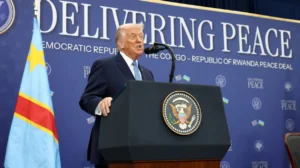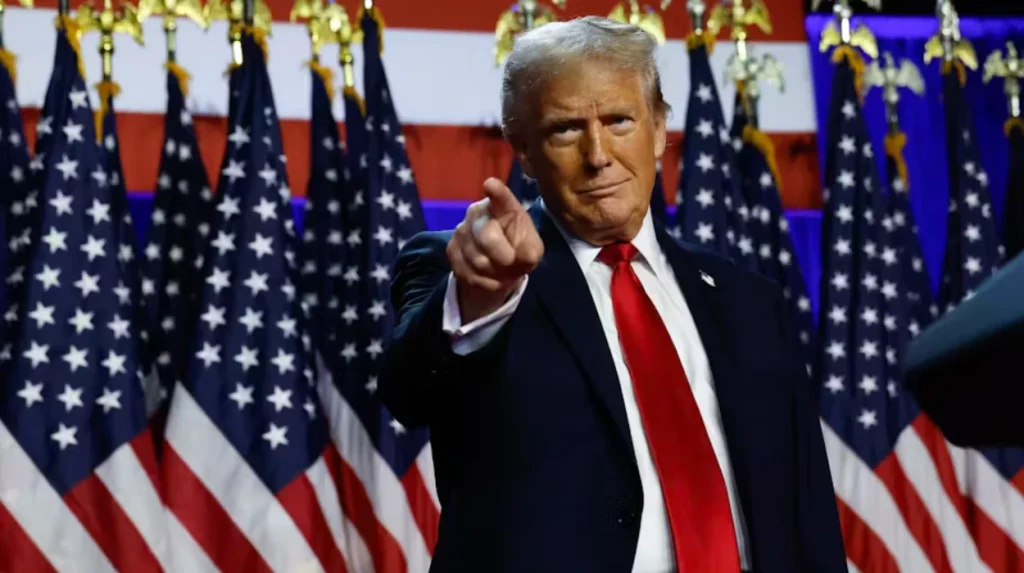
The second term of President Trump has raised concern and hope globally. He officially joined his office in January 2025. Many believe that this return of Trump would not prove beneficial for Africa. Some have said that Trump will be working hard to resolve the Russia-Ukraine war. While some experts say that his return to power disturbs US relations with other countries.
In the case of Africa, the views are mixed. During the 2016 presidential era of Trump, he made less focus on the continent. And some worry that this time Trump’s policy could reduce US interests in Africa. However, according to research from the University of Pretoria, Trump might prove beneficial for some African nations, especially in trade and investments. He prefers selective bilateral relations based on US needs.
Yet, this strategy could harm Africa’s international position. This approach damages African human rights and democracy. Trump’s new policies also don’t impact positively on climate change initiatives or African immigration to the United States. So, Africa may face many challenges under Trump’s leadership.
Trump’s priority is to focus on American interests, making its commitments with other nations secondary. This simply means that the foreign policy of the United States was more about security and financial benefits. For African nations, the presence of Trump may prove challenging, particularly for those with less strategic importance. In 2016, under Trump’s leadership, the US expressed more interest in bilateral trade deals. The nation did not support the African Growth and Opportunity Act(AGOA). According to this Act, African nations are permitted to export goods to the US without any tax. This modification would damage smaller African economies that depend on AGOA and could lead to fragmented trade relations.
Trump follows strict immigration policies that have hurt many African nations. His strict immigration rules prove beneficial to the US in preventing illegal immigrants, but at the same time, it hurts many legal African migrants to the United States.
Thousands of Africans risked deportation, which could harm remittances sent back to Africa. In 2023, these remittances were valued at $13 billion, vital for many African families and economies.
This approach of Trump towards Africa puts progress at risk made by President Joe Biden. He recognized the continent’s agency and promoted an equal partnership. Trump shows favoritism to only specific African nations as compared to the whole continent. While Biden and Obama showed equal importance to all African nations.
Trump’s democracy and human rights opinions are also concerning. His admiration for autocratic leaders may weaken democratic institutions in fragile African countries. This lessens accountability and makes the political landscape unstable in various nations, such as Burkina Faso and the Mail.
The climate change policies of Trump could harm African nations, despite knowing that these countries are already suffering from many environmental crises. Trump is a great supporter of fossil fuels. This support decreases US involvement in climate efforts. This also decreases funding for African climate adaptation and clean energy projects.
Trump’s planned tariffs and other trade measures might further sour ties between the US and Africa, reducing the predictability of future collaboration and perhaps reducing the benefits of important infrastructure investments.
Uncertainty surrounds the United States’ support for two permanent seats in Africa and the future of the UN Security Council’s (UNSC) reform. Trump’s second term has the potential to alter the assistance that the Biden administration pledged.
Trump’s return, though, could provide some optimism in certain places. He is probably aware of Africa’s expanding relations with China and Russia, and he could concentrate on counterterrorism initiatives in the Horn of Africa and the Sahel, aiding nations like Nigeria and Kenya. He is unlikely to send US soldiers, though.
During Trump’s first term, trade relations between the United States and Africa improved. Despite a drop brought on by the epidemic, commerce increased to US$40.9 billion in 2018 after declining under Obama. Although it eventually declined, US foreign direct investment (FDI) in Africa rose during his early years. Meanwhile, Africa’s foreign direct investment in the US increased. Depending on his policies, Trump’s second term may increase investment and trade.