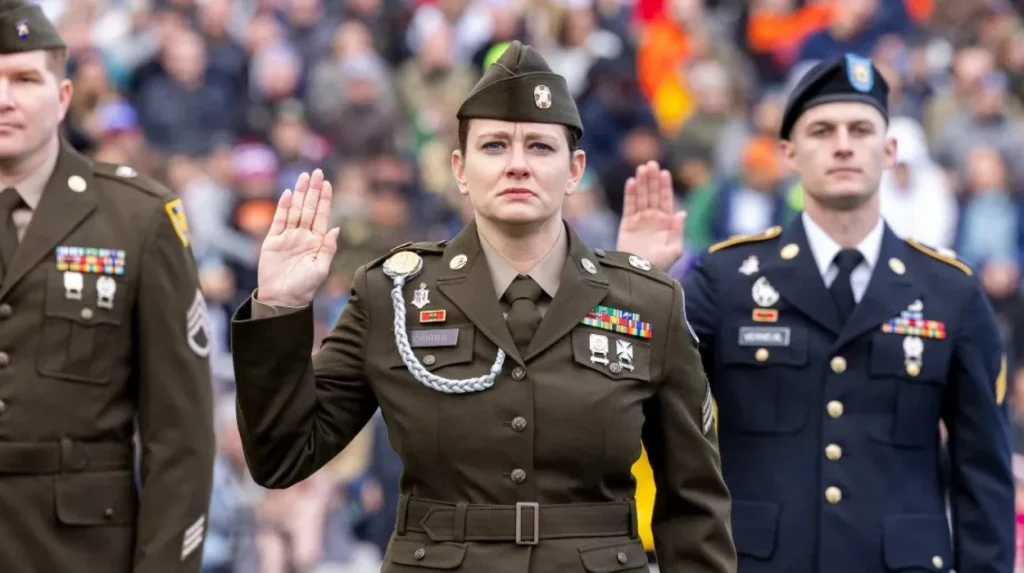
The U.S. recruiting deficit pressure became a hallmark of military preparedness throughout the early 2020s. According to the Pentagon, by 2024, the volunteer force had as many as one of the highest recruitment gaps in the history of the volunteer force, where only about a quarter of annual recruitment goals were achieved. These gaps were aggravated by the eligibility requirements with only 23 percent of Americans between 17 and 24 meeting the minimum criteria because of the increased obesity rates, academic losses and physical impediments. Interruptions caused by the pandemic meant that returning to schools with recruiters could occur at a slower pace and that the communities could be reached less, further undermining the recovery, according to senior officials.
There were signs of betterment in 2025 when the Army had registered a sudden turnaround. In January, leaders also attested that more than 61,000 enlistment contracts were already achieved four months earlier than anticipated, surpassing its fiscal-year goal by over 10 percent. This was turned around by the growth of Future Soldier Preparatory Course, which assisted the applicants to achieve academic and physical cut-off points. The Navy officials also noted such momentum, highlighting increased digital outreach efforts and polished advertisement campaigns, albeit noting that they still focused on the intricacy of keeping a lasting benefit.
What shaped the renewed momentum in 2025?
The situation that facilitated stronger numbers by the early 2025 was not just operational. It is noted by analysts that the public perception change has evolved with the increased geopolitical tensions, such as the increased focus on Indo-Pacific deterrence and the discussion of homeland resilience once again. Broader economic changes, such as localized unemployment pressures, were also to the advantage of recruiters, who began to seek less turbulent federal jobs.
How recruitment quality factors into readiness recovery?
Despite favorable recruiting numbers, defense officials emphasized that no one can compromise quality standards. The influx of new applications was subjected to a more rigorous performance screening and according to training officers pipelines would require time to take larger quantities without loss of quality. The indicators of readiness based on academic performance, physical strength, and retention after five years have remained to determine the actual worth of the recruitment trend in 2025.
Why eligibility gaps remain a strategic concern?
The systematic de-fitnessing of the nation and lack of academic readiness is a structural weakness. Defense officials cautioned that temporary gains in the supply problem might not be solved without further, more widespread health and education improvements in the nation. This reduces the flexibility at a time when the world is growing increasingly competitive due to the constrained recruitment pool.
Force downsizing and its operational implications
The recruitment crisis has been accompanied by structural cuts in the U.S. force. The active-duty Army size has dropped to approximately 445,000, which is one of the lowest levels of the force since the days before World War II. The fleet capacity of the navy is at 298 active vessels, which is way under the strategic threshold of the 400 recommended by internal analysis. The Air Force has been struggling with persistent pilot shortages of more than 2,000 slots, and the Marine Corps restructuring has been redefining force design to focus on smaller, leaner organizations.
These trends impose pressure on operations. Analysts emphasize to show that the United States has to strike a balance between commitments in Europe, the Indo-Pacific, and the Middle East using smaller numbers of personnel to deploy on a rotation basis. Unit commanders have reported greater pressure among those who are left in service, and policymakers are still arguing on the interaction of decreased force capability with the multitheater deterrence needs.
How force contraction shapes strategic risk?
The act of downsizing compromises the capability to deal simultaneously with various regional crises. Defense planners point out that competitors take the shrinking of force breadth in the U.S. as an element of weakness. The high rate of modernization in China such as increased building of the naval ships and superiority in the missiles puts U.S. planners in an ugly situation where they have to operate with a small fleet build-up.
Impact on morale and training cohesion
Supervisors have cautioned that staffing deficits undermine the unity of the units since they overstretch the teams, putting them in more tasks than they were initially intended to do. The 2025 preparation reevaluations present reports that firmly indicate that some combat units are in need of a longer training cycle to maintain skill as the staff moves in and out of deployment more often.
Broader strategic costs and geopolitical consequences
The strategic calculations abroad have been recalculated by the interaction of the recruiting deficits of the U.S and his shrinking force size. Adversarial states still determine U.S. capacity by the prism of dwindling manpower and languid modernization. The Russian sustained military operations in its western borders and the increased maritime patrols by China in the disputed waters have been associated with times when the U.S. force strength is the least. They have impacts on the alliance planning and have caused a call of more burden-sharing among NATO and Indo-Pacific partners.
The American threat environment is changing so that cyber attacks, hybrid warfare, and space rivalry elements evolve more swiftly than the customary force arrangements can possibly keep up. The tensions in early 2025 reflected in congressional debates were between domestic budgetary constraints and the upward trend in modernization programs costs. Top officials cited that strategic credibility over a long period of time was pegged on regular infusion of funding as opposed to periodic spikes related to crisis response.
How do political divisions shape defense decision-making?
A polarized environment has been through which defense legislation in 2025 has passed, which slows down modernization initiatives. The officials at the Pentagon were concerned that delays in approvals would weaken the revival in the recruitment process and restrict investment in specialized forces to meet the emerging threats.
Efforts to address recruitment and retention
The enhancements achieved in 2025 are supported with a number of initiatives. Recruiters keep growing their digital outreach and tailoring recruitment approaches to low-interest areas. The Future Soldier Preparatory Course stands out as the most mentioned success story and allowed thousands of applicants to achieve academic and physical standards without sacrificing them. The officials of defense underlined that such programs exemplify that early intervention could be used to retain potential recruits that would otherwise be lost due to eligibility.
Adjustment to the career advancement structure such as revised timelines of promotions and wider technical training opportunities were also credited by leadership. This is aimed at enhancing retention through better avenues to long term service.
Why retention matters as much as recruitment?
Retention and recruitment have a circular basis of preparedness. Analysts have emphasized that it is of little strategic advantage to get more people into recruitment without keeping the experienced staff. In the year 2025, the Pentagon remained focused on stabilizing mid-career ranks to ensure that they retained institutional knowledge which was critical in the training and operations.
Future outlook on military readiness and policy implications
The 2025 strategic landscape has increased the importance of filling deficits of U.S. recruitment. Despite the optimistic gains in the early period of the year, recovery is still weak. Manpower, modernization, and the global competition interaction are the three elements that determine the strategic orientation of the United States throughout the rest of the decade. Constant enhancements will not be achieved by simply employing better recruitment pipelines but also extending long-term reforms to meet the demographic trends and technological war requirements.
The broader question moving forward is how the United States balances its global commitments with evolving domestic realities. Observers continue to examine how shifts in public sentiment, economic patterns, and geopolitical priorities interact with force design choices. The trajectory of these developments invites ongoing scrutiny, particularly as policymakers navigate the tension between expanding obligations abroad and the internal pressures reshaping the nation’s defense landscape.