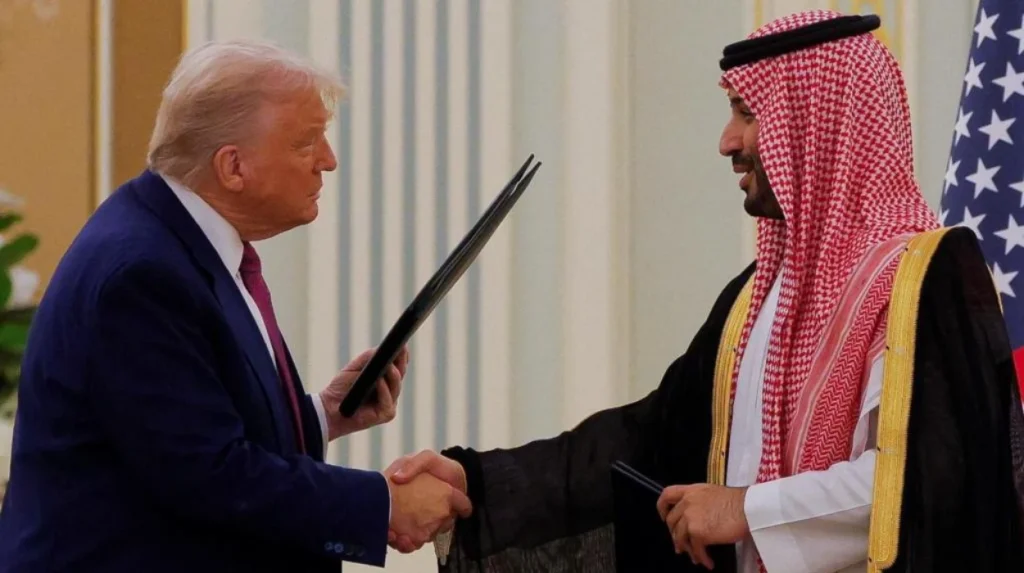
The 2025 vision of the Middle East as a strategy of America is an expression of a fundamental reevaluation of transactional diplomacy with the benefits going to security agreements, economic interests, and elite alliances at the cost of long-term human rights obligations. The shift is embodied in the continued protection of Saudi Crown Prince Mohammed bin Salman even after the world investigative agencies re-equate his involvement in the Jamal Khashoggi murder in 2018. The top officials put Saudi Arabia in the context of an essential pillar of energy security, military collaboration and the fight against terrorism claiming that national interests have been more important than rights disputes.
The title of Saudi Arabia as a key non-NATO ally is another institutionalization of this orientation. Enlarged arms sales, technology-sharing arrangements, joint security councils, all these are examples of a practical model that raises bilateral utility above value-based diplomacy. The U.S. policy makers stress predictability of partnerships as a policy instrument in a region where instability has returned with Yemen up to the Red Sea. Critics on the other hand believe that the marginalization of accountability undermines the normative power of Washington when authoritarian consolidation is still going on in the region.
The human rights toll as transactional priorities reshape regional dynamics
Human rights observers state that during the course of 2024-2025, there is an unprecedented escalation of violations in Saudi Arabia as the number of executions is increasing, as well as those accused under general counterterrorism and cybercrime laws. Activists report on the extensive application of solitary confinement, online surveillance, and movement restrictions to muzzle opponents. The fact that Washington is not willing to challenge such developments has undermined the mechanism of external pressure that previously determined the domestic behavior of Saudi Arabia.
One of the former U.S. diplomats wrote anonymously that when human rights became a bargaining point, the leverage of America was reduced. This weakening of conditionality has encouraged governments in the region to ignore U.S. objections as symbolic, not substantive, which strengthens impunity trends.
Expanding security cooperation and its implications
The new U.S.-Saudi security order encompasses multi-year arm packages, multi-level coordination of the missile defense and intelligence exchange on the Red Sea maritime threats. Such alliances promote American strategic interests but create doubts about the possible complicity in cases of partner force involvement in infractions where such partners are involved, especially in Yemen and in local counterterrorism raids.
Without explicit protection, human rights organizations caution, the weapons and intelligence supplied by Washington would pose a risk to the civilian casualty. Administration dismisses these accusations, stating that with increased cooperation, the U.S. will be able to influence behavior internally, but this has not been seen to be practiced to any significant extent.
Transactional diplomacy and its regional ripple effects
Leaders in the Middle East evaluate the Washington 2025 posture as an indication that performance based alliances are to be determined mainly on strategic usefulness. Trends in countries like Egypt, the United Arab Emirates, and Bahrain have cemented their own security partnerships with the U.S on the basis of expecting less in political terms associated with civil freedoms. Analysts hold that such an atmosphere enables governments to indulge in domestic crackdowns without the fear of reprisals as a result of diplomatic actions.
In Egypt, the government still holds activists using provisions of national security, but enjoys a strong relationship with Washington due to counterterrorism cooperation in Sinai. The understanding that human rights ceased to be a fundamental part of bilateral evaluation is stimulating the same actions throughout the region.
Impact on pro-reform movements
The realignment has also impacted on the civil society groups that used to be reliant on American advocacy to secure legal protection, publicity and diplomatic pressure. Most of the activists in the Gulf and North Africa complain of lack of room to express oneself as the governments perceive the silence of Washington as a tacit consent. This loss of external support adds to an overall riskier climate of journalists, human rights defenders, and minority populations.
Strategic calculations shaping Washington’s transactional approach
The centrality of the Middle Eastern energy supplies in a time of market volatility is one of the factors that have led America to shift towards transactional diplomacy. The events caused by the maritime unrest in the Red Sea, the drone attacks off the Gulf infrastructure, and the market volatility are strengthening Washington to maintain stable energy relations. The production capacity and pricing power of Saudi Arabia are considered by the administration too important to risk in controversial issues on the civil liberties.
This argument goes further to the relations with a host of Gulf producers rendering a wider policy trend of economic security perpetually dominant over normative issues. The calculus also implies a reversion to the Cold War-style prioritization of good partners of the state in strategically essential regions.
Counterterrorism and great power competition
The U.S officials say that they should work closely with Saudi Arabia and its neighbors to eliminate the dangers posed by Islamic State affiliates, Iranian-trained militias and transnational extremist networks in the Levant and Sahel. The administration insists that the erosion of the relations may give opportunities to China and Russia, which have increased military and economic relations within the area.
Such a strategic environment supports Washington in the use of transactional deals. Critics however argue that giving short term stability preference does not consider the underlying reasons behind radicalization like political marginalization and state oppression which may even escalate when the governments are run without accountability.
Diplomatic credibility and long-term geopolitical risks
The selective application of the human rights principles by America creates credibility issues which have widespread international implications. European partners are worried that the waning focus of the U.S. on democratic principles makes it difficult to co-ordinate actions to address human rights abuses around the world. At the same time, the authoritarian regimes use the posture of Washington as an argument that criticism of human rights is a political agenda and not an ideology.
Analysts caution that disjointed standards undermine the capability of America to assemble coalitions on matters such as inquiry of political prisoners to investigation of war crimes. The feeling of double standards leads to diplomatic tension and builds distrust among the states that have to serve between the contending world powers.
Implications for future U.S. administrations
The institutionalization of transactional diplomacy can limit the future administrations in their quest to revert to values-based interaction. Long-term arms agreements, extended security assurance and increased intelligence liaisons form dependencies that are politically hard to undo. Further, the governments of the Middle East are used to scrutiny on a slim basis and may not be willing to face the opposition of reformation once again.
According to policy scholars, the U.S. is selling long term influence to short term gain and this will probably hamper its possibilities to influence political changes in the region or intervene during crises. These implications, however, will be lasting depending on whether Washington balances its strategic and normative priorities.
A shifting landscape raising unanswered questions
The political and human rights course of the Middle East is remodeled by the changing American dedication to the transactional diplomacy in the region. It makes strategic relationships stronger and at the same time, creates less room of accountability, reform and civil society resilience. There would be some urgent concerns concerning the long-term expenses of neglecting the rights of people in the name of geopolitical expediency. The sustainability of these policy options and their effects on the stability of the region are still a debate that cannot be settled by 2025 yet one that will greatly affect U.S engagement in the future way beyond this time.