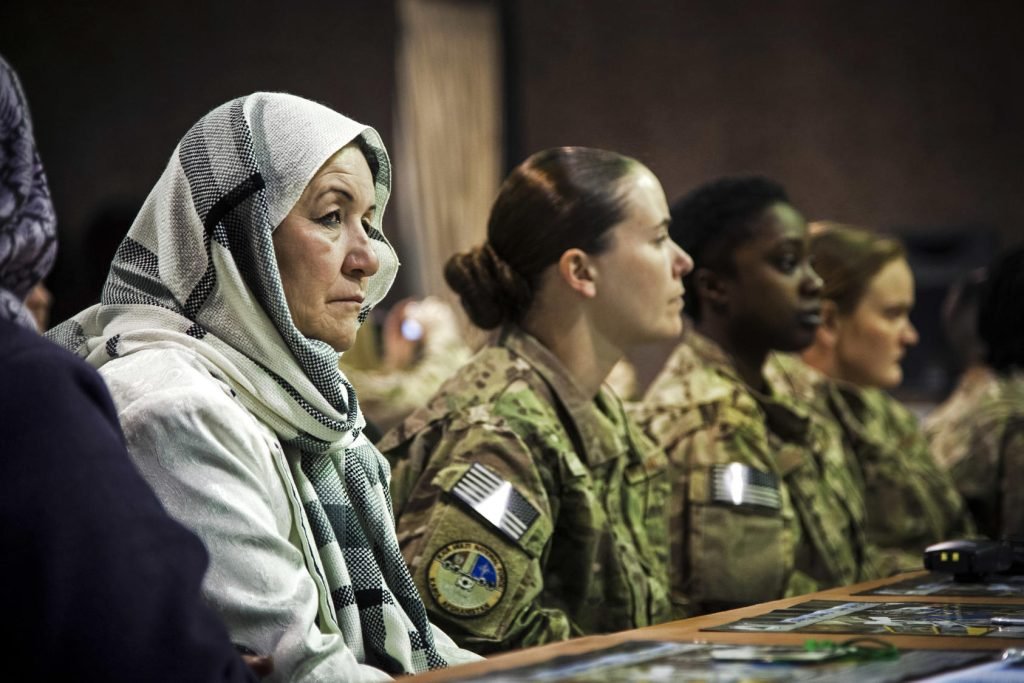
The Women, Peace, and Security (WPS) Act of 2017 is one of the historical milestones in the history of the United States. It made it an institution that recognizes the fact that women’s involvement in peace and security processes has a more sustainable outcome. The Act was based on bi-partisan cooperation as federal agencies, specifically the Departments of State, Defense, and USAID were required to report yearly on what progress had been made towards the inclusion of a gender perspective in peace building and conflict prevention.
Nevertheless, an interesting change was observed in 2025. The U.S. government missed its deadline of October 31 to present its annual report on WPS implementation to the Congress, the first time since it was enacted. The report that got overlooked is not just a procedural mishap, but an indication of declining political concern towards gendered peace and security structures. Ambassador Melanne Verveer, the Executive Director of the Georgetown Institute of Women, Peace and Security, called such negligence a failure to stay accountable and said that unless this is monitored, the bipartisan commitment spirit could weaken.
The lapse is a symbolic abdication of the American self-proclaimed leadership on the rights of women in the world as well as administrative negligence. To those who previously supported the WPS Act as a bi-partisan way to reform national security, 2025 is a year of retrogression, in which institutional follow-through was no longer in line with legislative intent.
Institutional Erosion And Policy Retrenchment In 2025
Other than the missed deadline, the year was characterized by structural weakness of the institutional mechanisms that supported WPS commitments. The shutting of the Office of Global Women Issues of the State Department was a big blow to the interagency coordination and gender mainstreaming. At the same time, the budget returns decreased funding on WPS-related programs by approximately 800 million dollars, limiting the range of operations of the initiatives to assist women mediators and peace advocates in conflict areas.
Such choices show that there was a change in policy focus and not an individual fiscal correction. The loss of institutional support jeopardizes decades of gradual development, indicating a larger movement of cutback in the U.S. institutions involved in foreign policy that promote human rights and gender equality.
The Impact On Multilateral Engagement
The American withdrawal has been felt in multilateral circles especially in the United Nations. With the 25th anniversary of the UN Security Council Resolution 1325, the lack of the American voice in forums concerned is conspicuous. The annual report on the WPS by the UN Secretary-General 2025 highlights the increasing disparities between international discourse and national action, mentioning the low level of engagement of the United States in debates on women safety and participation in peace-building.
Consequently, in previous years the U.S leadership would be viewed as a diplomatic ballast which made other states focus on gender-based peace processes. Its decreasing involvement in 2025 therefore has left multilateral development more divided and unequal.
Political And Security Dynamics Undermining Bipartisan Commitment
The enactment of the WPS Act in 2017 was an unprecedented bipartisan agreement on the idea that female inclusion was not a moral ideal but a strategic requirement. However, this agreement has been ruined by further polarization in Congress by 2025. Changing political leadership has caused an advantage of gendered security structures giving WPS actions a back-seat position in the overall national security discussions.
Budget Cuts And Administrative Realignments
Restructuring of administration in the Departments of Defense and State have diverted the funds and manpower to gender-oriented peace programs. Some of the key WPS liaison posts are still open, and a number of interagency working groups have been disbanded. These reorganizations in the bureaucracy undermine the practical application of the Act and decrease institutional memory that is important to propel long-term programs.
Strategic And Security Implications
According to analysts, the failure to fulfill WPS commitments may put at stake larger U.S. strategic interests. Empirical surveys such as those presented in the previous Congressional hearings show that when women are involved in the peace negotiation process, there are higher chances of having long-term stability. This marginalization of these structures undermines the conflict prevention and peacebuilding abilities of the United States, especially the fragile states where the role of women in the reconciliation process is still critical.
Loss Of Accountability And Legislative Oversight
The WPS report annually is one of the pillars of transparency, providing Congress and the civil society with a quality evaluation of the performance of the government. Its lack in 2025 makes it difficult to legislate and make it subject to scrutiny by people. In the absence of the new data on program results, resources distribution, and effectiveness assessment, policymakers can have only a vague idea whether the taxpayer-funded programs have the desired results.
This information is also used in holding agencies accountable by civil society groups. The existing information gap limits their advocacy and hinders the evidence-based interventions. And it is a systemic breakdown of not only reporting, but also of keeping the accountability mechanisms envisaged by the framers of the law.
Perspectives From Civil Society And Advocates
There is an increasing level of frustration on the advocacy front. Women for Women International and the International Rescue Committee among other organizations underline that the WPS framework is not merely symbolic politics, but rather it deals with real consequences, including participation in the peace process or post-conflict reconstruction.
Human rights activists caution that the reverse move would increase the vulnerability of women in war-torn countries, especially Afghanistan, Sudan, and Ukraine, as women rights groups in these countries are increasingly targeted in the process. The declining commitment by the U.S. can enable those states that do not support the norms of gender equality to become more bold, undermining the international standards that have been developed in the last twenty years of multilateral collaboration.
Ambassador Verveer warned that the bi-partisan consensus that constructed WPS should not break up into political expediency. Her words help highlight the increasing alarm that gender inclusivity which was seen as a bipartisan pillar of U.S. diplomacy, now faces the threat of being a casualty of partisan politics.
The Future Of Women, Peace, And Security In U.S. Foreign Policy
The future of WPS policy in the United States lies in the recovery of the synergy in legislative directive and executive implementation. The revival of this agenda needs fresh congressional oversight, regular funding and reinstatement of institutional leadership positions that had previously broken the coordination of WPS implementation.
It is also important to reassert American presence in the multilateral arena, whereby its participation has traditionally brought development. Restoration of WPS commitments would put the U.S. back in its trusted role as an active participant in the development of inclusive peace processes and would send a message of continuity in its leadership on human rights.
Yet the question remains: can the United States reconcile domestic political divisions with its global advocacy for gendered peacebuilding? The answer will define not only the resilience of the WPS agenda but also the broader credibility of U.S. human rights diplomacy. As shifting geopolitical realities challenge established norms, sustaining the Women, Peace, and Security framework may depend on the country’s willingness to view inclusion not as an option, but as an imperative for global stability and strategic success.