Georgetown Israel Gaza discussion of 2025 shows how the international conflicts have taken over the U.S. academic spaces. The Walsh School of Foreign Service has a symbolic and policy-making burden, as one of the leading international affairs bodies in the world. However, debate on the topic of Gaza has increasingly become heated, characterized by a rise in activism, institutional silence accusations and student safety and commercial freedom.
The conflict in Gaza remains a headline, in 2025, and Georgetown is a reflection of immediacy. University settings are the real-time reflections of the international community as it argues about ceasefire initiatives, reconstruction policies, and law-related inquiries. Silence, in the view of many students, is not considered to be neutral but rather to be complicit, whereas a person believes that academic institutions cannot take the stance of a foreign policy without disregarding scholarly autonomy.
Diverging Activism And Rising Pressures On Academic Institutions
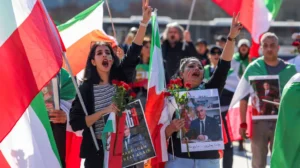
The 2025 large student-led initiatives have been pursuing moral clarity over Gaza by the university. Student coalitions and campus groups are circulating petitions asking Georgetown to denounce what they term systemic violence of Palestinians based on their own investigations of human rights organizations which cite the Israeli military actions as possible contraventions of international law. Proponents of this view among the student body claim that one of the leading institutions of international affairs should show moral leadership in instances where the suffering of the masses of civilians is recorded by trusted observers.
Pro-Israel students and supporters, in turn, outline the issue of campus safety and marginalization. They argue that labeling the acts of Israel as genocide through rhetoric leads to a sense of insecurity or victimization by Jewish students. According to faculty members who are well acquainted with the dynamics, there is an increasing fear that academic dissent can automatically lead to the development of harassment or reputational damage, especially because of the online exposure and political mediators elevating the discussions on campuses.
One of the student activists summed up the environment by stating that the deliberations have become charged, emotional, and at times threatening. Although the above statement is just personal opinion and not an official policy, it is in line with a growing national trend of polarization of campuses, which is closely monitored by the academic watchdogs and congressional oversight committees.
Academic Centers And Program Responses To The Conflict
The Middle Eastern and religious affairs centers, as well as the georgetown center, have been hosting lectures that explain the humanitarian crisis of Gaza, its historical background and its geopolitical implications. The 2025 academic year hosted panels of international law, conflict studies, and human rights scholars, which seemed to have long-running disagreements regarding occupation, colonial structures, and international standards.
Perceived Imbalance In Perspectives
Nonetheless, critics hold that programmatic materials are more inclined towards pro-Palestinian framing. They mention panels prefiguring Palestinian anti-colonialism and structural critiques of Israeli policy. According to these critics, the problem of a lack of ideological diversity is the possibility of diminishing academic dialogue and transforming it into consensus-affirming discourse instead of debate. A university dedicated to the rigor of foreign policy, in their view, should provide them the opportunity to defend counter-positions based on international policy of security, diplomacy and legal analysis.
Georgetown Qatar’s Visibility
The Qatar campus remains a resolution to events involving regional scholars who are very critical of Israeli policy. Other outside critics believe that such programs can hurt the reputation of Georgetown by portraying the impression that there is a dominant narrative. Although the Qatar campus justifies these occurrences as important to learning the Middle Eastern geopolitical truths, the debate demonstrates the compound reputational stakes of transnational academic establishments.
Free Speech, Identity, And Campus Security Concerns
Both pro-Palestinian and pro-Israel students across the campus complain of feeling threatened when voicing their opinions. Administrators verify the existence of heightened security patrolling during protests and other academic activities. Online reporting networks intensify the tensions by highlighting the student comments, which sometimes exposes them to targeted harassment off campus.
Administrative Responses To Heightened Polarization
The leadership of Georgetown pays attention to the idea of open debate, striving to encourage students and faculty to respectfully interact. However, both critics maintain that the reaction of leadership is cautious as it is limited by reputational issues and legal provisions. Based on the approach, its proponents of the administration view it as being moderate and institutional stability is made a priority. It is viewed by others as being too cautious during a time when there is a need to be morally focused especially as humanitarian crises deepen in Gaza.
Identity-Based Fear And Intercommunity Strain
The incidents of identity and political-views-related reported harassment have led to investigations and demands of institutional formulations by student groups. Scholars of academic settings observe a trend that surrounds U.S. universities: as the politics become increasingly more intense, the lack of trust among constituencies that perceive universities as either morally-active or ideologically-active declines.
Implications For Foreign Policy Education And Research Norms
Students who are going to work in the areas of diplomacy, intelligence, and humanitarian should know to assess conflict stories under strain. The present climate of Georgetown offers a laboratory-style setting that is up to date in terms of information warfare, public diplomacy, and international legal discourse. Nonetheless, the emotional undertoning of the subject matter threatens to prevent the stock of foreign policy professionalism, which demands analytical distance.
Institutional Responsibility To Preserve Academic Inquiry
Faculty caution that when polarization inhibits the pursuit of truth, there is a blow to the purpose of global affairs education. They emphasize the need to defend scholars and students that seek answers to uncomfortable questions on war, state actions, and human rights. It is crucial to maintain intellectual discipline by using conversational introductions that do not give up when the political temperature rises.
Policy-Shaping Institutions Under Public Scrutiny
The fact that campus debates are the subject of public attention is not an issue of cultural commentary; it has impacts on the institutional credibility among policymakers. An institution of higher education that is perceived to be stifling dissent will lose its capacity to be heard in the discourse of international affairs. On the other hand, institutions that are viewed to support extremist rhetoric are subject to questioning by federal and philanthropic associates. Balancing between both these exposures requires leadership which is circumspect and open dialogue.
Moving Forward In A Sensitive Academic Landscape
The 2025 discussion of Georgetown Israel Gaza indicates that there is a conflict on the campus between the moral urgency and the scholarly requirements to open discussion. With the violence in Gaza still on, students have been emotionally impacted and their expectations of the institution to act are high. However, the task of an academic institution is not similar to that of a political actor. The difficulty is to realize that people are suffering without intellectual autonomy.
The ability of universities to defend free inquiry, and respond to demands to have moral clarity, will determine whether they are credible in terms of global affairs education. These dynamics are now in view and facing those who will become the future diplomats, analysts, and scholars. These questions are central to the generation: can the space of academia be one where debate is principled when the realities of global crises are pressing identity and conscience so hard?
The new solution, which comes out slowly in lecture rooms and student forums, can set not only the future strategy of Georgetown but also the wider demands of international relations courses that face the reality of geopolitical trauma that is still happening and split public opinion.