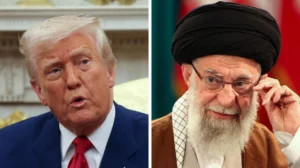
The American perception of foreign countries, particularly Asian countries in 2025 will show a significant shift from the past decades. The difference between allies, opponents, and strategic partners that used to gain the clarity of the Cold War is now becoming increasingly blurred within the minds of the U.S. citizens. This development is also related to a larger geopolitical rebalancing and is indicative of changes in the domestic politics of the United States and its foreign policy.
According to the 2025 public opinion survey by the Korea Economic Institute (KEI) and YouGov, the shift in the clarity with which Americans distinguish between traditional allies and adversaries has changed significantly: the gap between 2020 and 2025 is a decrease of 13.5 points. The reasons behind this increasing ambiguity include inconsistent accounts of foreign policy, oscillating economic priorities and shifting presidential regimes. Specifically, the transactional and unpredictable nature of President Trump operations with respect to alliances helped erode the binary foreign policy that many Americans once possessed.
South Korea is a definite exception despite this uncertainty. The image of South Korea is still considered to be positive by about two-thirds of Americans, and the alliances are regarded as the keys to American national interests. This stability seems to be based not just on military co-operation but also cultural diplomacy and exposure to South Korean culture and innovation.
The nuanced view of China and its impact on foreign policy
China still remains to be in the middle stage of the American foreign policy discussions. Although it is still taken with great caution, new statistics show the slightest change of heart. In 2025, 77 percent of Americans poll with an unfavorable opinion of China- a downgrade of eighty-one percent of 2024. Much more convincingly, the proportion of Americans who define China as an enemy decreased to 33 percent as compared to 42 percent. These statistics indicate a moderation of the hard-line opinions which could be due to the global dynamics and interdependence.
Economic and security competition in the eyes of the people is still there, but it is now accompanied by an increased appreciation of the relevance of China in addressing global issues. Climate collaboration, pandemic preparedness, and internet regulation are just some of the areas that U.S.-China engagement is necessitating, despite the ongoing tension. This duality is puzzling the general opinion and supports the notion that adversarial framing is possibly no longer enough.
Economic pragmatism versus security concerns
Although the hostility against China has slightly been softened, Americans are still very much worried about the perceived threat associated with the safety of the U.S. by China. According to the survey by KEI/YouGov, America still sees China as the highest national security threat (42 percent). This perception is strongly related to the domestic economic sentiment. Pessimistic respondents of the U.S. economy will be more apt to label China as enemy, which is fueled by the fear of imbalanced trade, loss of jobs, and theft of intellectual property.
Nonetheless, there is also a strong support of having an interest in economically aligned partners. The American people would prefer to maintain a deeper trade relationship with allies in which they share in the same democratic values, and this explains their perception of China is not an entirely oppositional form of relationship but is perhaps clouded by an economic and strategic intent. This suggests that there is a practical undertoning of the larger skepticism.
Evolving views on regional partnerships and alliances
The alliance with South Korea is one of the most consistent and favorable alliances of the U.S. in Asia. About 63 percent of Americans feel that the alliance plays a positive role in national security and 60 percent are willing to continue or perhaps even grow troop presence in South Korea even in a scenario whereby North Korean denuclearization is achieved. These numbers are indicative of the long-term confidence in the partnership and a common sense of mutual good.
Japan and Germany are also rated as having a high score on the levels of people trusting them with over 70 percent of the people rating them as positive. These countries are seen as trusted, democratic, and economically complementary partners strengthening old ties built on decades of close collaboration. The public opinion about these nations indicates that historical partnership due to the similarity of principles still resonates with Americans in the complicated geopolitical environment.
Ambiguity with emerging partners and competitors
Unlike a trust that is enjoyed by the conventional allies, the general opinion regarding the new peers such as India and Mexico remains ambiguous. Unpredictable policy engagement, contradictory economic signals, and perceived domestic instability have put Americans at a loss of how these countries will fit within U.S. interest. As an example, although India is growingly regarded as a kind of counterbalance to China, domestic democratic recession in India is a cause of concern to the layers of the American population.
Likewise, even though Mexico is a key trading partner and physical neighbor, it is frequently discussed in the U.S. in the context of it being a domestic political concern rather than a regional partner. Such ambiguity is an indication of a greater problem in establishing the boundary between friends and foes within a multipolar world in which economic and security agendas often intersect and diverge.
Public skepticism toward north korea alongside humanitarian concern
People of the United States also have very few positive feelings towards the country of North Korea as only 12 percent of the population expresses them in 2025. Most citizens 87 percent would like denuclearization to be a priority whereas 85 percent of the citizens are concerned about human rights violations. These priorities relate to a population that feels that the regime is very threatening yet at the same time the people of North Korea are suffering.
Interestingly, more than half (54 percent) of people surveyed are in favor of humanitarian assistance being rendered to North Korea. This implies that although the regime has continued to be one of the least reliable actors in Asia, the American populace still makes the distinction between leadership and civilians. Meanwhile, only a small number of Americans, 33 percent, approved of the way the U.S. government handled North Korea policy, and almost half of those asked are not sure. It is an indication of a greater discontent with diplomatic incoherence and a need to have a more definite and consistent approach to policy.
Shifting frameworks in a redefined global order
The shift in the American attitude towards nations in the Asian region is not a solitary event. It is included in a larger change in the perception of world power and influence in 2025. Americans are getting adjusted to a world in which alliances are becoming more tactical, where economic interdependence is making old logic of defense and security more difficult. The decoupling trend, especially in technology and commerce with China, has been in conflict with the realities of the world, which need inter-border collaboration.
This changing mental map is also influenced by political leadership, media discourses and education. This disparity in the message that the administrations and even the branches of government have shared has helped to create a disjointed perspective in who is an ally and who is an adversary. Such confusion affects the backing of foreign policy campaigns by the people, and it is crucial to focus on diplomatic campaigns that are clear, coherent and based on facts in future.
The evolution of friend-foe perceptions among Americans in 2025 underscores the increasing complexity of public engagement with foreign policy. While some alliances remain strong, others are being reevaluated in real time. These shifts may challenge policy-makers to reconsider how they communicate strategic goals and navigate public expectations. In a time when alliances are more flexible, threats are more diffuse, and information is more contested, understanding public opinion becomes a strategic necessity not merely a background metric. As lines continue to blur, the question is no longer who is friend or foe, but how alliances and perceptions evolve to meet the demands of a rapidly changing world.