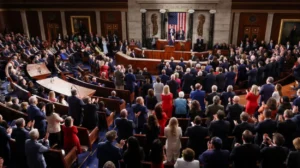
Former President Donald Trump invoked a rarely used pocket rescission to block $4.9 billion in foreign aid already approved by Congress. Implemented at the fiscal year’s end on September 30, the move leveraged the Impoundment Control Act’s 45-day review period, raising debates over executive power and legislative authority.
The Trump administration in effect blocked Congress from taking up the rescission within the timeframe necessary to do so by filing the rescission too near the deadline, so the funds were nullified without an explicit legislative vote. Some of the allocations that were to be made included 3.2 billion to programs in USAID development, such as that to help in addressing climate change and promoting democracy, 900 billion of the foreign assistance fund of the State Department and 445 billion of the U.N. peacekeeping fund. The Trump team has described these initiatives as woke, weaponized, and a waste of money and has been used in its ongoing campaign to rebrand foreign policy with an America First branding.
The action received an immediate legal and political outcry, bringing back fears of executive overreach and undermined congressional authority over federal funding. The pocket rescission has not been employed since 1977, and its resurrection in the era of growing partisan warfare contributes to the legal muddiness and constitutional interests currently in the middle of a Washington debate.
The constitutional and legal controversy surrounding the rescission
At the centre of the debate is the separation of powers in the constitution, that is, Article I, Section 9, which vests the Congress with exclusive jurisdiction over federal expenditures. According to legal experts, the pocket rescission, by its very nature, corrupts this process because it enables the executive to bypass the regular processes involving rescinding funds that were pre-authorised by Congress.
The Republicans, through Senator Susan Collins who is the chair of the Senate Appropriations Committee, criticized the maneuver in strong terms saying,
“This is not only an end run around the law, it’s an assault on the foundational balance of power.”
Congressional Budget Office and Government Accountability Office analysts have also argued that such rescission constitutes impoundment, and that is not permitted by the Impoundment Control Act except by direct Congressional authorization.
The lawfulness of the rescission depends on a procedural loophole. Even though the Impoundment Control Act allows the presidents to propose rescission, it must be approved by the congress in the next 45 days of the legislative session. By timing the request to expire before Congress could take action, the executive effectively circumvents the intention of the statute, a reading that is now subject to judicial review.
Historical infrequency and legal ambiguity
This is one of the least tested budgetary strategies in contemporary U.S. government, as the last pocket rescission was used almost 50 years ago. During the intervening years, budgetary norms have mostly discouraged its use, and courts have had little time to weigh on its constitutional soundness.
The Trump administration’s revival of the tactic in 2025 injects new urgency into legal debates over the separation of powers. Several lawsuits have already been filed in federal district courts, and observers project the problem will go to the Supreme Court by early 2026. The question of whether the Court upholds or denies such a discretion on the part of the executive to timing rescission requests in such a manner will probably have long-term effects on future administrative regimes and legislative-executive relations.
Political and policy implications of the foreign aid rescission
The pocket rescission is delivered when there is an increased budgetary tension in Washington. With the September 30 fiscal deadline near, the partisan wrangles on the government spending and deficits have been aggravated. Though Republicans are generally supportive of the reduced foreign aid calls by Trump, people have worries around the long-term constitutional ramifications of the tactic.
Democrats, in their turn, have positioned the rescission as an authoritarian strong arm. House Minority Leader Hakeem Jeffries referred to it as a budgetary ambush that renders the role of the Congress and strengthens the role of America as a global leader. Moderate Republicans, too, have been raising concerns about the precedent, because they fear that future administrations, of both parties, will abuse it.
The scenario has added to fresh discussion of a possible government shutdown, where legislators aim to restore the money that has been cut off by additional appropriations or veto tactics- measures that may be blocked by political gridlock.
Impact on U.S. foreign aid and international standing
U.S. diplomacy is also important because of the practical implications of the rescission. Reduction of billions of aid is bound to sabotage long-standing development projects, undermine humanitarian work, and diminish the U.S. presence in multilateral institutions. The climate change and the public health programs of USAID, as an example, have critical roles in Africa, Southeast Asia and Latin America.
Critics threaten that the withdrawal of these resources may ruin the strategic alliances and lose territory to other world powers like China who has been gaining more influence in the areas where American aid is being trimmed down. Diplomats warn that the sudden rescission sends the message of unreliability to allies and partners who feed off steady funding by the U.S.
Administration perspectives and rhetoric
The Trump administration has justified the ruling as ideologically and financially sound. The Office of management and budget (OMB) official said that:
“These funds supported agendas that do not reflect the values or priorities of the American people.”
The framing by the administration makes the rescission appear to be more of a remedy to what the administration views as wasteful and partisan foreign aid apparatus.
This individual has clucked about the matter, pointing to the high constitutional stakes and to the greater weight on the conduct of American government and foreign policy in this rescission exercise:
Their comments emphasized constitutional importance of the rescission and doubted the long-term effect on the democratic checks and balances, especially where executive timing can bring down congressional decisions.
A pivotal moment in budget authority and executive power
The Trump pocket rescission of 4.9 billion adds a sharp bend in the American appropriations regime. On one hand, it brings to the fore some basic constitutional issues of whether a president can employ procedural timing to override legislative will. On a different one, it questions the permanence and accuracy of the United States foreign policy pledges that have traditionally cut across different administrations.
The case is potentially turning into a landmark case in the financial governance of the United States as legal actions continue. It may reaffirm the exclusive power of the Congress over the purse, or uphold a new period of executive gamesmanship in fiscal affairs, depending on the way the judges interpret it.
The broader implications extend beyond the courtrooms and into America’s global standing. The ability to deploy aid effectively, consistently, and lawfully is a key measure of state capacity and leadership. Whether this maneuver becomes precedent or cautionary tale may well shape the boundaries of constitutional authority for decades, particularly as future leaders inherit a world where both budgetary power and diplomatic credibility are contested and more consequential than ever.