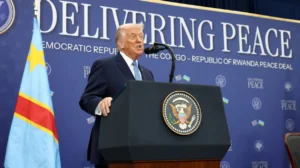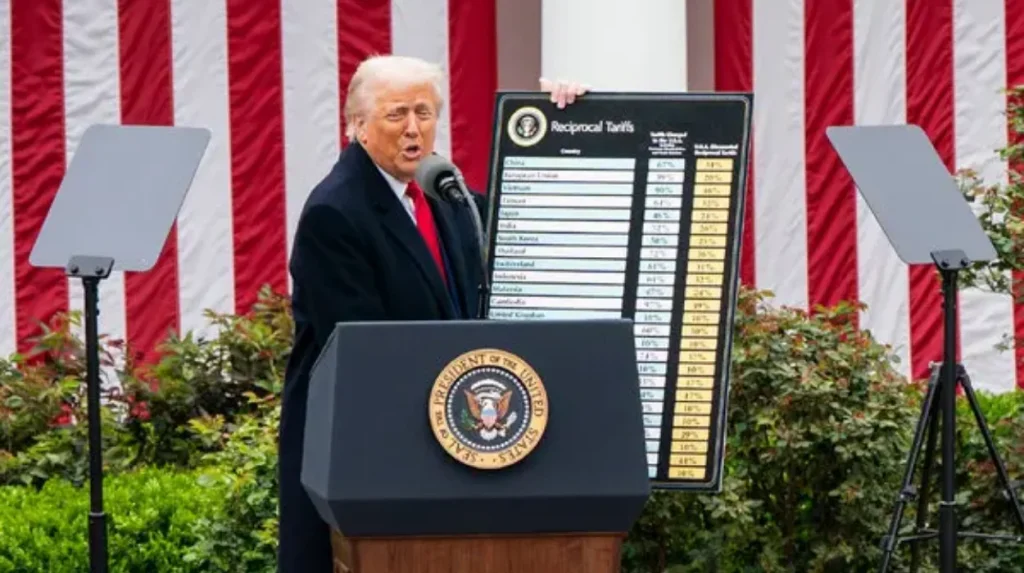
His administration as the president of the U.S. became characterized by the application of the presidential powers to impose tariffs as part and parcel of his trade policy. The Trump administration imposed broad tariffs on imports of key trading partners, especially China, Canada and Mexico, through the International Emergency Economic Powers Act (IEEPA).
Tariff revenues in the form of cumulative payments had paid tens of billions of dollars to the U. S. Treasury by 2025. They were however, also catalysts of retaliatory efforts, and actions that interfered with world supply chains, and legal actions. When the economic and constitutional overtones became apparent, the courts started reconsidering the validity of the use of the IEEPA in this fashion, and a decisive legal turning point was reached.
The Landmark 2025 Court Ruling And Legal Reasoning
In August 2025, the Federal Circuit U.S. Court of Appeals upheld the decisions of the lower courts who found the majority of tariffs declared during the Trump era by IEEPA to be unconstitutional. That ruling held that the executive was exceeding its legal limits by invoking emergency powers to bypass the constitutional power of Congress over trade and tariffs.
The court held: Invocation of IEEPA by the president when he in fact was not facing any actual emergency directly related to national security is unavailable, and tariff power is an essential Congressional power. In particular, the court overturned the imposition of tariffs on Chinese, Canadian, and Mexican goods on the ground of the so-called fentanyl emergency and the 10% so-called reciprocal tariffs on the world imposed in 2020.
Scope And Immediate Effects
The ruling made a clear distinction between tariffs issued under IEEPA and those imposed under other laws like under Section 232 of the Trade Expansion Act, which were not subject to the ruling. The court did not decide that the tariffs were illegal, but allowed them to stand pending, claiming economic turmoil. The issue under consideration of the Supreme Court, in which the government appeals, is aimed at defining the constitutional limitations on executive authority in economic issues.
The Appellate Process And Future Legal Battle
The case’s trajectory points toward a high-profile constitutional showdown before the U.S. Supreme Court. The stay of enforcement by the court of appeals underlines a high level of difficulty in weighing the economic urgency against constitutional integrity. Law analysts posit that when the Supreme Court eventually issues its decision it may alter the limits of presidential powers in the trade field which will have extensive long term consequences to the U.S. economic governance.
The tariffs are still collected in the meantime, both raising revenue and political controversy. The fact that it has taken the court over 3 years to act on its ruling shows that the judiciary is conscious of the disruptive effect tariff removal may have on the trade especially in the current circumstances of a global trade conflict.
Stakeholders’ Perspectives And Wider Implications
The ruling was in large measure received as a vital reaffirmation of the separation of powers by legal scholars. The decision reaffirms the role of Congress in determining the trade policy, by putting a check on presidential overreach. Analysts caution, though, that the ruling would impair the executive branch capability to act promptly to growing threat, and demand new legislative clarity regarding the norms of emergency trade authority.
Some voices in the legal community noted that
“The unchecked use of IEEPA for broad tariff measures risked eroding the constitutional balance.”
Others emphasized that future policy innovation should be rooted in updated statutes reflecting modern trade and security realities.
Business And Economic Sectors
The ruling was met favorably by American industry groups and multinational business. The unpredictable trajectory of Trump era tariffs had long been criticized by many as it created unpredictable costs and discouraged investment. The importer and exporter organizations were found to be rather cautiously optimistic that the legal clarity would bring back normalcy and enhance planning of the cross-border trade.
However, corporate executives cautioned that until tariff regimes are resolved, in particular those that are still in existence under other legislation, they still are a source of friction to U.S. supply chains. Failure to have integrated federal strategy in the area of trade is one of the burning issues, especially in high-tech, automotive, and agricultural industries that thrive on international integration.
Political Ramifications
The court ruling echoed the political right and left. Proponents of Trump’s hostile trade policy decried the decision as judicial overreach over national security authorities, and critics saw it as a much-needed reset. To both present and forthcoming administrations, the decision increases the stakes of unilateral executive action on trade.
According to the Treasury officials, there was the possibility of dangerous diplomatic embarrassment in the event that tariffs were removed abruptly, particularly those imposed on allies. U.S. leverage in the current trade negotiations is also influenced by the case, as tariff threats are not such a strong negotiating tool without strong legislative support.
This individual has already addressed the subject, and the importance of critical interpretation in delimiting presidential power and its profound effects on U.S. trading patterns:
Their evaluation is indicative of wider agreement that the decision is a turning point in executive executive authority in the trade field.
Charting A Path Forward For Trade And Executive Authority
The move by the court to invalidate key elements of the Trump-based IEEPA-based tariff regime represents a greater institutional change of getting back to congress control in economic activities. This is because global commerce is becoming more intricate and the United States is under pressure to restructure its laws without inadvertently compromising its capability to take decisive action in emergencies.
The policymakers will tend to consider legislative amendments to explain when and under what circumstances the executive can invoke emergency powers in economic action. This may involve the establishment of clearer definitions of the threats to national security, obligatory congressional notification or review, and time limits of the economic actions implemented in extraordinary cases.
In the meantime, the Biden administration and its successors should look at other tools, namely, diplomatic, regulatory and cooperative, which are flexible and do not overcome the constitutional boundaries. Trade talks can be reduced to punitive tariff regimes to an inclusive agreement that incorporates economic, environmental, and labour standards.
At the heart of this transition is a question about governance in the 21st-century global economy: how to ensure democratic accountability in trade policy while maintaining agility in a volatile world order. As courts, Congress, and the executive branch navigate this recalibration, the outcome will likely shape the structure of American influence in trade and economics for decades.
The Trump tariffs legal invalidation signals more than a judicial rebuke; it embodies a broader reckoning with executive power in U.S. economic policymaking. Amid rising global protectionism, supply chain realignments, and shifting geopolitical alliances, how America defines the balance between legality, leadership, and leverage may determine its trade future in a world where authority must be earned, not assumed.