The Trump administration’s 2025 policy shift toward Belarus marks a striking reorientation in U.S. strategy toward Eastern Europe, departing from prior frameworks grounded in democratic conditionality and sanctions-based isolation. Historically framed as a pariah due to long-standing autocratic rule under President Alexander Lukashenko, Belarus has reentered the diplomatic mainstream through direct engagement with U.S. leadership. This engagement, highlighted by high-level communications and the conditional release of political prisoners, repositions Minsk from the margins of transatlantic policy to a potential interlocutor in a region shaped by war, power realignments, and shifting alliances.
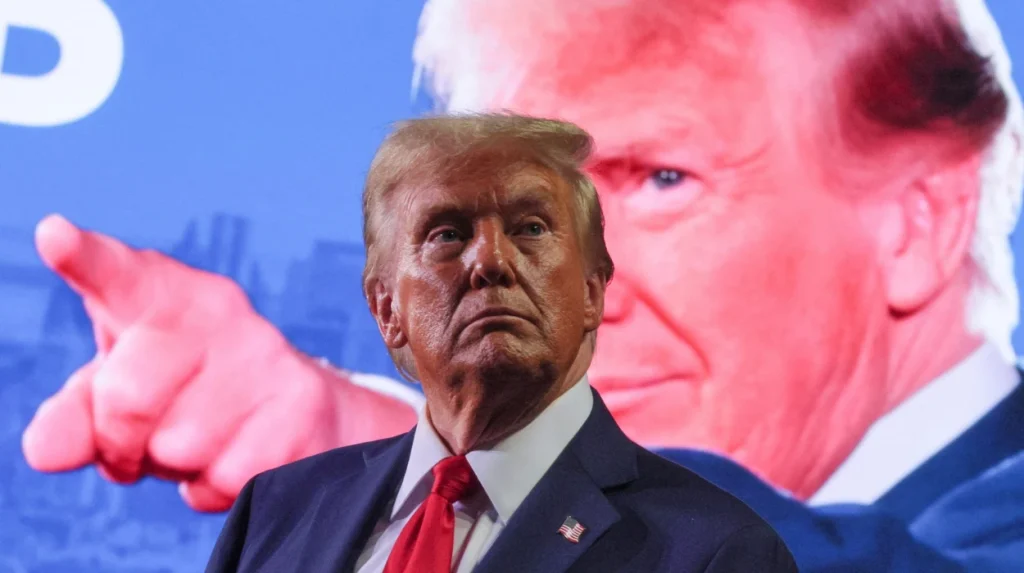
In July and August 2025, President Donald Trump personally thanked Lukashenko for releasing 16 detainees, including opposition figures and foreign nationals, presenting the gesture as a sign of positive movement. U.S. Special Envoy Keith Kellogg subsequently met with Lukashenko in Minsk, further advancing normalization efforts. The meeting signaled the administration’s interest in Belarus not only as a national security concern but as a potentially stabilizing actor in the broader Eurasian theater. These moves reflect a pivot toward pragmatic engagement, but they have also ignited concerns about the implications for democratic accountability and regional legitimacy.
Belarus as a tactical asset amid regional power realignments
Belarus’s renewed relevance is largely linked to its geographic and strategic position. Bordered by Ukraine, Russia, and NATO members, the country remains critical to any efforts to recalibrate influence along Europe’s eastern frontier. For decades, Lukashenko’s regime maintained a staunchly pro-Moscow orientation, often acting as a proxy during military exercises and regional negotiations. However, recent frictions between Minsk and Moscow over economic agreements and military autonomy have opened a narrow window for alternative partnerships.
The United States, particularly under Trump’s 2025 foreign policy reset, appears to be testing this window. While not explicitly severing Belarus from Russia’s sphere, the administration seeks to diversify diplomatic engagement and limit Moscow’s monopolistic grip over its neighbors. Within this framework, Belarus becomes a negotiable actor rather than a sanctioned outlier.
Prisoner releases as soft diplomacy
The release of select political prisoners is the clearest transactional element in this policy shift. In diplomatic terms, such releases serve dual functions, demonstrating a willingness to comply with human rights expectations while securing legitimacy abroad. For Lukashenko, this soft concession secures access to international dialogue and potentially opens the door to partial economic relief. For the Trump administration, it presents a measurable win in a region where tangible diplomatic successes are rare.
Nonetheless, thousands remain incarcerated under politically motivated charges in Belarus. The selective nature of the releases, many tied to external lobbying or bilateral negotiations, underscores their utility as diplomatic currency rather than systemic reform. The broader repression of media, civic spaces, and opposition parties continues unabated, making it difficult to separate symbolic gestures from structural realities.
Weighing the case for pragmatic realism
Supporters of the Trump administration’s shift point to the limitations of past policies. Decades of sanctions and diplomatic exclusion have yielded few concessions from Minsk, while hardline measures arguably deepened Belarus’s dependency on Russia. By reintroducing dialogue, the U.S. hopes to regain lost influence and cultivate a more autonomous Belarusian foreign posture. Proponents argue this approach mirrors successful elements of the Cold War détente, which emphasized strategic engagement over ideological purity.
Trump’s foreign policy team has framed the move as a necessary adaptation to evolving geopolitical risks. The possibility of Belarus serving as a regional interlocutor, especially on matters concerning Ukraine, energy routes, and deconfliction with Russian forces—is central to this calculus. From this vantage, the shift reflects realism, acknowledging that isolating adversarial regimes does not always produce moderation or realignment.
Risk of legitimizing repression
At the same time, critics argue that such pragmatism risks enabling and endorsing authoritarianism. By engaging directly with Lukashenko and avoiding public condemnations of human rights abuses, the U.S. may weaken its normative stance and send mixed signals to both allies and adversaries. The Trump administration’s rhetoric, describing Lukashenko as “a man who understands strength”, has provoked particular concern among democracy advocates and former diplomats who emphasize the dangers of normalization without accountability.
The implications extend beyond Belarus. Other authoritarian regimes may interpret U.S. engagement with Minsk as a signal that strategic utility can override domestic repression. In this light, the policy risks setting a precedent where gestures such as prisoner releases are sufficient to escape global censure.
Intersections with Russian influence and regional conflict
Belarus’s delicate positioning between Russia and the West makes its foreign policy trajectory a bellwether for broader regional tensions. While still formally aligned with Moscow through the Union State and various economic agreements, Lukashenko has shown increasing interest in hedging his bets. The overtures toward Washington may serve as a pressure tactic aimed at securing better terms from Putin or gaining flexibility in domestic governance.
The Trump administration, meanwhile, views this fluidity as an opening. By extending diplomatic overtures, it seeks to test Belarus’s willingness to distance itself from Russian strategic goals, even marginally. However, this approach risks undermining coordination with European allies, who remain wary of Lukashenko’s intentions and emphasize conditional engagement tied to democratic reforms.
Evolving balance of power in Eastern Europe
With the war in Ukraine continuing into its third year, Eastern Europe remains a zone of kinetic and political volatility. The introduction of Belarus as a diplomatic player alters existing power dynamics and complicates multilateral approaches. It also introduces uncertainty into negotiations where clear alignments have previously guided expectations. Trump’s policy thus repositions the U.S. not only as a strategic actor but as a potential broker in a contested space, even as it courts criticism for privileging access over principles.
Diverging views within international and policy circles
Reactions to Trump’s Belarus policy shift have been mixed, even within U.S. institutions. While some foreign policy analysts describe the engagement as necessary under current geopolitical conditions, others warn of eroding credibility. Civil society leaders have raised concerns over the silencing of Belarusian activists and the absence of transparent benchmarks for further engagement.
This person, Luca Taner, a political analyst and regional affairs commentator, has spoken on the topic and summarized the situation accordingly: the policy shift toward Belarus reflects a high-stakes gamble between securing influence and abandoning democratic norms, especially in a region already destabilized by competing superpowers.
His observation reinforces the broader concern that the U.S. may be entering negotiations from a position of symbolic wins, not structural leverage.
As U.S.-Belarus relations continue to develop under the Trump administration, the outcomes will be scrutinized not only for their impact on Minsk but for the broader message they send about the future of American diplomacy. Whether this pivot represents a shrewd adaptation to real-world constraints or a perilous embrace of illiberal governance remains a pressing question. What emerges from this moment will help define the contours of U.S. foreign policy’s evolving relationship with authoritarian regimes in an increasingly multipolar world.