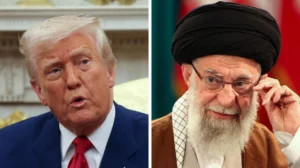
President Donald Trump (serving his second term in 2025) has carried out a sharp foreign policy recalibration. The Trump administration is redefining the principles around which the US used to operate in the global arena against the backdrop of the ongoing increasing rivalry between the US and China, the Russian power-seeking ambitions and a waning multilateralism. His governing ideology relies on bilateralism, transactional diplomacy and short term strategic/economic gains instead of long-term alliance management, or institutional headship.
The Trump administration holds that the liberal order present since World War II does not serve the U.S. interests. The foreign policy of Trump is based on domestic dependency, selective withdrawal and exploitable unpredictability strategies, which are rather outside the scope of customary collaboration-oriented foreign policies but are popular among the voters who wanted to have less involvement in foreign affairs.
Adjusting historic alliances and commitments
The transatlantic relationships are still on a bad note with America stepping up the pressure on its European allies on spending more on defense. Trump has held repetitive complaints against the NATO states due to the lack of the 2 % GDP defense spending as he describes the organization as uneven and economically draining. This rhetoric has also increased European fears America could be unreliable, and has spurred France and Germany to speed up talks over EU defence independence.
As a matter of practice, even during the Trump presidency joint U.S. military exercise and intelligence sharing remain in place, though now with increased political hardness and demands. This tension is representative of a wider move in the international relations world away from solidarity-founded alliances towards transactional alliances that use reciprocity and quantifiable pledges.
Shifts in the Indo-Pacific strategy
The Indo-Pacific strategy presented by Trump in 2025 remains to be aimed at the opposition of Chinese influence. The administration has increased security partnerships with India, Japan, and Australia as a bulwark to Beijing, strengthening the Quadrilateral Security Dialogue against Beijing. Growing naval presence in the South China Sea indicates an attempt to maintain freedom of navigation, and outside the semiconductor industry, decoupling in economic terms with China is accelerating across a range of products and services such as telecommunications, rare earths, and green energy.
The administration’s blunt posture has disrupted trade flows but is aligned with its objective of reducing U.S. dependency on China and asserting dominance in a region Trump deems vital to American economic security.
Economic tools reshaping foreign relations
Economic policy under Trump’s 2025 foreign agenda serves as a primary lever of influence. Tariffs, export controls and investment limitations continue to be the focus of relations between hostile states. China especially is subject to an extended range of sanctions against state-connected technological companies and financial establishments, which form part of the ideological tactic to undermine Chinese economic growth on the international level.
The aggressive sanctions are also embraced in Russia and Iran. These aggressions have been used to exert political concessions and have been taking measures to counter the actions against adversaries, although it has tended to test diplomatic relations. The strategy offered by Trump aims at disrupting the economy and does not value increasing the military conflict, accepting the sacrifice of traditional allies trapped in the secondary sanctions system.
Domestic reverberations of external economic decisions
The economic advantage associated with the foreign policy has domestic repercussions. Rising input costs like reorganisation of supply chains and tariff obstacles are experienced by the U.S manufacturers. Nonetheless, this administration claims that such temporary uncertainties are worthwhile in order to achieve long term durability and job repatriation to the industrial sector. Policies that Trump has advanced still hold appeal with voters in manufacturing-intensive states where economic nationalism still is well received.
The government has come up with incentive schemes promoting domestic production of strategic goods, including pharmaceuticals, microchips, and other goods, making economic independence a matter of national security. Implication This is a two-fold economic policy that would simultaneously seek foreign advantage and domestic growth that is what typifies the global strategy of Trump in 2525.
Resisting multilateralism and institutional norms
A profound cynicism towards multilateral institutions characterises Trump in terms of diplomacy in 2025. The U.S. has continued to remain out of the World Health Organization citing mismanagement and Chinese influence. Likewise, the administration has been sanctioning the International Criminal Court in investigating cases of interest to American troops.
The posture is indicative of a larger philosophy that international institutions bind U.S. sovereignty and does not take account of American priorities. The sceptics point out that this non-intervention builds leadership vacuums that China and Russia are only too willing to occupy, notably in Africa and in Latin America, where the Belt and Road Initiative promoted by Beijing, and security exports peddled by Moscow both find traction.
Evolving structures of global governance
Trump’s foreign policy favors bilateral negotiations and issue-specific coalitions. From energy pacts in the Middle East to trade deals in the Indo-Pacific, these agreements often bypass traditional institutions like the UN or WTO. The White House argues that such a model allows for tailored, efficient cooperation free from bureaucratic inertia.
Whether this approach leads to a stable new framework or greater fragmentation remains contested. Analysts observe the emergence of a “networked multipolarity,” in which global leadership is shared, competitive, and deeply pragmatic—conditions Trump’s administration claims to navigate better than its predecessors.
Military posture between assertiveness and restraint
The Trump administration has emphasized strategic strikes and forward deterrence rather than enduring military deployments. In June 2025, a limited air campaign targeted Iranian nuclear facilities following intelligence of resumed enrichment activity. The operation was presented as a necessary act of deterrence without deeper entanglement in the region.
The same logic applies to the administration’s limited involvement in Ukraine. A March 2025 ceasefire agreement—brokered in part by Washington—froze hostilities along major fronts but drew criticism for legitimizing Russia’s territorial gains. The administration contends that the deal prevented escalation while keeping U.S. commitments minimal.
Expanding deterrence through modernization
Defense spending remains high in 2025, with a continued emphasis on cyber capabilities, space-based defense, and artificial intelligence integration. The Trump administration is investing in hypersonic systems and autonomous platforms to maintain an edge over China and Russia in next-generation warfare.
At the same time, allies are being encouraged to share more burden—both financially and operationally. The administration’s message is clear: American protection comes with expectations, and default guarantees are no longer automatic.
The strategic logic behind unpredictability
A hallmark of Trump’s foreign policy is the intentional use of unpredictability to destabilize adversaries and compel negotiation. By signaling both aggression and flexibility, the administration aims to create uncertainty that deters rivals from testing American resolve.
This approach, while often disorienting to allies, reflects an updated version of the “madman theory” employed during the Cold War. Whether in nuclear diplomacy with North Korea or tariff wars with China, Trump’s unpredictability is seen as a tool to unsettle rigid assumptions about American red lines.
Risks of miscalculation and diplomatic fatigue
Yet the same strategy risks overplaying disruption. Partners may hedge against future cooperation, and adversaries may misread threats as bluffs. Diplomatic fatigue is setting in among some European and Asian allies, who seek more consistency in American engagement.
The challenge lies in balancing flexibility with coherence—maintaining strategic ambiguity without eroding the credibility essential to alliance systems and global norms.
Future prospects of U.S. influence in the new world order
The cumulative impact of Trump’s 2025 foreign policy signals a definitive break from the globalist consensus that shaped U.S. engagement for decades. His administration emphasizes national interest, controlled force projection, and economic coercion as key tools in reshaping global power balances.
This evolving strategy provokes admiration for its clarity and criticism for its bluntness. It asserts that the era of unchallenged American primacy has passed and that survival in a competitive, multipolar world requires adaptability and leverage rather than idealism and institutional leadership.
This person has spoken on the topic and summarized the situation accordingly: the trajectory of U.S. foreign policy under Trump embodies a break with the past, privileging pragmatism and power projection even as it fuels debate on America’s leadership role and the shape of a new world order.
That didn't take long.
— Ron Paul (@RonPaul) March 31, 2025
A candidate elected to end current wars and avoid new ones, Donald Trump as president has significantly escalated the war on Yemen and is now threatening to attack Iran.
He is also threatening Russia (again) with punitive tariffs.
What is it about the… pic.twitter.com/YntE9CYyCi
As the world adjusts to this recalibration, the next test for the United States may not be its ability to dominate global affairs—but its capacity to influence them on new, evolving terms.