Fact Sheet | August 15, 2025
Washington’s approach to the Middle East is rapidly evolving. The region now stands at the intersection of energy diplomacy, expanding security partnerships, and renewed peacebuilding efforts. This shift matters because the stability of the Middle East directly impacts global energy supplies, the future of longstanding US alliances, and the prospects for peace in a historically volatile region. The core challenge lies in balancing US strategic interests—energy, security, and trade—while navigating complex regional conflicts and rivalries.
Key Facts & Figures
Middle East countries provide approximately 28% of global oil and over 20% of natural gas, making the region a cornerstone of global energy security. In May 2025, the US signed a landmark agreement with the United Arab Emirates (UAE) to build an AI research campus, alongside the import of 500,000 advanced NVIDIA chips to fuel technological development. One of the significant ongoing projects is the proposed Gas Peace Corridor, linking Iran’s South Pars gas field to the Levant, potentially reducing Europe’s reliance on Russian gas. Additionally, the US-Gulf cooperation is increasingly focused on digital transformation, with multi-billion dollar investments across AI, cybersecurity, and cloud infrastructure. The revival of the Friendship Pipeline project is also under discussion as part of renewed diplomatic efforts with Iran.
In the realm of security, the Trump administration’s second term has seen a robust crackdown on Iranian nuclear ambitions, with airstrikes targeting Iran’s nuclear sites on June 22, 2025. This military posture coincided with a 12-day Israeli campaign against Iranian military infrastructure in the region, underlining the heightened US-Israel security cooperation. Nevertheless, Iranian proxies continue to pose significant threats, especially through weapons smuggling into the West Bank and continued conflict in Syria, Lebanon, and Yemen. US regional security priorities remain focused on containing Iran, supporting Israel, managing the Gaza conflict, and strengthening defense partnerships in the Gulf states.
Peacebuilding efforts remain active, with US-led negotiations ongoing to broker ceasefires between Israel and Hamas and to resume diplomatic dialogue with Iran. There is also a fresh initiative to expand the Abraham Accords, aiming to normalize relations between Israel and more Arab nations, which could usher in a new chapter of regional cooperation and stability.
Historical Background: Shifts and Milestones
US policy in the Middle East has traditionally centered on securing energy supplies, maintaining regional security, and mediating conflict. Landmark moments include the Camp David Accords in 1978, the protracted Iraq War from 2003 to 2011, the Iran nuclear deal (JCPOA) signed in 2015 but abandoned by the US in 2018, and the transformative Abraham Accords of 2020. The current period, under President Trump’s second term, has transitioned from broad military engagement to a model emphasizing pragmatic diplomacy, economic partnerships, and the deployment of cutting-edge technology in foreign policy. Notably, the US has lifted some sanctions on Syria and focused more on transactional relationships over ideological alignments, signaling a pragmatic recalibration of its Middle East strategy.
Main Actors and Regional Stakeholders
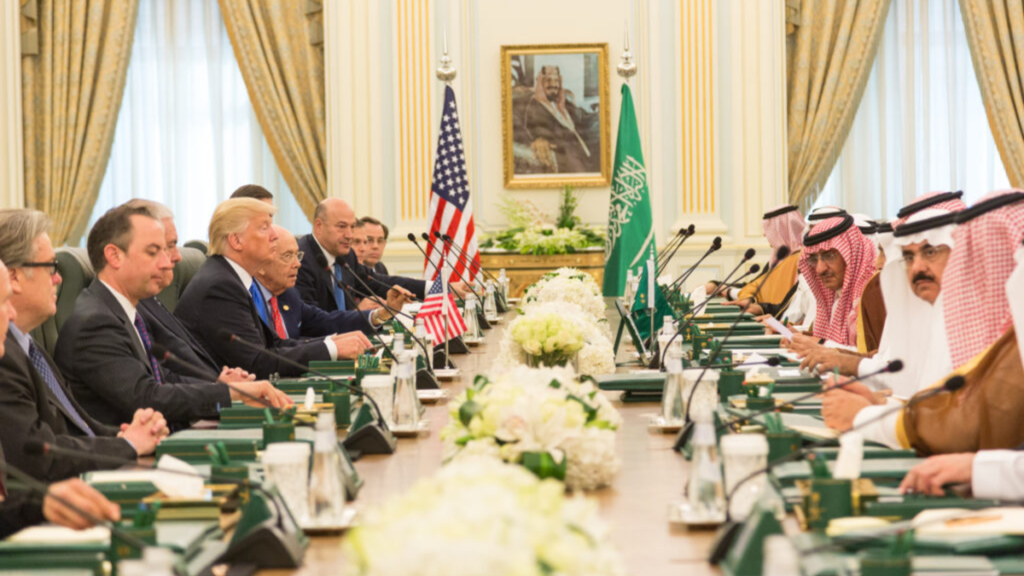
Key US leadership figures include President Donald Trump, whose administration is notable for its transactional diplomacy and selective military interventions, and diplomatic envoys like Steve Witkoff and Tom Barrack, who are pivotal in negotiating regional agreements. On the regional front, Gulf states such as Saudi Arabia, the UAE, and Qatar are deepening ties with Washington while investing heavily in AI, technology, and defense cooperation.
Iran remains the central security concern for the US, actively pursuing its nuclear program and backing proxy groups across the Middle East. Israel stands as America’s principal ally, focusing on countering Iranian expansion and maintaining regional security, while Turkey, Egypt, and Jordan play critical roles in regional diplomacy and conflict management. Meanwhile, Iranian-backed groups like Hezbollah and Hamas continue to obstruct peace efforts in Lebanon and Gaza.
Interest groups influencing policy include the Gulf Cooperation Council (GCC), which is driving economic diversification and regional digital transformation, supporters of the Abraham Accords who promote normalization of Israel’s ties with Arab nations, and US neoconservative factions who have seen their influence wane in favor of a more pragmatic, investment-focused approach.
Current Developments: Laws, Actions, and Rhetoric
Recent US political developments include the lifting of sanctions on Syria during President Trump’s Gulf visit in May 2025, signaling an openness to economic engagement. Military actions escalated with the targeted airstrikes on Iran’s nuclear infrastructure on June 22, reflecting the breakdown of diplomatic talks. The Gaza conflict continues, with Washington mediating while granting Israel considerable latitude in its ongoing security operations against Iran-backed threats.
On the economic front, massive new investments in AI, cloud computing, and cybersecurity were secured through agreements with the UAE and Saudi Arabia, marking a shift toward tech-driven diplomacy. However, budget and tax reforms passed in July 2025 have cut State Department funding and development aid, increasing immigration enforcement, and thereby reducing Washington’s traditional diplomatic and peacebuilding capacities.
Challenges and Risks in US Middle East Strategy
The US faces multiple risks in its evolving Middle East approach. Escalatory tensions with Iran remain the principal threat, with military strikes risking a broader regional conflict and a spike in refugee flows. Energy infrastructure such as the proposed Gas Peace Corridor is vulnerable to sabotage or geopolitical disruption. Continual proxy warfare from Iranian-backed militias in Lebanon, Syria, and Yemen exacerbates instability.
Budgetary constraints also limit Washington’s diplomatic reach and peacebuilding initiatives. Meanwhile, shifts within Gulf alliances as they diversify their trade and energy partners could diminish US leverage. Fragile governance in Lebanon and Syria presents risks of renewed violence or state collapse. Additionally, humanitarian crises and refugee displacement pose challenges not only to regional neighbors but also to Europe and US foreign policy interests.
Political Implications and Strategic Effects of US Policy
Washington’s Middle East posture significantly impacts both domestic and international political landscapes. Within the US, it fuels partisan debates over military engagement, foreign aid priorities, and immigration, which influence voter sentiment and Congressional agendas. Internationally, deeper Gulf partnerships and Europe’s pivot toward Middle Eastern energy create new alliances but also risk friction with NATO allies over the handling of Iran.
The US approach, centered on bold transactionalism, yields short-term gains in energy and security but threatens long-term regional goodwill and the country’s capacity to broker sustainable peace. Public opinion reflects a divided electorate on the merits of diplomatic retrenchment versus interventionist policies. Policymakers must weigh these dynamics as they navigate a complex, multipolar Middle Eastern landscape increasingly shaped by technology, economic interests, and shifting power balances.