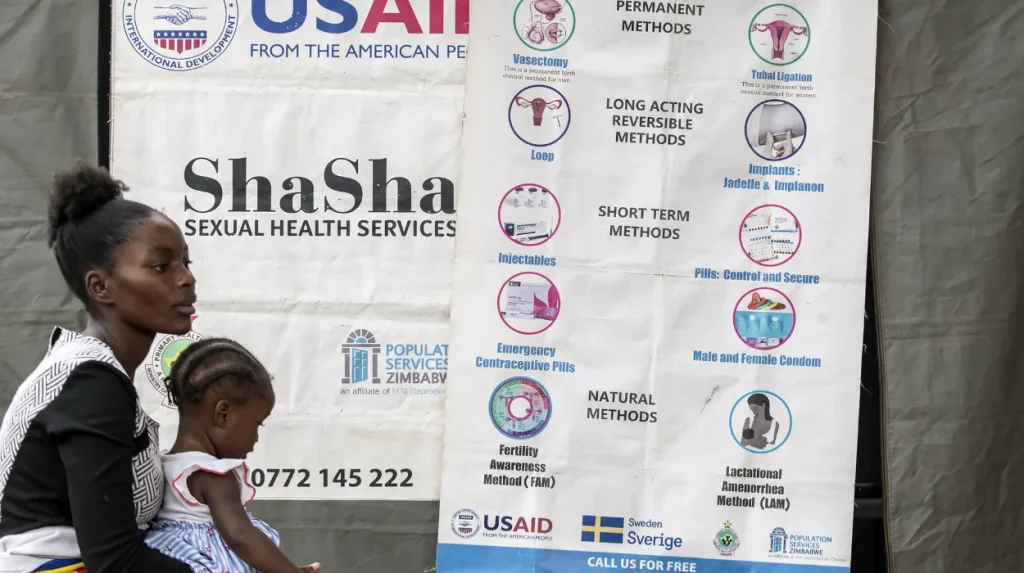
The American government had bitterly decided to burn off approximately $9.7 million worth of contraceptives that were funded by tax payers in 2025. These consisted of long-acting reversible contraceptives like implants and intrauterine devices and millions of doses of injectable hormonal contraceptive methods and injectable hormonal oral contraceptive pills. The materials were stored in a medical warehouse in Geel, Belgium and were originally sent to the health programme in low-income countries, mainly in sub-Saharan Africa.
Though the Estimated shelf life of the contraceptives goes up to at least 2027 and probably beyond, it is currently to be incinerated in France at the extra cost of about 167,000 U.S dollar in terms of disposal. Internal audits from early 2025 revealed that over 70% of the products’ usable life remained intact. Experts estimate the destroyed stockpile could have covered one year of contraceptive protection for over 650,000 women or up to three years for nearly one million women in need.
Growing Need in Vulnerable Regions
Sub-Sahara Africa is also a region that has the least fulfilled contraception requirement. In spite of the rising demand, the contraceptive prevalence among women of reproductive age in the region stands below 30 percent and more than 50 percent express the desire to use contraception in case it were available. The area is also facing an ongoing increase in teenage pregnancies 4.5 million in 2000 and 6.1 million in 2021 which are usually coupled with high death rate in young pregnancies and low school enrollments by young girls.
This demolition is happening when there is increased international interest in access to reproductive health services. By 2030, the Sustainable Development Goals, especially the Target 3.7, will guarantee that everyone has access to family planning. The fact that such a large quantity of contraceptives has been lost is actively working against this progress and eroding the work on the frontlines of public health that is already struggling due to economic shocks and climate change disruptions.
Policy and Political Drivers Behind the Destruction
Legal Constraints and Institutional Shifts
The U.S. government’s rationale for destroying the contraceptives is rooted in the reapplication of the Mexico City Policy—commonly referred to as the Global Gag Rule—and the Kemp-Kasten Amendment. These restrictions prohibit funding or collaboration with organizations that include abortion services or advocacy within their programs. Consequently, even NGOs willing to take the stockpiled contraceptives without compensation were deemed ineligible due to these legal barriers.
The recent dissolution of USAID and its absorption into the State Department in early 2025 has compounded the issue, disrupting existing channels of global reproductive health coordination. The result has been a policy environment where redistribution of surplus or unused medical aid has become increasingly difficult.
Rejected Redistribution Offers
Organizations such as MSI Reproductive Choices attempted to take custody of the contraceptives for global distribution, even offering to repackage and transport the products at their own expense. These offers were declined. Similarly, the United Nations Population Fund (UNFPA) was reportedly engaged in early-stage negotiations to secure the contraceptives but received no formal response from U.S. officials or the contractor managing the warehouse inventory.
The U.S. government’s inability or unwillingness to find alternative solutions for these supplies stands in stark contrast to common international practices, where near-expiry medications and devices are quickly rerouted to areas of acute need.
Reactions from Advocacy and Political Circles
Humanitarian agencies and lawmakers have condemned the destruction. The International Planned Parenthood Federation described the decision as “reckless” and “indifferent to global need.” Health analysts argue that the move undermines both the ethical obligation to improve women’s health and the fiscal responsibility tied to taxpayer-funded programs.
In the U.S. Senate figures such as Jeanne Shaheen and Lisa Murkowski voiced opposition, framing the destruction as a policy failure. Global contraceptive delivery systems, which have already been undermined by years of uneven funding and legal ambiguity, were dealt a “catastrophic blow” by the ruling, according to Sarah Shaw, Advocacy Director at MSI.
Financial and Ethical Costs of Incineration
Destroying usable medical supplies incurs more than logistical expense. That 167,000 incineration cost which is borne by the U.S. taxpayers is representative of a more serious inefficiency in the management of foreign aid. More essentially, the moral significance of such a decision is very high. Every busted gadget means a lost chance to prevent a pregnancy, save a life, or give a woman an opportunity to control their health better.
Discarding instead of re-distributing essential commodities to other countries as a decision, against a background of reduced world aid funding, exemplifies how legal and political imperatives can trump common sense in terms of protecting the health of the population. The incident endangers the international spread of doubt over the loyalty and ethical transparency of American worldwide health promises.
Missed Opportunities and Long-Term Ramifications
Global Reproductive Health Landscape
The ruling leaves a dark legacy on the future of the American foreign medical relations. It interrupts chains of supply, it undermines confidence in partner countries and threatens to get other countries to reduce the donor participation. The U.S. European and African allies even expressed worries about the increasing volatility of American foreign health policy already.
The destruction also potentially sets a dangerous precedent. Should other donor countries adopt similar constraints, the global reproductive health infrastructure—already fragile—could unravel, resulting in widespread consequences for family planning, maternal health, and gender equality goals.
Implications for U.S. Aid Credibility
The inability of the U.S. to transfer ownership of the contraceptives to qualified organizations signals bureaucratic paralysis. According to health professionals, a redistribution of the supply networks which is tried and tested in dealing with vaccines, medicines and emergency relief supplies could have easily absorbed these goods but only when there was political will. The defeat compromises the prospective talks with NGOs and international health coalitions who would now doubt the prospective dependability of American partnership.
This is what this individual said about the issue: Kristan Hawkins, president of Students for Life and a leading attendee of conservative family policy, justified the destruction by the legal terms and positioned it as a compliance with the federal law. Her comments sparked debate, as they were interpreted by many public health advocates as prioritizing political symbolism over global women’s health needs.
The Human Toll Hidden in the Policy Debate
Beyond the dollar figures and policy debates lies the human reality. There are places where every human in need of protection, every contraceptive device could save a human being, a family, the loss of a health care system new inmate, and the incineration of nearly 10 million dollars worth of protection is not just a bureaucratic oversight, but a silent world tragedy.
Each loss of an opportunity to offer reproductive care translates into a blow not only to women’s health but also to the community, childhood development, and economic security. Since countries are on the brink of climate-related calamities, conflict-related displacement, and failing health systems, reproductive health is no longer a subset.
The annihilation of such provisions is one such point where we need to self-examine in terms of the role of a domestic political agenda towards international humanitarian obligations. It provokes the stakeholders to question whether the global health system can afford both the human and monetary cost of not acting against the reproductive demands that are crying out at them and demanding action.