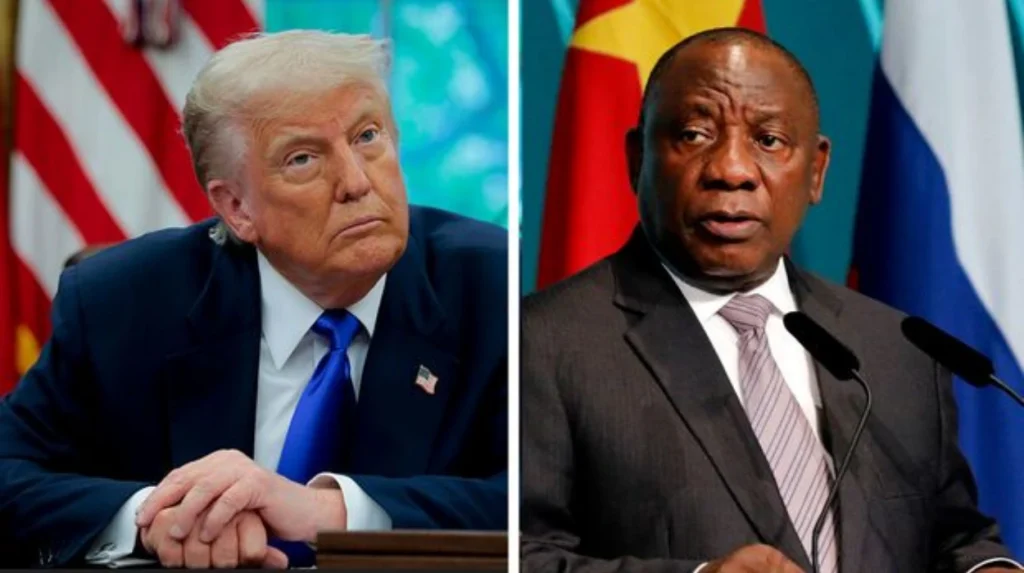
The fall in the relationship between the United States and South Africa in 2025 is at the turning point, which indicates the overall geopolitical directions and shifts in policies on both sides. What previously had been viewed as a strategic alliance informed by commonalities in interests in the fields of development, health security as well as multilateral diplomacy has taken a serious beating. The public split occurred in February 2025, when the previous president Donald Trump gave white Afrikaners refugee status by executive order, after they claimed to be discriminated against institutionally. The move was denounced by Pretoria as politically driven and racially selective that is seen to be an affront to its internal governance.
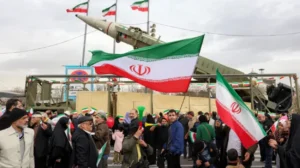
At the same time the U.S. suspended a variety of non-security kinds of aid to South Africa intensifying the war of words. The U.S House of Foreign Affairs Committee responded by drafting the U.S.-South Africa Bilateral Relationships Review Act of 2025 that directs a 120 day audit of bilateral relationships and the consequences of sanctions against high-ranking ANC officials who were accused of compromising U.S. interests. The main issue Washington has with Pretoria is turning towards Moscow, Beijing, and Tehran, which are being considered by the U.S. as strategic competitors in Africa.
Internal U.S. Ambiguities and Foreign Policy Drift
Misguided policies in the U.S. have also ensured that bilateral relations are strained further by contradictions. Embassy cables released by WikiLeaks point to continuing uncertainties regarding who exactly is intended to benefit by the refugee program and on what terms. There is rampant internal debate on whether other Afrikaans speaking communities can be qualified and whether the policy can be applied to the displaced minorities in other societies like post-colonial nations.
This lack of clarity has triggered diplomatic friction, with South African officials characterizing the program as a backhanded indictment of the country’s post-apartheid social fabric. Pretoria considers the action as interference with its sovereign affairs and aggravated by mixed messaging by U.S. agencies and the absence of top-level interactions since the implementation of the order.
The American interest in South Africa has even been evident through lack of interest on the part of the U.S. diplomatic involvement there. The bilateral attention is likely to be downgraded with the retirement of Charg E DAffaires Dana Brown, in March 2025 and the abandonment of naming a successor. The interim Deputy Chief of Mission, David Greene, has had the misfortune of stepping into very difficult situations, having to oversee a relationship guided more by confrontation, than cooperation.
Political and Economic Fallout for South Africa
Sanctions Threats and Trade Retaliation
With the bilateral review underway in Congress, economic measures loom large. Some of the suggested measures are the raiding of South African mineral or agricultural exports with a 30 percent tariff- a fact that raked in more than 7 billion dollars worth of trade between the U.S. and South Africa in the year 2024. Pretoria is already straddling the problem of post-COVID economic decline and the loss of more jobs especially among the youthful population; a new setback through the implementation of punitive tariffs will hit it particularly hard.
This is economic straining in a politically weak time. The ANC has not been so popular that the rate of its support has declined to about 40 percent in the 2025 general elections compared to 57 percent in 2019. A diluted mandate has enabled the domestic critics and also divided coalition politics, leading to the push at the foreign policy to be more aggressive and defensive in Pretoria.
Shifting Diplomatic Landscape
To offset U.S pressure South African officials have moved to strengthen relations with Russia and China. Military coordination of cooperation and bilateral infrastructure agreements have accompanied involvement by Pretoria in the expanded BRICS +, now to include Iran. South Africa has also restated its position on non-alignment of controversial issues in international affairs such as non-participation in UN resolutions against Russia in Ukraine and its trial against Israel at the International Court of Justice.
This repositioning emphasizes another strategic shift not only to exercise diplomatic sovereignty but to acquire alternatives in economic and political relationships in a more multipolar world.
South Africa’s Assertive Diplomatic Posture
Pretoria has been defiant and recalibrated in the face of U.S pressure. The top ANC leaders have portrayed the U.S. measures as coercive evoking the changing sides by Washington and what it termed as selective human rights championing. The South African foreign ministry has indicated the intensity by which the country advocates a balanced interest at interest-based diplomacy by opposing any form of geopolitical preposition to any compulsory coordination that does not act in the national interest.
In this context, South Africa wants to adopt a foreign policy that is as flexible as possible in various global directions. This outward-looking reorientation is reflected by the recent upward trend in energy cooperation between South Africa and Iran, infrastructure in Johannesburg by China and sustained involvement in African peacekeeping operations via the AU.
Strategic Divergence and Ideological Misalignment
Competing Foreign Policy Philosophies
The turnaround by Washington and Pretoria is not a matter of difference of choices made on an individual policy; it is also ideological. As the U.S. is moving more toward making everything binary in regards to world politics, South Africa is adhering to its non-alignment-based multi-lateralism, which it believes is pulling the world out of a fragmented world. Such orientation grounded in the history of the fights against apartheid and South-South cooperation, conflicts with the present-day U.S. urges of alliance.
This developing divide has also been echoed by tensions over Pretoria not taking sides in the conflict over Ukraine, its reluctance to criticize the Iranian behavior in the region and criticisms of NATO-led security arrangements. South Africa views the world system as the one that should correspond to the existence of several sources of power and the U.S. states that it is determined to preserve its power in Africa both militarily and diplomatically.
Regional Impacts and Global Stakes
The implications of this tension ripple beyond the bilateral sphere. U.S. retrenchment from Africa, evidenced by the 2025 closure of several consulates—including one in Durban—risks creating vacuums that rival powers may quickly fill. Humanitarian programs, counterterrorism initiatives, and joint climate change research stand at risk of deprioritization in the face of growing bilateral acrimony.
For South Africa, the diplomatic standoff tests the limits of its foreign policy autonomy. The need to maintain Western trade partnerships, especially with the U.S. and EU, collides with its strategic ambitions to build influence through BRICS and continental leadership.
Fragile Prospects for Diplomatic Reset
The window to both countries of recalibration is becoming small. The U.S. Congressional hearings, perhaps scheduled in 2025, will define the future of the U.S. South Africa Bilateral Relations Review Act and may provide a precedent to guide Washington in handling the middle powers that engage in multipolar practices. Simultaneously, South Africa has to choose between the arguments that it has more interests in the assertion of strategic independence than the economical and political costs of continued alienation of the west.
There might be a decisive role of domestic political changes within the both countries as well. U.S. midterm elections in 2026 might change the mood in the U.S. Congress, whereas ANC leadership infightings might sway Pretoria when making diplomatic decisions.
This person has spoken on the topic: South African political analyst Clement M recently observed that
“The US-South Africa relationship in 2025 is a mirror of broader global realignments—each side maneuvering carefully amidst rising mistrust but also mutual dependencies.”
Listen to what Helen Zille told me in December on #FaceTheNation.She had just returned from US & London,where she spoke to a “key Trump advisor”.This may help you understand where SA finds itself with the US. “Trump doesn’t play, we must be careful & stop playing games” she said pic.twitter.com/vtdqemsxNO
— Clement Manyathela (@TheRealClementM) February 9, 2025
His analysis encapsulates the complex interplay of sovereignty, strategic calculus, and mutual need shaping the bilateral environment.
As South Africa and the United States navigate this pivotal year, the stakes extend beyond national interests into the broader domain of global order. Whether the mistrust hardens into sustained estrangement or gives way to pragmatic dialogue will depend on leadership choices, domestic pressures, and the capacity of both countries to recognize converging interests amid diverging worldviews.