In 2025, the relationships between the United States and South Africa became tense after the progress of the US-South Africa Bilateral Relations Review Act (H.R.2633). The name of this bill, Republican Representative Ronny Jackson, passed the House Foreign Affairs Committee with a 34 to 16-vote, and it forms the basis of prescribed sanctions against South African government officials and members of the ruling African National Congress (ANC). The legislation provides a critical re-consideration of bilateral ties as well as cites the foreign policy of South Africa in alignment with China, Russia, Iran and Hamas as the major areas of concern.
According to the advocates of the bill, the acts that are being undertaken by South Africa are indicators of a lapse of democracy and a shifting of powers to the authoritarian side. Jackson added that South Africa left America and allies to join communists and terrorists. This rhetoric is but a symptom of a general frustrated feeling in Washington due to the nonalignment policy of South Africa which is now seen, in a polarized geo-political world, not to harmonize with US interests.
The Bill’s Core Objectives And Provisions
Strategic Realignment And Policy Assessment
The new law demands an extensive examination of every component of the US-South Africa relationship, such as the military connection, economic relationship, intelligence and diplomatic contacts. It enables the government to identify and potentially penalize South African officials who can be regarded or considered as involved in corruption or abuse of human rights especially in the ANC.
In the bill, specific developments in recent times are highlighted including the joint naval activities of South Africa with China and Russia, the diplomatic relations with Hamas leadership, and the reduction of the relationship with Taiwan. These activities are contextualized as evidence of strategic orientation that is inconsistent with the foreign policy interests of the US.
Tools For Diplomatic Pressure
Proponents of H.R.2633 view the legislation not only as punitive but as corrective. By conditioning future cooperation on realignment with Western partners, the bill positions the United States as both an enforcer and a potential diplomatic partner, encouraging Pretoria to reconsider the direction of its international alliances.
Geopolitical Context And Regional Ramifications
South Africa’s Foreign Policy Between Powers
Historically, South Africa has pursued a nonaligned foreign policy, engaging with both Western democracies and emerging powers such as China and Russia. In the current multipolar order, that balancing act is increasingly scrutinized. South Africa’s participation in global legal proceedings against Israel and its ties with nations adversarial to the US have amplified these tensions.
Pretoria insists that its approach is rooted in sovereignty and strategic autonomy. Yet, as Washington adopts a harder stance, South Africa’s space to maneuver without consequences is rapidly narrowing. The US bill represents a significant intervention in this dynamic, seeking to redefine the limits of acceptable alignment for a regional power.
Ripple Effects Across Africa
Should the bill pass into law, its ramifications would extend beyond bilateral ties. South Africa plays a central role in continental diplomacy and is a key player in African Union initiatives. Sanctions against ANC leaders could be interpreted across Africa as a US willingness to punish governments that deviate from Washington’s strategic vision.
The proposed sanctions may also trigger economic fallout. South African exports to the US are already under scrutiny, with a potential 30% tariff looming. This poses risks to industries like citrus farming and automotive production at a time when South Africa is contending with economic stagnation, load-shedding, and post-pandemic recovery.
Domestic Political Responses In South Africa
Political Disagreement And Institutional Friction
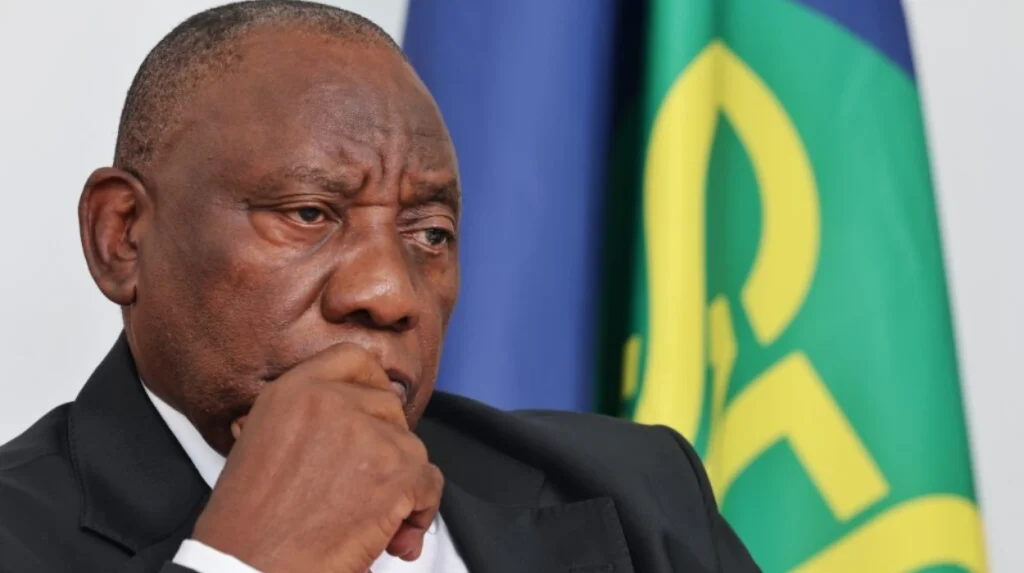
The ANC officials have spoken up against this bill, claiming that it interferes with national sovereignty and penalises the right to foreign policy expression within the democratic discourse. Even though the incoming administration of president Cyril Ramaphosa has reacted with cautious diplomatic phraseology, internal party debates are showing signs of increased apprehension.
As the largest opposition party, the Democratic Alliance in South Africa has criticized the ANC because it has lost friends in the West. The rejection of a diplomatic visa to the special envoy of President Ramaphosa only added more fuel on the home front and reportedly highlighted the poor relationship in the official avenues between the two countries.
National Sovereignty And Global Pressures
In South Africa, the debate over the bill has sparked off debate as to what international partnerships entail. Most critics state that the foreign policy must not be subjected to the laws of other legislatures and therefore, a clear statement of the South African foreign policy must be articulated in a fast-moving international system.
Legal And Political Dimensions In Washington
Legislative Trajectory And Political Climate
Even though the advancement of H.R.2633 through a committee is commendable, it still has to be discussed and voted on by both Houses of Congress and it has to be signed by the President in order to become an Act. Legislative fate of the bill Looking at legislation, Congress is not scheduled to resume work until September 2025, so the future of the bill is unclear, but is a political issue.
The administration headed by Trump has welcomed the bill and has been consistent with its overall move to hold states believed to act against the interests of the United States to account. The foreign policy platform of the administration has concentrated on accountability and selective engagement, which are the same themes being considered in the objectives of the bill.
Enforcement Challenges And Geopolitical Repercussions
In case it is adopted, the sanctions may cover visa ban, asset freeze and restriction of financial transactions with the targeted leaders. These would be unprecedented in terms of increase of US- South Africa ties post apartheid.
It would probably require coordination of intelligence and support of allies to implement in practice. This brings the danger of diplomatic stand-off, which may be prompting South Africa to seek other alliances, economically, among the BRICS.
Evaluating Broader Consequences And Strategic Calculus
Risks Of Overreach And Economic Fallout
The US bill introduces the risk of destabilizing a key African partner at a time when great power competition is intensifying. Sanctions could undercut US trade access to the region and damage South Africa’s economic capacity to serve as a regional stabilizer.
Synergies on issues of mutual interest such as climate adaptation, counterterrorism and public health where politics sometimes takes second place to common interests may be lost in collateral damage. The fracture in its relations would impair the ability of both states to liaise in solving world problems.
A Catalyst For Policy Reassessment
Irrespective of its aggressive nature, the bill could create some reconsideration on either side. In the case of the United States, this can mean an improvement of the balance between the strategic enforcement and regional partnership. In the case of South Africa, it will come as an opportunity to get its foreign policy framework clarified and strengthen the ties with other countries on mutual respect and strategic fit.
This person has spoken on the topic: William Gumede, a prominent African affairs expert, recently noted that
“the US bill underscores deepening mistrust but also opens a window to renegotiate a complex partnership that must reconcile differences without jeopardizing Africa’s strategic importance.”
'US Congress: The Draft Bill to Sanction ANC Cadres'. US lawmakers advance bill, "U.S.-South Africa Bilateral Relations Review Act", that will sanction leaders of South Africa's African National Congress over 'corruption or human rights abuses'. pic.twitter.com/TY2LvwxwDZ
— William Gumede (@william_gumede) July 23, 2025
Navigating Complexities In US–South Africa Relations
The Act to Review Bilateral Relations between US and South Africa of 2025 shows us the pressure that international alliances are under in the era of geopolitical fragmentation. The legislation is characterized by the competing need of national sovereignty, the principles of security and the interdependence of the economy in the global scale.
The issue that the two countries have to grapple with now is that of doing damage control and maintaining channels of constructive interaction. How each government negotiates this tipping point in the increasingly important US-Africa relationship via legislative actions and tactful diplomacy will determine the future of US-Africa relationships in large.
This scene highlights how hard it is to support the mutually-respectful relationships in the face of the differing strategic ideas. A way ahead will require delicate negotiation, principled diplomacy, and an understanding that world power resides as much on a capacity to engage as it does on anything approaching a form of alignment.