Addressing Hostile and Antisemitic Conduct by the Republic of South Africa Act of 2025 is a bill introduced in the US house of Representatives by Republican Representative Greg Steube June 17, 2025. It is a direct riposte to the move launched by South Africa to initiate a case of genocide complaint against Israel before the International Court of Justice (ICJ). The US Congress views this legal action as a misuse of international institutions to wage “lawfare” against Israel, framing it as advancing an antisemitic narrative under the guise of international law.
Representative Steube described the attitude of South Africa as unfair treatment of Israel and the provocation to enemies against the United States and its allies. According to him, America should not be involved in a corrupt regime that uses the instrument of political power in the country against the Jewish people and endangers the national security interest of the country indulging the terrorist groups and their facilitators. This rhetoric highlights the aim of the bill (which is to punish South Africa owing to what is perceived as hostile behavior).
Diplomatic ties with Hamas and Iran
Beyond the ICJ case, the bill highlights South Africa’s diplomatic engagement with Hamas, particularly following the October 7, 2024 attacks, and its economic cooperation deal with Iran involving oil refinery projects. These ties are listed as pointers to South Africa being in the same line with non-us friendly regimes and non-democratic regimes.
The act requires that all bilateral relations be reviewed and the direct US aid to South Africa which was excluding humanitarian and the public health should be suspended unless Pretoria stops supporting international legal activities that are aimed at Israel without the US, adopts anti-corruption reforms, and develops better US relations.
Economic and diplomatic stakes
Aid and investment at risk
South Africa has historically been a significant recipient of US foreign direct investment and development assistance. Between 2012 and 2021, US foreign direct investment in it has climbed to more than $6 billion, with a strong component of aid coming in the form of government and affiliated bodies. The suggested sanctions have the potential to break this flow, and some sectors dependent on the US investors and collaboration can be affected.
In addition, the provisions in the bill may influence the eligibility of South Africa in the African Growth and Opportunity Act (AGOA) which permits South African export goods into the US market duty-free. If trade benefits were suspended or reduced there would be an actual economic impact of this especially in the textile, agriculture and manufacturing industries.
Targeted sanctions on political leaders
The bill gives the US President the authority to impose sanctions against South African officials who will be seen to be promoting antisemitic policies or abusing international courts to attack Israel under the Global Magnitsky Human Rights Accountability Act. It is a special way of putting pressure on the political leaders, in a manner that shows the change of focus towards a narrower view of diplomatic censure to individual assumption of responsibility.
Members of the ANC leadership have been singled out by name in the legislation to indicate those who may be sanctioned and the US is worried by the direction of the foreign policy set by the ruling party.
Divergent perspectives and regional implications
South African political and public reaction
The government of South Africa has argued that its legal outbursts and all of the diplomatic activities are legal manifestations of their foreign policy and are an aspiration towards international justice. Opponents of the US bill say that the bill is excessive and is trying to quash the sovereign choices of the South African nation.
Political expert Siseko Maposa said the bill was a continuation of punitive moves by some sections in US politics who are out to punish South Africa over its moral stands, especially towards Israel. He noted that
“What distinguishes this initiative from prior attempts is its heavy enforcement mechanisms, which would inflict tangible consequences for South Africa if enacted.”
The introduction of the bill has caused controversy in South Africa regarding the balancing between international relations and having an independent foreign policy.
Broader geopolitical context
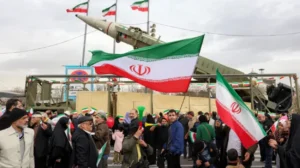
The sanctions proposal should be put in the framework of the greater geopolitical battle between the US, China, Iran and actors in the Middle East. South Africa that is getting close to Iran and hosting Hamas delegations is seen in conflict with US strategic interests in the Middle East.
This orientation is part of a wider swatch of south-south affiliation and a wish by Pretoria to project a free voice on universal affairs, such as the rights of Palestinians and decrying perceived miscarriage of justice by the west.
The legislative process and prospects
The bill has already been read twice before being forwarded to the House Foreign Affairs and Judiciary Committees to be acted upon. Its progress is still unenviable due to political juggling and the intricacy of US- South Africa ties.
Noting that the bill has a huge symbolic value, at least among the Republican group, analysts warn that applying the bill may complicate relations and existing partnerships.
This individual has addressed the issue in an interview with Al Jazeera by pointing out the danger of increasing sanctions and emphasizing dialogue as the tool to sort out the difference. The interview briefly touched on the fact that striking the balance between human rights issues and the condition of national sovereignty and legal practices in the international process is vital.
Potential impact on US-South Africa relations
The proposal on sanctions is a defining moment on bilateral relations. In the event that it is implemented, it might result in suspension of aid schemes, limited investment, and poor relations. This would influence collaboration in any global health, security, and economic development programs that the US and South Africa have worked together on.
This bill can also turn off South Africa in the African Union and other developing countries who see the ICJ case as a quest to get justice. It can strengthen the stories of Western intrusion and make the work of the US in forging wider coalitions on international matters complex.
Navigating a complex diplomatic terrain
The actions of the US congress to sanction South Africa on its position towards Israel highlights how difficult civic interests and human rights propagation and sovereignty of foreign policy decisions of a foreign nation are to balance. It sheds light on the increasing politicization of international relations, in which judicial procedures and foreign interactions turn into the fields of geopolitical rivalry.
The stand of South Africa is a sign of believing in international justice and standing with the Palestinian on its causes whereas the US reaction illustrates fear of security partnership and instability in the region.
As this political stalemate is played out, the burning question is how the two nations will be able to offset their differences without breaking a relationship which comes with extensive regional and international consequences.
The developing scenario tempts on close analysis of relations of law, politics and diplomacy in a more multipolar world.