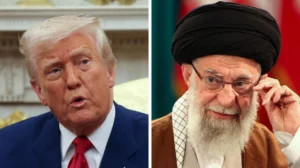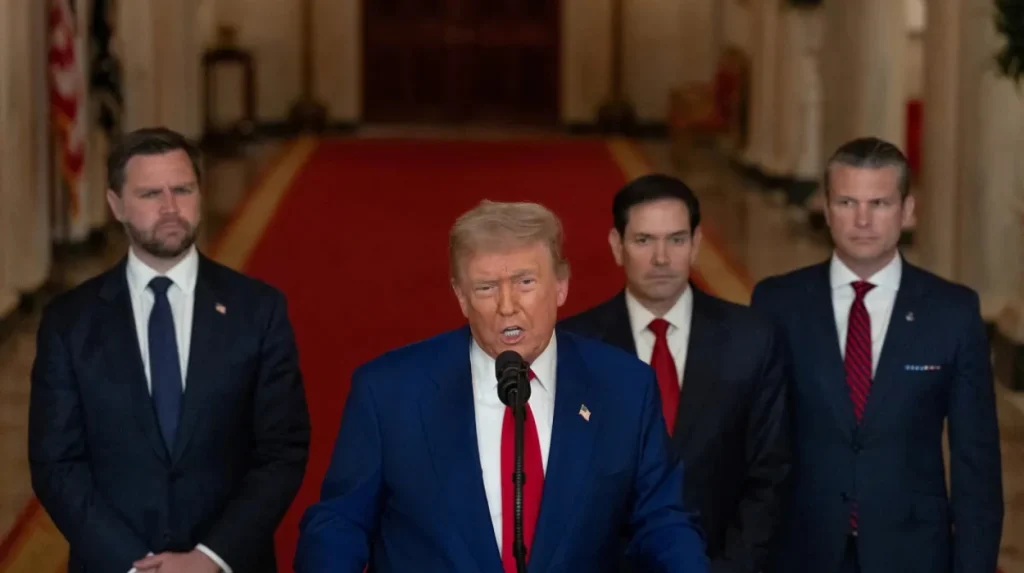
Although President Donald Trump is signaling bombing missions against Iran’s nuclear facilities, and engaged in discussions behind the scenes, the American public is nowhere near unified on war after looking at the public mood from nearly every perspective. This article will examine several recent polls, major events, and public comments made by leaders to Illustrate how public opinion may impact U.S. policy decisions in the upcoming months.
The Intensifying Tensions in the Middle East
What is Happening on the Ground?
The conflict between Israel and Iran has been boiling for years, but 2023 and 2024 saw a titling point in the escalation. Iran-backed militias in Iraq and Syria, have ratcheted up attacks on U.S. and Israeli forces, and in October 2025, Iran launched 180 ballistic missiles at Israel. Israel responded to these attacks with their largest and most significant strikes to date on Iran missile production and air defenses. Roll forward to June 19, 2026, an Iranian missile hits the Soroka hospital located in southern Israel, injuring a number of Israeli soldiers. The Prime Minister of Israel, Benjamin Netanyahu, declared a response which he would not specify (for now) and the White House stated President Trump was still weighing military options, but was optimistic of a diplomatic solution.
What Would a U.S. Military Strike Look Like?
Analysts believe if the U.S. strikes Iran, targets would be nuclear sites like Natanz and Fordo. The objective would be to quickly and overwhelmingly disable Iran’s nuclear capability, either by deliberately targeting hundreds of nuclear-related researchers with GPS-guided weapons, or by executing a comprehensive plan quickly targeting Iran’s leadership, missile bases, and communication sites to minimize potential retaliation. Intelligence reports show Iran is reportedly years away from a nuclear weapon which complicates the decision of if/when to strike. This piece of information adds pressure to make a decision sooner rather than later. The Iranian backed militias in Iraq have already said they will attack U.S. forces if the U.S. decides to intervene which complicates things even further.
What Americans Think About War with Iran
Polls Paint a Picture of Caution
Recent surveys show that many Americans are uneasy about the idea of war with Iran:
- A Washington Post poll from June 18, 2025, found that 45% of Americans oppose U.S. airstrikes on Iran, while only 25% support them. The rest remain undecided.
- An Economist/YouGov poll from mid-June showed 60% opposed U.S. military involvement in the Israel-Iran conflict, with just 16% in favor.
- Axios’s June 19 poll echoed these numbers, with 60% against U.S. military action.
- A Fox News poll on June 21 revealed that while 73% of voters see Iran as a serious threat, opinions about military strikes are split along party lines.
The Partisan Divide
Republicans, especially those who support Trump, are more likely to back military action. Among the so-called “MAGA” voters, 65% support strikes on Iran, though even within the party, opinions vary. Both Democrats and independents oppose military action, with approximately two-thirds against it. Americans overwhelmingly prefer to pursue diplomatic efforts before resorting to the military.
What’s the hesitation?
Many Americans are fearful of bombing Iran escalating into a much bigger conflict. A 74-year-old woman from Washington mentioned that this type of war could lead to World War III. Many Americans worry about the humanitarian aspects of war, like the human costs and regional instability, as well as what they have learned from the costly wars in Iraq and Afghanistan. Surprisingly to some, 59% of voters believe that military strikes would increase global dangers, especially Democrats and Independents, who are fearful of the potential for escalation.
How do Americans perceive the Iranian threat?
Enemy or Adversary?
Half of Americans see Iran as an enemy, while about a quarter view it as unfriendly. Only a small fraction considers Iran a friend or ally. Most people recognize Iran’s nuclear ambitions as a serious concern:
- 61% say Iran’s nuclear program is an immediate or somewhat serious threat.
- Republicans are more likely than Democrats to see Iran as an urgent danger.
Support for Talks Over Tanks
Despite these worries, a majority of Americans favor diplomacy. Over half want the U.S. to negotiate with Iran rather than rush into military action. This preference crosses party lines, with both Democrats and Republicans showing support for talks. Compared to 2015, when opinions were more divided, there’s a growing appetite for peaceful solutions.
Voices From the Frontlines of Policy
President Donald Trump’s Position
President Trump has made clear his tough stance, threatening airstrikes if Iran doesn’t halt its nuclear program. His social media posts have been fiery, calling Iran’s leader an “easy target” and demanding “UNCONDITIONAL SURRENDER.” However; the administration is similarly indicating that they are open to diplomacy, and plans to formally decide on military action shortly.
Benjamin Netanyahu – Prime Minister of Israel
Netanyahu claims that Iran will pay for attacks against Israel but he did not take any action calling for regime change. He stated those are questions the people of Iran will determine.
Muqtada al Sadr – Iraqi Cleric
Sadr is a prominent figure in Iraq.. He condemned Israeli attacks on Iran, and expressed concern over new wars occurring within Iraq. His opposition on the militias in Iraq reflects ideas I’ve heard in other contexts: that the conflict will spill over and cause further destabilization in Iraq, especially with elections coming down the pipeline.
United States Intelligence Community.
The best intelligence suggests that Iran is not clearly building a nuclear weapon, and is years away from building a nuclear weapon. This public posture creates complications for some of the more wildly pro war speeches; while making the case for military strikes far more difficult.
What Does This Mean for the U.S. Policy?
A Nation Divided
The American public’s cautious stance means that President Trump and his administration face a tough choice. Launching military strikes without broad public support could deepen political divisions and risk backlash. On the other hand, ignoring Iran’s nuclear ambitions could have long-term security consequences.
Diplomacy Remains Key
With the public favoring non-military solutions, it is likely that the United States will maintain its diplomatic and non-military commitment while preparing militarily where necessary. Sanctions, international pressure, and negotiations will remain very important.
The Danger of Escalation
Military action may create a greater regional war especially with Iranian-backed militias currently threatening U.S. forces in Iraq and Syria. Policymakers must carefully consider the cost.
In 2025, many Americans find themselves wrestling with the reality that while they believe Iran is a legitimate threat, they fear what a war with Iran would entail. Many see the danger presented by Iran’s nuclear program; however, the majority of common people prefer diplomacy over military action. Partisan divides and uncertainty complicate the already muddied political waters. While tensions continue to escalate in the Middle East and the U.S. faces pressure from political leaders to act, U.S. leaders will need to continue a careful balance of what national security looks like versus what the American people want.