In June, 2025, the shared world was rocked into a crisis never seen before as Israel and Iran dealt with each other by direct blows. An Israeli operation named Rising Lion is a massive air strike campaign against the Iranian nuclear/military infrastructure that was immediately retaliated against with Israeli cities and bases being bombed with hundreds of drones and ballistic missiles by Iran named Operation True Promise III.
The world since then glued itself as the conflict escalated and the U.S intelligence agencies examined concrete Iranian plans of coordinated attacks on American military bases found all over the region in case the U.S. chose to participate in the attack with Israel. The analysis has become the locus of the debate in U.S. foreign policy that poses vital questions of escalation and deterrence, as well as the danger of the war in the region.
Background: The Road to Direct Confrontation
From Shadow War to Open Hostilities
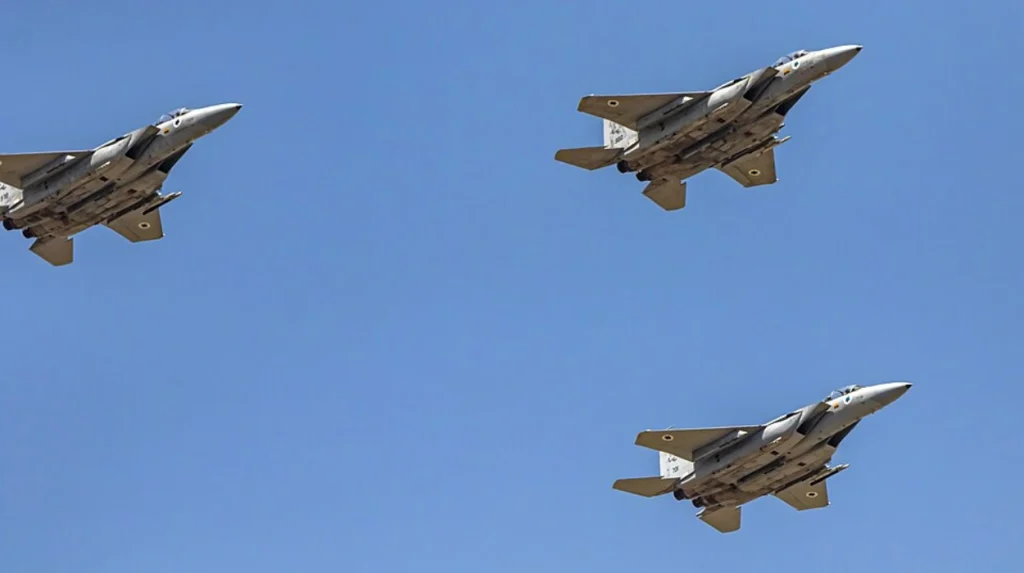
The rivalry between Iran and Israel had boiled down over decades on proxy wars, cyber-attacks, and black operations. This so-called shadow war culminated into open hostilities in June 2025. Israel sired multi-faceted airstrikes supported by above 200 fighter jets and Mossad-led sabotage operations against nuclear plants in Natanz, Fordow, Isfahan, and Khondab, missile stores and Iranian Red guards command HQs around Tehran. This operation eliminated the highest Iranian military commanders such as IRGC Chief Hossein Salami and Armed Forces Chief of Staff Mohammad Bagheri and annihilated a large section of the Iranian missile capability.
The reaction of Iran was immediate and large-scale: as part of Operation True Promise III hundreds of drones and missiles were launched against Israeli cities, military facilities and diplomatic missions, resulting in civilian and military losses and destruction of vast amounts of infrastructure.
U.S. Intelligence Assessment: The Iranian Threat to U.S. Bases
The Intelligence Review
As the war tension grew, the American intelligence units intensively assessed military operational planning against Iran. The evaluation indicated that Iran had made elaborate contingency to missile and drone assaults on American military bases in Iraq, Jordan, Saudi Arabia, Qatar and the UAE- in an event that the U.S. would intervene militarily on the side of Israel. The targets were to supposedly be critical infrastructure that includes airfields, command centers, logistics hubs, missile defense batteries.
Iranian Intentions and Capabilities
The Iranian military doctrine is based on asymmetric military methodology and the implementation of ballistic missiles and drones to compensate for conventional operations. This intelligence analysis pointed to the capability of Iran in multiple and simultaneous assaults launched through various locations taking advantage of its proxy system and missile sites. The danger is not solely related to the U.S. personnel and structures but also regional stability, energy markets, and global economy.
Iranian Defense Minister Aziz Nasirzadeh issued a stark warning:
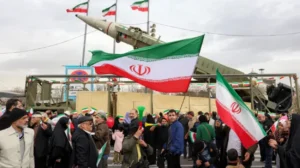
“If a conflict is imposed on us … all U.S. bases are within our reach and we will boldly target them in host countries.”
Strategic Calculus: U.S. Foreign Policy Dilemmas in 2025
The Trump Administration’s Position
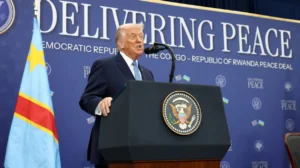
President Donald Trump’s administration has faced a difficult balancing act. On one hand, Trump has reiterated his commitment to preventing Iran from acquiring nuclear weapons, stating:
“Iran cannot have a nuclear weapon. It’s very simple.”
“I am seeking Iran’s unconditional surrender.”
“Everyone should immediately evacuate Tehran!”
Conversely, the administration has been hesitant to fully get involved in an all-out regional war. Despite Israeli warning to Washington before its attack, the U.S. has up until now acted in only supplying intelligence, shielding of forces and diplomacy56.
The U.S. Military Posture
The U.S. keeps up to 40,000-50,000 soldiers in at least 19 U.S. military installations in the Middle East, where they host large installations in Qatar, Bahrain, Iraq, Jordan and Saudi Arabia. The Pentagon has increased force protection, issued orders that dependents who are military can leave voluntarily and partly evacuated embassies in Iraq and the Gulf.
Defense Secretary Pete Hegseth emphasized:
“Protecting U.S. forces is our top priority and these deployments are intended to enhance our defensive posture in the region.”
Escalation Risks: What Could Go Wrong?
Direct Attacks and Regional War
If the U.S. were to join Israel’s offensive, Iranian retaliation could trigger a cascade of attacks on American bases, with the potential for mass casualties and destruction of critical infrastructure. The risk of drawing in U.S. allies and host countries—such as Jordan, Saudi Arabia, and the UAE—is high, potentially destabilizing the entire region.
Proxy Warfare and Hybrid Threats
Iran’s network of proxies—including Hezbollah, Iraqi militias, and Yemeni Houthis—could be activated to strike U.S. interests and partners across the Middle East. Hybrid tactics, including cyberattacks and sabotage, would likely accompany kinetic strikes, complicating defense and response efforts.
Global Economic and Political Fallout
Disruption of Gulf energy exports, attacks on shipping lanes, and regional instability could send oil prices soaring and trigger global economic shocks. The conflict would also test U.S. alliances, strain transatlantic relations, and challenge the credibility of American deterrence.
Stakeholder Perspectives: Voices from the Region and Beyond
Israeli Leadership
Israeli Prime Minister Benjamin Netanyahu justified Operation Rising Lion as a preemptive strike to prevent Iran from acquiring a nuclear weapon:
“If not stopped, Iran could produce a nuclear weapon in a very short time. It could be within a few months, less than a year.”
Netanyahu emphasized that Israel’s war was with the “Islamic regime” and not the Iranian people, framing the campaign as a defense of Israel and its Arab neighbors.
Iranian Government
Iran’s foreign minister called Israel’s moves a “declaration of war” and vowed to retaliate against both Israel and any U.S. involvement.
United Nations
UN Secretary-General Ant Ronio Guterres said he was deeply concerned that the escalation had posed serious threats to regional and world stability and asked everyone to exercise restraint and go back to diplomacy.
Policy Analysts and the U.S. Congress
Congress is still divided as some lawmakers pressed strongly in support of Israel and some insisted that it would be warned not to give any military action without any oversight on the part of Congress.
Most Recent Programs of the U.S. Foreign Policy in 2025: Macro Context
- April May 2025: The U.S. took the frontline in providing diplomatic pressure to resume nuclear talks with Iran whose deadline of acquiescing to the demands of IAEA expired in two months time that failed moments before Israeli strikes5.
- Spring 2025: The U.S. responded to Houthi drone attacks on shipping in the Red Sea by carrying airstrikes against Houthi targets in Yemen, and the conflicts were all connected.
- June 2025: the U.S. boosted intelligence sharing and collaboration on missile defense to Israel though not direct participation in the IranIsrael conflict.
The Escalation Razor of Escalation
The fact that the U.S. intelligence has been able to review Iranian plans to launch coordinated strikes on the American bases highlights the dangerous nature of the 2025 conflict between Iran and Israel. With Israel and Iran waging direct war, the U.S. is in a tricky situation: it risks a war in the region, the exposure of the U.S. troops, and balancing prevention and aggression. Washington decisions that will follow will not only determine the destiny of this crisis, but they will also establish precedents in the way the United States approaches foreign policies in an increasingly unstable Middle East.