By June of 2025, the inflammatory episodes of tension between Iran and Israel had devolved into hostilities, including Israeli air strikes on Iranian nuclear and military facilities, and Iranian missile and drone attacks on cities in Israel and Israeli military facilities. As violence escalated, the United States blustered over whether to rate its firepower to the Israeli air strikes, which created a vacuum that Europe wanted to fill. European diplomats took advantage of the political tensions and flew to Geneva to mediate between Israel and Iran, as they sought to diminish the prospect of total war that would draw in the entire Middle East and beyond.
This analysis will present the current conflict, the Geneva talks, key players involved, humanitarian consequences, and potential avenues for peace.
The Escalation: Facts, Figures, and Conflict Overview
Recent Hostilities and Casualties
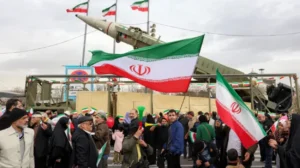
The conflict began on June 12, 2025 with Israel conducting the first wave of its “Operation Rising Lion”, and launching a series of air strikes on Iranian nuclear and missile facilities. These air strikes resulted in the killing of various high-ranking Iranian generals and nuclear scientists, including leaders of the Islamic Revolutionary Guard Corps (IRGC), and key actors in Iran’s nuclear program.Iranian state media have reported casualties which include at least 639 dead, of which 263 are civilians, and more than 1300 injured according to human rights activists tracking the conflict.
Iran unleashed waves of missile and drone strikes against Israeli cities and military bases with around 24 Israeli civilians dead and hundreds more injured.
Destruction has been significant on both sides of the conflagration. In the case of Iran, there were missile strikes on important nuclear sites (Natanz and Isfahan) and missile launch complexes and military bases. There was also damage to civilian infrastructure, such as civilian residential buildings and hospitals and energy infrastructure. In Israel, there were missile strikes against civilian apartments, a university, and a hospital, but the majority of IDF missiles were intercepted by Israel’s sophisticated air defense systems.
U.S. Position and Delay
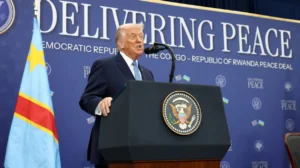
As Israel pursued its military objectives, the United States under President Donald Trump delayed a decision on whether to join Israeli forces in military operations. Trump specifically stated that he would announce his decision within two weeks, a situation that spurred a hurry with European diplomatic efforts to mediate a ceasefire to prevent further loss of lives.
The Geneva Talks: Europe’s Diplomatic Initiative
Participants and Goals
On June 20, 2025, Iranian Foreign Minister Abbas Araghchi met in Geneva with European Foreign Ministers from the United Kingdom, France, Germany (the E3) and EU Foreign policy Hybrid Kaja Kallas. This was the first in person get-together since the start of the conflict. The purpose of the meeting was to re-start negotiations on Iran’s nuclear and ballistic missile programs and to attempt to avert further escalation of military confrontation.
European leaders were adamant diplomacy is the only way forward. They laid out a number of things to be clear on: zero uranium enrichment, oversight over Iran’s missile programs, and hostages must be released. The negotiations were to bridge the significant level of mistrust and cover off the platform for dialogue that could sustain itself.
European Statements
- French President Emmanuel Macron called for “the immediate cessation of strikes on civilian and energy infrastructure” and stressed that “we are preparing a diplomatic solution.”
- French Foreign Minister Jean-Noël Barrot expressed readiness to contribute expertise for a lasting reduction of Iran’s nuclear and missile capabilities.
- EU Foreign Policy Chief Kaja Kallas reaffirmed that “diplomacy remains the optimal route to prevent Iran from developing nuclear weapons.”
- British Foreign Secretary David Lammy highlighted a “diplomatic window” existing within the next two weeks to reach a solution.
Iran’s Position: Conditions and Concerns
Iran argues that it has a peaceful nuclear program and has no intention of developing nuclear weapons. But, it will not negotiate while attacks are ongoing in Israel, which they perceive as a hostile act.
- Foreign Minister Abbas Araghchi stated, “We will not negotiate while the regime’s aggression continues,” accusing the U.S. of complicity in Israeli attacks.
- President Masoud Pezeshkian specified that Tehran would not return to nuclear negotiations while Israel conducted strikes.
- Iran has demanded the halting of Israeli strikes before returning to negotiations.
Israel’s Stance: Rejection of Diplomacy
Israel’s government has rejected diplomatic overtures even in the context of European diplomatic efforts, noting that it must take military action to prevent Iran from getting nuclear weapons.
- Foreign Minister Gideon Sa’ar stated that there was a need for constant military pressure.
- Prime Minister Benjamin Netanyahu felt they could count on U.S. support. affirming Israel’s right to self-defense and stating, “They are already providing significant support.”
- Israel views its strikes as proactive measures to neutralize an existential threat posed by Iran’s nuclear and missile programs.
International Reactions and the Humanitarian Toll
United Nations and Human Rights Groups
The IAEA, the UN’s nuclear weapons watchdog body, called for maximum restraint and stated there was, so far, no evidence Iran was trying to obtain nuclear weapons. Human rights groups reported a heavy civilian toll and made a plea for the protection of civilians, including compliance with international humanitarian law.
Global Powers
Russia and China denounced the Israeli strikes and called for a resolution to hostilities. The U.S. did not adopt a confident position, though they had support for Israel, and tried to impose limits to not directly collaborate in military action in the region.
Challenges to Diplomacy
Deep Distrust and Pre-Conditions
At the core of the diplomatic challenge is the lack of trust and preconditions imposed by both sides. Iran demanded Israel stop strikes before negotiations could resume and Israel would agree to stop its military campaign unless Iran made a commitment to stop all nuclear activities.
U.S. Ambiguity
The U.S.’s delay in making a decision on military intervention in this conflict increases uncertainty and reduces the effectiveness of dissuasive diplomacy, adding complexity to potential negotiations and mediation.
Regional and Global Stakes
The conflict stands on the brink of expanding into a much larger regional conflict that could potentially engulf proxy regional groups (Hezbollah in Lebanon, Houthis in Yemen, etc.) and further threaten regional instability in the Middle East.
It’s imperative to avoid a hot war between two nuclear-armed adversaries, two possibly unpredictable actors, for regional and global security.
The Stakes: Why This Diplomacy Matters
- Preventing a humanitarian catastrophe for civilians in Iran and civilians in Israel is a moral necessity.
- The continuity of stability globally depends on continued enforcement of the global non-proliferation regime, and on preventing nuclear arms races in the Middle East.
- A critically important objective is to avoid further entrenching conflicting dynamics in a region where only tenuous stability remains, especially as there are various conflicts embedded in the larger conflict – Syria, Yemen, etc.
A Diplomacy on a Knife’s Edge
The Geneva negotiations are Europe’s last opportunity to reel in the Iran-Israel conflict from hitting a tipping point and transitioning into a wider regional conflict. The stakes are high, and with so many civilian lives in peril and global security on the line, which direction the negotiations go will have severe implications. The diplomatic window for action is small, and there is a sense of suspension in the air as the parties confront the implications of all the parties involved having bad intentions, strategy, and the looming reality of military escalation.