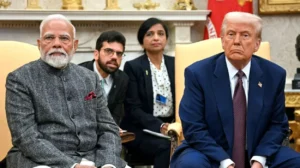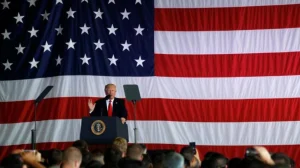
The dispute between India and Pakistan was rapidly deteriorating, sending the nuclear-armed neighbors into a perilous cycle of reciprocal attacks. Then, unexpectedly, US President Donald Trump declared on Saturday that the US had mediated a ceasefire.
Vice President JD Vance had stated that the crisis was “fundamentally, none of our business” only days prior, so his sudden revelation that India and Pakistan had agreed to a “full and immediate” ceasefire on his Truth Social platform was all the more surprising.
The horrifying terror attack in Indian-administered Kashmir last month, which claimed the lives of 26 people, mostly tourists, was the catalyst for this already highly heated dispute. To make matters worse, Pakistan claimed to have shot down five Indian Air Force planes in the subsequent Indian airstrikes, which would have been a devastating blow to the Indian military.
Evidence indicates that some planes were downed, while Indian officials have denied any losses.
However, Washington appears to have taken notice of the growing assaults deep inside Indian and Pakistani territory, and both sides have been under pressure to pull back from the edge.
In a statement, US Secretary of State Marco Rubio claimed that he and Vance had discussed reaching a deal with the military and political establishments in Pakistan and India in order to prevent further deterioration.
India had attacked Pakistani military positions just hours prior to the ceasefire announcement, which sparked a fierce response from Pakistan. Pakistan launched rockets, artillery, and drone attacks on hundreds of Indian targets, inciting increasingly patriotic demands for payback.
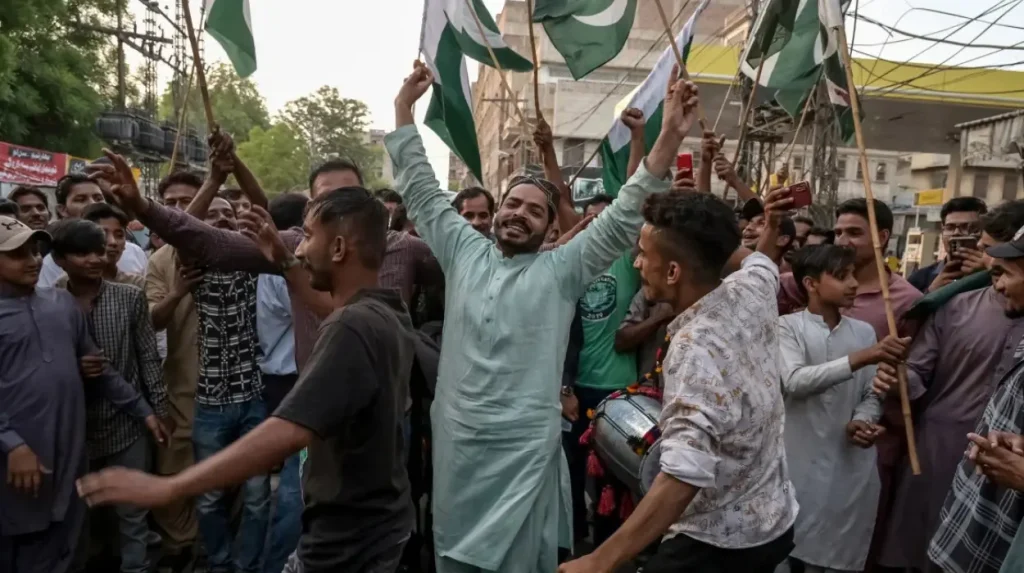
The ceasefire negotiation process has been described in a variety of ways. New Delhi, eager to present the ceasefire as a win and claim that the neighbours had collaborated “directly” on the truce, minimised US involvement while Islamabad hailed it. The White House was essentially advocating for an open door, whatever of the precise role played by the US, as the war was not beneficial to either India or Pakistan.
Additionally, the ceasefire is precisely the type of speedy agreement Trump sought to strike in other places, including Ukraine, where hostilities with Russia have been raging for almost three and a half years. In contrast, it appears like the fierce conflict between India and Pakistan has ended after only three and a half days. However, a permanent peace may not be ushered in by this Trump ceasefire.
The truce was just a few hours old when news surfaced of continued cross-border assaults and explosions in Indian-administered Kashmir. As the ceasefire solidifies, this could calm down.
However, there is a more serious issue as well: the ceasefire deal mediated by the United States will not adequately address the core concerns behind the long-running conflict over the status of Muslim-majority Kashmir, which is claimed by both India and Pakistan and has an autonomous, separatist movement. Even if the most recent conflict over Kashmir is over, it will probably return with a fury.