The role of Pakistan in mediating the ongoing U.S.–Iran war up to now has evolved as a geographic factor to an active diplomatic role as necessitated by circumstances and not ambitions. Placed next to Iran and having its roots in regional security currents, Islamabad has been sucked into a conflict where old-fashioned brokering has been either unacceptable to one of the parties or being weakened in terms of its strategic capability. This has seen Pakistan rise to a unique position of being a messenger that can talk to both Washington and Tehran without being 100 percent trusted by either.
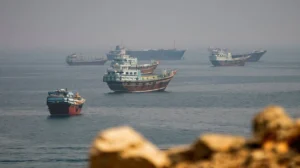
The engagement of the country does not stem out of a single strategic doctrine but of a combination of pressures such as energy insecurity, border stability concerns and the threat of regional spillover due to escalated military activities. In 2025, the increased volatility in the Gulf shipping lanes already revealed the vulnerability of Pakistan to external shocks especially through the energy prices that would fluctuate as an outcome of the Strait of Hormuz instability. Such structural dependencies have ensnared the lack of engagement in the crisis as a growing challenge.
Regional proximity and security exposure
Pakistan is on the frontline of any possible escalation due to its shared border with Iran. The cross-border risks such as the influxes of refugees and militants generate direct security issues that force Islamabad to stay active in the diplomatic arena even in cases where the results are not guaranteed.
Diplomatic Channels And Back-Channel Negotiation Structures
Although it is seen as being neutral, Pakistan is bound by a very limited diplomatic space. Its ties to the United States are economically and security-relevant, and its position to Iran gives rise to geographical and political sensitivities that curtail open allegiance. This twin dependence puts a tight operation room whereby Islamabad will have to balance with the two sides in terms of credibility.
This is further complicated by the fact that there is no standardized mediation framework in the present conflict. In contrast to organized multilateral negotiations, the U.S.–Iran dialogue is extremely personalized as it depends on the ad hoc communication channels that make the situation more volatile. The role of Pakistan in this system is thus reactive and is influenced by the external signaling and not internal agenda-setting.
Message relay and structured proposals
The role of Pakistan in relaying negotiation structures such as the U.S-written ceasefire outlines has put it at the centre of being a logistical conduit. But it does not have control of content and so its power to influence substantive results is constrained by whether both sides are willing to do more than a purely symbolic interaction.
Constraints On Neutrality And Strategic Autonomy
Despite its perceived neutrality, Pakistan operates within a tightly constrained diplomatic environment. Its relationship with the United States remains economically and security-relevant, while its proximity to Iran introduces geographic and political sensitivities that limit overt alignment. This dual dependency creates a narrow operating space in which Islamabad must balance credibility with both parties.
The challenge is compounded by the absence of a universally accepted mediation framework in the current conflict. Unlike structured multilateral negotiations, the U.S.–Iran dialogue is heavily personalized, relying on ad hoc communication channels that increase volatility. Pakistan’s role in this system is therefore reactive, shaped by external signaling rather than internal agenda-setting.
Limited leverage in asymmetric negotiations
The fact that Pakistan cannot impose compliance or ensure results makes it less influential in the course of negotiations. It is more of a transmitting node than a decision-making entity, which puts it at a reputational risk in case of failures or breakdown of negotiations.
Geopolitical Risks Of Hosting Indirect Diplomacy
The agglomeration of diplomacy in Islamabad poses symbolic and strategic threats. Though hosting indirect negotiations puts Pakistan in a better position to be seen in the international arena, it exposes it to the crossfire of competing narratives. When ceasefire efforts do not work, each party will have its own understanding of the ceasefire space, and will hold the mediation space responsible or blameworthy according to the political results.
Other regional conflicts mediated by similar efforts in 2025 showed that middle states tend to be disproportionately overexposed to diplomacy and receive no strategic benefits. Pakistan is on the brink of a similar cycle as it would become linked to process management instead of conflict resolution.
Exposure to political and economic backlash
Mediation may aggravate domestic pressures in Pakistan in case of increased inflation or energy shocks associated with instability in the region. The perception of the U.S. as being externally aligned could also change with the way the U.S.-Iran war is going.
Structural Limits Of Pakistan’s Mediating Capacity
The success of the mediation role that Pakistan played is limited by the very nature of the U.S.Iran conflict. Both groups are involved in a wider strategic conflict that goes beyond regional politics to military threats, economic sanctions, and maritime security. This minimizes the room of third-party intervention in making core decisions.
The diplomacy of Pakistan thus works within a thin spectrum of tactical communication as opposed to strategic change. Although messages have been successfully conveyed, the latent stances of both actors have not changed much, as there is a strong mistrust and security doctrine variance.
Dependence on external political will
It all depends on whether Washington and Tehran will embrace compromise in the end or not, which will determine the eventual success of any mediation effort. The absence of such a shift in politics means that the role of Pakistan is constrained structurally in spite of its engagement in diplomacy..
The Future Trajectory Of Pakistan’s Diplomatic Position
Pakistan’s mediation role is likely to persist as long as the U.S.–Iran confrontation continues to lack formal negotiation channels. Its geographic position, combined with its relatively broad diplomatic access, ensures that it remains one of the few viable intermediaries in an otherwise fragmented diplomatic landscape.
However, the durability of this role depends on whether Islamabad can convert procedural relevance into strategic influence. At present, its function is defined more by necessity than authority, placing it in a position where it facilitates dialogue without shaping its direction. The longer the conflict persists, the more Pakistan risks being embedded in a mediation cycle that produces visibility but limited resolution.
As regional tensions evolve and external powers recalibrate their engagement strategies, Pakistan’s role may shift again either toward deeper integration into multilateral mediation frameworks or toward a more constrained position as a transit point for unresolved geopolitical messaging. The outcome will depend less on Pakistan’s diplomatic intent and more on whether the wider conflict itself moves toward conditions that allow meaningful negotiation to take root.