The capital of Pakistan has assumed a crucial diplomatic position with the situation between the United States and Iran at a delicate stage. The High-Stakes Gamble by Islamabad is an effort to convert a temporary ceasefire into a wider negotiation process that is able to cover nuclear, military and regional conflicts. In the April 2026 negotiations, there was an increase in deaths of more than 3,600 people over the 39 days leading to an urgency to calm the situation on all sides.
This decision to switch to Islamabad is an indication of change in the patterns of mediation. Although in the past, indirect exchanges have taken place in Oman and European capitals in 2025, the inclusion of Pakistan in the process suggests that the region is increasingly owning the conflict resolution. Prime Minister Shehbaz Sharif termed the initiative as a historic moment as it involved the coordination of civilian leadership and military channels that helped in the initial ceasefire.
Diplomatic Positioning of Pakistan
The neutrality of Islamabad is a compensating factor. Its established ties with Washington and its pragmatic involvement with Tehran enable it to act as a facilitator and not a partisan player. This stance was observed in the first round of discussions where the security coordination and logistical support facilitated a high level of participation.
The diplomatic approach that Pakistan used also indicated the lessons of 2025 when indirect negotiations did not yield any long-lasting results. Through its direct engagement, Islamabad hopes that it will minimize the miscommunication, as well as speed up decision-making schedules.
Security and Logistical Considerations
The negotiations were hosted and this necessitated a lot of security measures such as restricted airspace and diplomatic areas. These steps emphasize how sensitive the discussions were and the dangers of possible failure.
It has also been more about logistical efficiency, prompt deployment of negotiation teams and safe communication channels. This kind of readiness indicates the desire of Islamabad to continue its participation in a dialogue beyond one round.
Key Negotiators and Their Strategic Objectives
The involvement of high-level political leaders signifies the severity of the involvement. The relations between the delegations can play an important role in the direction the negotiations take.
JD Vance’s Strategic Mandate
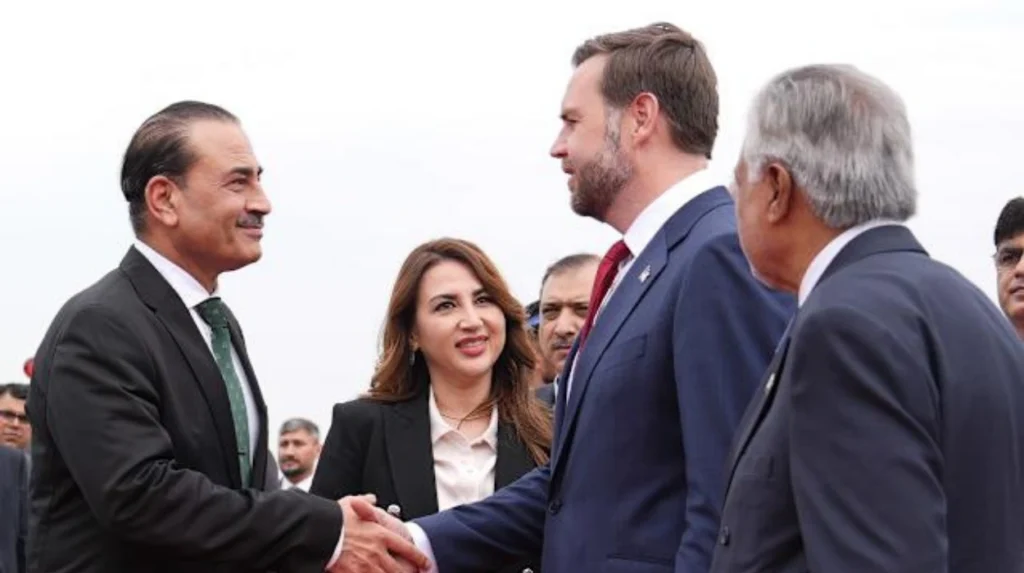
The American delegation is headed by US Vice President JD Vance who has a mandate to pursue both de-escalation and strategic containment. His strategy is to use economic incentives and hard demands on the nuclear restrictions. This is an indication of the greater aim of Washington in ensuring that Iran does not gain enrichment potential but at the same time ensure deterrence in the region.
Vance has a staff of skilled negotiators who would work to bring diplomatic interest and security interests into line. The fact that he highlights the importance of engaging in good faith indicates that he is willing to compromise, but the conceptual framework is pegged on reducing the strategic capability of Iran.
Abbas Araghchi’s Negotiating Approach
The Foreign Minister of Iran, Abbas Araghchi, carries with him a wealth of experience in previous nuclear negotiations, such as the 2015 agreement framework. His strategy focuses on reciprocity, by which the degradation in military position is to be accompanied by tangible United States concessions.
Araghchi has also mentioned that Iran is ready to suspend defensive measures in case external aggression is eliminated, and the negotiation can be viewed as a decision between the continuation of the conflict and restraint. Nonetheless, his maneuverability is limited by the pressures of domestic politics, especially by groups that are sceptical of the Western commitments.
Ceasefire Fragility Shapes Negotiation Urgency
The present diplomatic drive is influenced by the nature of the current ceasefire that is unstable. In the absence of an organized accord, there is a high risk of a new escalation.
Timeline and Structure of the Ceasefire
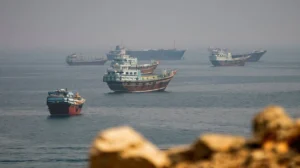
In mid-April 2026, the ceasefire was brokered and hostilities were temporarily suspended, with the restricted maritime activity in the Strait of Hormuz. It came after a series of intensive negotiations that proved that there could be cooperation in the face of pressure.
Nevertheless, the fact that there is no formal extension points to the fact that it is provisional. The negotiations in Islamabad seek to transform this temporary freeze into a permanent framework to deal with both the short term and long-term issues.
Reported Violations and Trust Deficits
Already, reports of ceasefire violations have made the negotiation environment complicated. Iranian officials have also cited alleged infractions on airspace access as well as regional operations, whereas US officials cite the necessity of more stringent compliance mechanisms.
These conflicts are part of more fundamental mistrust based on previous experiences. The failure of indirect negotiations in 2025, and the further intensifications have confirmed a lack of trust on both the part, and verification and enforcement have become central in the ongoing debates.
Core Issues Dividing Washington and Tehran
Although both sides share the common interest of not escalating the situation, underlying differences remain and are still leading the negotiation arena.
Iran’s Strategic Demands
The stand of Iran has a wide range of demands, which consist of the relief of sanctions, the acknowledgment of nuclear rights, and the decline of the foreign military forces in the region. These requirements are not only economical but also strategic ones that were formulated in the 2025 escalation period.
Tehran also correlates the regional problems, including the Lebanese conflicts, with the larger negotiation picture. Such a united approach complicates the discussions; because it broadens the scope of the concerns beyond nuclear issues.
United States Policy Priorities
The United States is still concerned with restricting the nuclear capacities of Iran whilst not compromising on its security pledges in the region. The strategies of Washington comprise diplomacy coupled with strategic capabilities such as economic sanctions and coordination of alliances.
Focusing the negotiation on essential nuclear matters, US officials are trying to reach some concrete results. Nevertheless, this would be a dangerous move of not taking into account interconnected regional processes which Iran finds important.
Pakistan’s Mediation Strategy and Regional Implications
The role of Pakistan is not just to host but to play an active role of facilitating the dialogue and establishing confidence-building initiatives. The High-Stakes Gamble of Islamabad can be viewed as a desire to become a serious player in the complicated geopolitical struggles.
Balancing Regional Interests
Pakistan’s engagement requires careful balancing of relationships with multiple stakeholders. Its cooperation with Gulf states, combined with diplomatic ties to Iran, positions it uniquely but also exposes it to competing pressures.
This balancing act has become more pronounced since 2025, when regional conflicts intensified and external mediation efforts struggled to deliver results. Islamabad’s approach emphasizes inclusivity, seeking to accommodate diverse perspectives within a unified framework.
Economic and Strategic Incentives
Hosting negotiations offers Pakistan potential economic and strategic benefits, including enhanced international credibility and opportunities for investment. These incentives align with broader national objectives of economic stabilization and global integration.
At the same time, the risks remain significant. A failure to achieve progress could undermine Pakistan’s diplomatic standing and reinforce perceptions of regional instability.
2025 Developments Shaping the Current Negotiation Framework
The trajectory of the April 2026 talks cannot be understood without examining developments from the previous year.
Escalation Patterns and Diplomatic Gaps
In 2025, tensions escalated following renewed sanctions and increased regional activity. Indirect negotiations produced limited outcomes, highlighting the need for direct engagement. These experiences informed the current approach, emphasizing clarity and accountability.
The inability to sustain earlier agreements also exposed weaknesses in enforcement mechanisms. This has led to a stronger focus on verification in the current talks, with both sides seeking guarantees against unilateral actions.
Transition from Indirect to Direct Engagement
The shift from indirect communication to face-to-face negotiations marks a significant development. Direct engagement reduces ambiguity and allows for real-time problem-solving, increasing the likelihood of progress.
This transition also reflects a broader recognition that prolonged reliance on intermediaries may delay critical decisions. Islamabad’s role in facilitating direct dialogue underscores this evolving dynamic.
Prospects for Agreement and Strategic Uncertainty
The outcome of Islamabad’s High-Stakes Gamble remains uncertain, shaped by competing priorities and external pressures. The presence of high-level negotiators suggests a willingness to explore compromise, yet structural differences persist.
Short-term progress may depend on incremental agreements, such as extending the ceasefire or establishing verification mechanisms. These steps could build confidence and create momentum for addressing more complex issues.
Long-term resolution, however, requires alignment on fundamental questions of security, sovereignty, and regional influence. Without such alignment, any agreement risks remaining temporary.
As negotiations continue, the interplay between diplomacy and strategic calculation will determine whether Islamabad becomes a turning point or another chapter in a prolonged cycle of engagement and breakdown. The unfolding discussions raise broader questions about whether emerging mediators can reshape entrenched conflicts, or whether structural divisions will continue to define the limits of diplomacy in an increasingly fragmented global order.