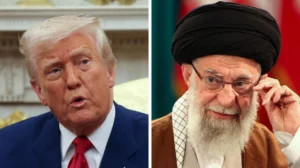
Last Saturday’s largely backchannel negotiations between US Special Envoy Steve Witkoff and Iranian Foreign Minister Abbas Araghchi were a sudden change of course for US President Donald Trump. In 2018, in his first term, Trump withdrew US involvement in the JCPOA negotiated by his predecessor, President Barack Obama, and lamented the deal’s sunset provisions, sanctions relief, and lack of addressing Iran’s ballistic missile program and regional malign activities.
Even for those valid criticisms of the agreement, most Iran-watchers thought that the JCPOA was the best of a whole series of bad choices because it gave the one thing that is hardest to grow: time
In 2015, everyone generally knew Iran was still months to years from possessing a functional nuclear weapon. In purchasing time, there was the chance to utilize it to attempt to arrive at an agreement that ended the problem permanently and in its entirety, knowing if Iran cheated on the agreement, it would remain months to years from possessing a nuclear weapon.
Today, that time is no longer. Any agreement, therefore, would need to be much more strict than the JCPOA since Iran is now one to two weeks from producing sufficient 60 percent electriched uranium to power a nuclear bomb, and it can load up to five more bombs in the coming months. In addition, Iran has made more sophisticated progress toward a crude nuclear weapon, even if US intelligence is accurate that the nation is not “building a nuclear weapon” in the classical sense.
Trump’s withdrawal from the JCPOA did escalate pressure on Iran, mostly in the form of sanctions. But it also gave the country a pretext to accelerate on its work to enrich uranium and develop its nuclear program, setting the process of taking Iran’s nuclear program to where it is now. Continued argument within the Trump administration over how best to approach Iran continues to sow confusion regarding the president’s final plan even as talks are already in process.
Trump, in February, signed a National Security Presidential Memorandum that reimposed “maximum pressure” on Iran and called specifically for the denial of nuclear weapons to Iran, but also intercontinental ballistic missiles, and to counter its terrorism efforts.
Last month, National Security Advisor Mike Waltz underscored the memorandum’s main points in several interviews in which he pointed out that “all elements of Iran’s [nuclear] program” must be dealt with, not only enrichment but weapons and ballistic missiles, as well as Iran’s sponsorship of terror. That is to say, a deal with Iran must be comprehensive, not narrowly defined around its nuclear program.
Except, in the days before negotiations started, US president stated, “I’m not asking for much, they can’t have a nuclear weapon.” Witkoff, whether intentionally or not, hinted that Iran might be allowed to maintain its nuclear program with a uranium enrichment cap of 3.67 percent—consistent with a civilian nuclear initiative. He also mentioned, “Where our red line will be, there can’t be weaponization of [Iran’s] nuclear capability.” Earlier this week, he appeared to retract those remarks to better match Trump’s stance, despite uncertainty over whether the president would permit Iran to have a civilian nuclear program.
He is generally forthcoming about his tastes in policy issues. Too frequently, his outright declarations are not taken seriously, and so many are shocked when he actually goes through with them (see the response to his imposition of blanket tariffs). The possibility that Trump, ever keen to cut a deal, would be satisfied with a deal that only deals with Iran’s nuclear program must not be discounted.
It is not unprecedented for Trump to pursue a deal very much like one he once ruined. In 2019, Trump replaced the North American Free Trade Agreement, which he referred to as a “disaster,” with the United States-Mexico-Canada Agreement, which had comparatively minor variations.
And although it’s worth examining whether Iran might be persuaded to significantly alter its established redlines and accept limitations much stricter than under the JCPOA—such as that conditions imposed on its nuclear program are permanent, not temporary—such an outcome is extremely unlikely. That leaves the option of a limited agreement, which could end up causing more harm than good.
It would kick the nuclear can down a much more perilous path than in 2015, and it would give sanctions relief likely to be spent to support terrorist allies like the Houthis and assist in rejuvenating a now weakened Hezbollah, all while moving Iran’s ballistic missile program forward.
Additionally, as in the aftermath of the JCPOA, a such deal would make there be no longer enough leverage available to the United States and allies to bargain around these more systemic challenges and very little Iranian enthusiasm to do the same.
Malign intent, terrorism, and ballistic missiles are not necessarily existential dangers for regional allies, particularly Israel, in the same manner that an Iran with nuclear capabilities would be. These, however, are the problems, not Iran’s nuclear program, that have been at the origin of conflict, killing, and destruction in the Middle East for the past three decades.
Looking at them as secondary to the nuclear problem most likely ensures not only more conflict in the next few years but also deadlier wars, as walls and access to advanced technologies decline. As negotiations are scheduled to continue this weekend in Rome, Trump is right to try to negotiate a deal prior to approving, or engaging in, military action against Iran. But he ought to remember that, in contrast to 2015, time is nearly expired.