US leading weapons producers will probably experience a severe shortage of essential rare earth minerals that they import from China as a result of Donald Trump‘s intensifying trade war against Beijing.
New export controls imposed by China on seven rare earths are set to disrupt supply to over a dozen US defence and aerospace firms that produce everything from fighter aircraft to submarines and drones.
Increased Chinese restrictions can potentially inflict severe harm on the US defence industry and hamper the Trump administration’s broader re-industrialisation plans. Finally, this would provide Beijing with a vital strategic benefit in long-term US-China competition for military and technological dominance and contribute to its current manufacturing lead.
The rare earths problem has quickly become one of the key achilles heels in Trump’s trade war against Beijing. The minerals subject to Chinese controls – samarium, gadolinium, terbium, dysprosium, lutetium, scandium and yttrium – are seven of the 17 rare earths in the periodic table. Although China has not directly prohibited export of the minerals, it has specifically imposed licensing limits, in a repetition of a similar controversy with Japan in 2012 when the price of rare earths rose tenfold.
The rare earths have multiple industrial applications, including military applications, not the least for the manufacture of hi-tech magnets utilized in contemporary motors including electric vehicles. 70% of the planet’s rare earths are mined by China and 90% of the planet’s supply are processed by China, a position that had suited western buyers long enough due to the environmental challenges involved in the production – with no rare earth production occurring within the US at the moment.
The US has tried to find alternative sources, such as Ukraine and possibly Greenland, propelling two of the most clumsy foreign policies of the Trump administration: to offer rare earths in exchange for an end to the conflict in Ukraine, and to take control of the Danish autonomous region.
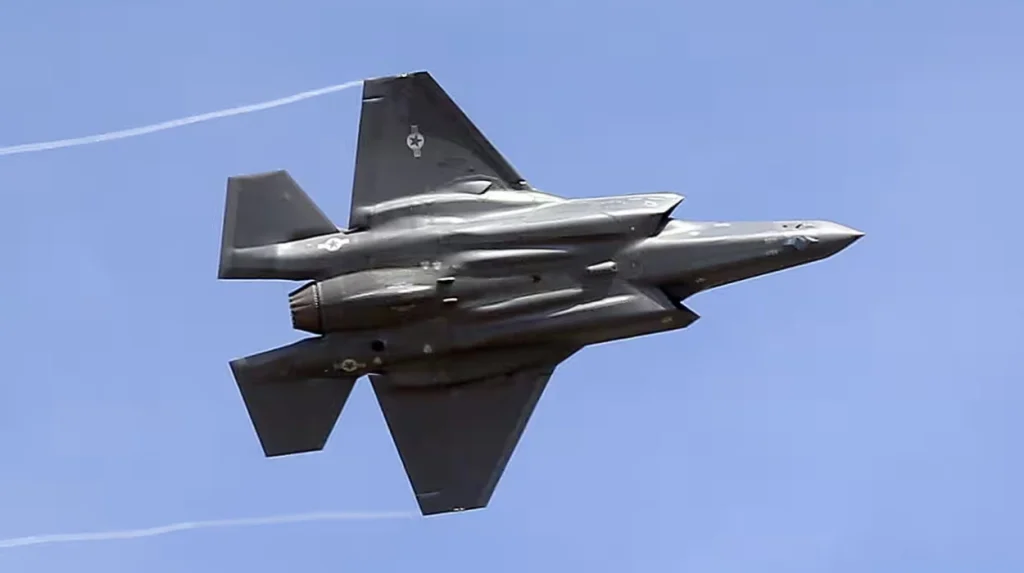
The minerals are utilized in several of the US’s most important defence systems such as F-35 fighter aircraft, Virginia- and Columbia-class submarines, Tomahawk cruise missiles, radar systems, Predator unmanned aerial vehicles and the Joint Direct Attack Munition series of smart bombs. Chinese actions ought to have been wholly anticipated in the face of threats of US exposure to supply restrictions.
A number of policies forecast that export curbs were looming. China first weaponized the rare earths in 2010 when it capped exports to Japan in a conflict over a fishing trawler. Between 2023 and 2025, China began export controls of strategic materials to America in the guise of gallium, germanium, antimony, graphite and tungsten.
On the question of China’s influence on the subject of rare earths, this grants China a grip on inputs to supply chains important to American hegemony, from semiconductors to planes.
China is taking advantage of its central position in supply chains from which the US has tried to shut it out, most significantly semiconductors. The action is a message: while the US may try to isolate China from the most sophisticated chips and other leading-edge technologies, China can take a step further by isolating the supply chain upstream.
One long-term threat for the US in a long-lasting trade war was that America and China were both in a competition to develop sixth-generation fighter planes, such as the planned US F-47 unveiled by Trump recently, allowing China to get ahead as it also developed its own.
Any Chinese lead in the production of advanced military aircraft, which America has long enjoyed, would be bound to find its way into military tensions. Weaknesses in supply of rare-earth minerals have also for long been recognized in civilian production, with Elon Musk’s electric vehicle maker Tesla seeking to lower the use of rare earths in its electric cars by 25% in recent years.