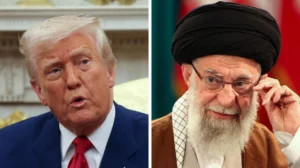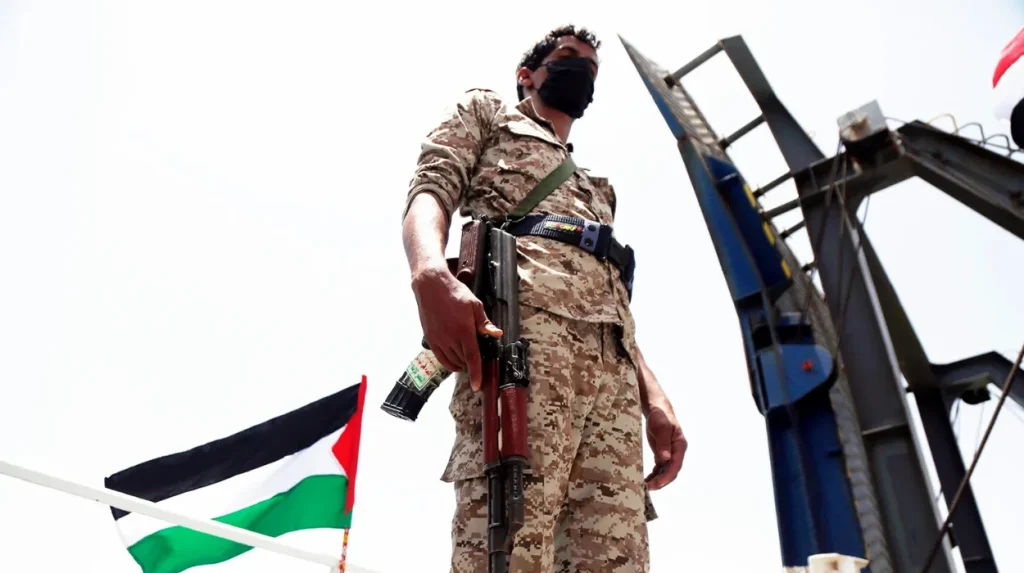
US President Donald Trump declares that his government will make certain Yemen’s Houthi rebels are “fully destroyed”—and he is intensifying the military strength of the US to demonstrate this commitment.
The renewed US military campaign has caused considerable destruction, resulting in at least 57 deaths, comprising both Houthi militants and Yemeni civilians. Additionally, the campaign has aimed at weapons stockpiles, drones, and missile storage sites to diminish the Houthis’ capability to attack Red Sea trade routes.
Given the recent losses in leadership among Iran’s proxies, it might appear that the Houthis are destined to fail. However, this view overlooks their resilience, strategic flexibility, and significant presence in Yemen.
The Trump administration must acknowledge that solely military tactics are insufficient to realise Washington’s aim of ” total annihilation ” in addressing the challenges associated with targeting the rebels.
Houthi strength
In spite of a strong military intervention by the Saudi-led international coalition against the group since their 2014 capture of the capital in Sanaa, the Houthis have retained and extended their grip in Yemen. The previously small rebel force is now a powerful military, with rising international support assisting in facilitating their growing naval threats.
One of the biggest hurdles to eradicating the Houthis is how to demobilise their leadership. Particularly their charismatic leader, Abdel Malik al-Houthi, who has played a key role in the organisation ever since he took over as their leader in 2004.
In contrast to most other Iran-aligned factions, the Houthis are dynastic and highly centralised around al-Houthi and his relatives. Losing al-Houthi would be a huge blow to the group, particularly since the absence of a clear heir would most likely result in the group having to devote itself to suppressing internal rivalries rather than operations. But eliminating al-Houthi will be an uphill battle.
Changing environment
The United States’ capability to monitor al-Houthi is likely limited by insufficient ground intelligence in Yemen. This was evident early last year, when the US struggled to evaluate its operations’ effectiveness and the group’s complete arsenal amidst a lack of information. Targeting such a concealed leader will be difficult without a dependable presence or an informant network.
Reports from August suggest that Russian military intelligence officers are currently active in Houthi-controlled regions, offering the group crucial technical support. There are also accusations of a ten-million-dollar Russian small arms transaction with the Houthis, and reliable reports that Moscow supplied the group with targeting information for their maritime operations and is contemplating selling the group advanced anti-ship missiles.
Elderly, the relationship between Beijing and the Houthis can also enable them to rebuild. For instance, US intelligence reports claim that China is providing the rebels with state-of-the-art components and direction gear for weapons in return for immunity to Chinese-flagged vessels traveling in the Red Sea.
With the Houthis’ demonstrated resilience taken into consideration, this entails expanding intelligence-sharing agreements with regional allies. It will require using state-of-the-art monitoring devices to track illicit arms traffic and cooperating with Gulf allies in a bid to enhance maritime security.