Recently, U.S. President Donald Trump imposed retaliatory new reciprocal duties on imports from 185 nations across the globe. Russia and its partner Belarus are notably among the few nations that are excluded from the US president’s roster.
US Treasury Secretary Scott Bessent informed Fox News that current restrictions indicated there was no commerce with Russia anyway. After Russia’s assault on Ukraine, the US and other nations, especially those in Europe, intensified pre-existing sanctions on Russia. White House spokesperson Karoline Leavitt emphasized that the US sanctions, in combination with the conflict in Ukraine, would hinder “any significant trade” with Russia. But is this truly the case?
Strategic imports from Russia
According to the United States Census Bureau, trade with Moscow has plummeted significantly since it launched its full-scale assault on Ukraine: from approximately $36 billion in 2021 to about $3.5 billion in 2024. Bessent’s assertion that there is no trade with Russia, therefore, does not align with the reality that imports from the nation, although diminished, remain considerable for the US, especially because they involve crucial goods such as inorganic chemicals and fertilizers.
Even if trade with Moscow is now one-tenth of previous levels, its exclusion from Trump’s new tariffs cannot be justified by existing sanctions and the decline in import figures alone. In comparison, Washington is imposing duties of 27% on imports from Kazakhstan, even though the trade volume with the US is similar to that of Russia: around $3.4 billion, of which $2.3 billion are US imports. The trade volume with Ukraine is even lower at $2.9 billion of which $1.2 billion consists of imports. Nevertheless, Ukraine is included on Trump’s list for a retaliatory tariff of 10%.
Although several sanctioned nations such as Venezuela are also on Trump’s tariff list, others under sanctions including Russia, North Korea, Cuba, and Belarus remain excluded from the new actions.
The US has not released any data on trade with North Korea, Cuba, and Belarus. However, according to United Nations estimates, bilateral trade between the US and Belarus, for instance, totals several tens of millions of dollars annually. In 2024, for example, Belarusian products worth $21 million were imported into the US. The tariff list, therefore, does not seem to be solely based on a country’s trade volume. Even small or uninhabited regions such as the Heard and McDonald Islands — remote Australian territories in the southern Indian Ocean with almost no significance to US trade — are impacted by the measures.
Canada and Mexico are also absent from the new list, though most products imported from both countries are already subject to existing tariffs of 25 percent.
What makes Russia an exception?
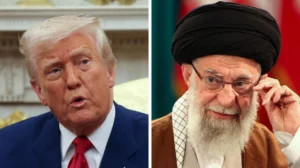
Analysts view Trump’s choice to exclude Russia from the tariff list as a clear sign that enhancing relations with Moscow is a priority for him. The Russian officials have recognized the political message, pointing to a Telegram post by the Russian president’s special representative, Kirill Dmitriev, who is presently in Washington. In the post, Dmitriev stated that the revival of dialogue between Russia and the US is a “challenging and gradual process” but that “every meeting, every honest discussion enables us to progress.”
Experts view diplomacy between the two nations as a potential reason for Trump to avoid imposing tariffs on Russia. Political pressure will be applied to Russia in some form, but during Dmitriev’s visit, tariffs are seen as counterproductive. The Trump administration could impose tariffs on Russia later if it chose to.
The decision not to impose further tariffs on Russia is seen as entirely political, despite Washington’s assertions that bilateral trade is minimal. Russian nuclear fuel, fertilizers, and platinum metals continue to be supplied to the US, and high tariffs on these could result in higher energy costs, which are not part of Trump’s strategy.
Meanwhile, the present trade volume with Russia, significantly reduced from its prior level, does not match either the European or the Chinese market. A return to more substantial trade between Russia and the US would also be impractical. Even if relations were to improve, it would be unattainable to return to the previous level. Financial, logistical, and sanctions-related limitations will remain in effect, and China has already partly seized the Russian market.