Last week, Kirill Dmitriev’s meetings with US officials at the White House went mostly unnoticed and were intentional. The highest-ranking Russian official to travel to the US since Moscow invaded Ukraine in 2022, Dmitriev – a key figure in Putin’s inner circle – is well-suited to resonate with Trump and an administration characterized by a straightforward transactional approach.
Crucially, it is Dmitriev whom Putin has assigned to keep Donald Trump onside amid the US president’s self-described irritation with Russia over the status of a US-mediated “ceasefire” that exists mainly in name only amid continuing seizures. According to Dmitriev last week, adhering to a well-known Kremlin strategy, the blame lay with everyone except Russia.
Any remaining hope in Ukraine that negotiations could result in a tangible path to peace has long since evaporated to concerns that Russia may be planning a significant new offensive for the upcoming spring and summer months.
Designed as a temporary solution addressing only a limited aspect of the conflict, it urged both parties to avoid attacks on energy and other civilian infrastructure, while the war continued unabated along the extensive, winding front line in eastern Ukraine and within the Black Sea region.
Among the two issues, attacks on energy infrastructure have been the most critical, as both parties blame each other for violating the energy agreement sites. Experts have highlighted that the agreements made in Jeddah, Saudi Arabia, were not only unclear but also lacked a way to verify and enforce the truce.
In Ukraine’s corner – after Trump’s notorious confrontation with President Volodymyr Zelenskyy, in the White House – the necessity of appearing supportive of a ceasefire has deeper implications: ongoing access to US weaponry and intelligence is at risk, especially under Trump’s influence.
This has caused Kyiv to emphasize Zelenskyy’s assertion regarding Trump and the US vice-president JD Vance, who spoke furiously throughout the intense, televised White House meeting: that Russia cannot be relied upon to honor agreements.
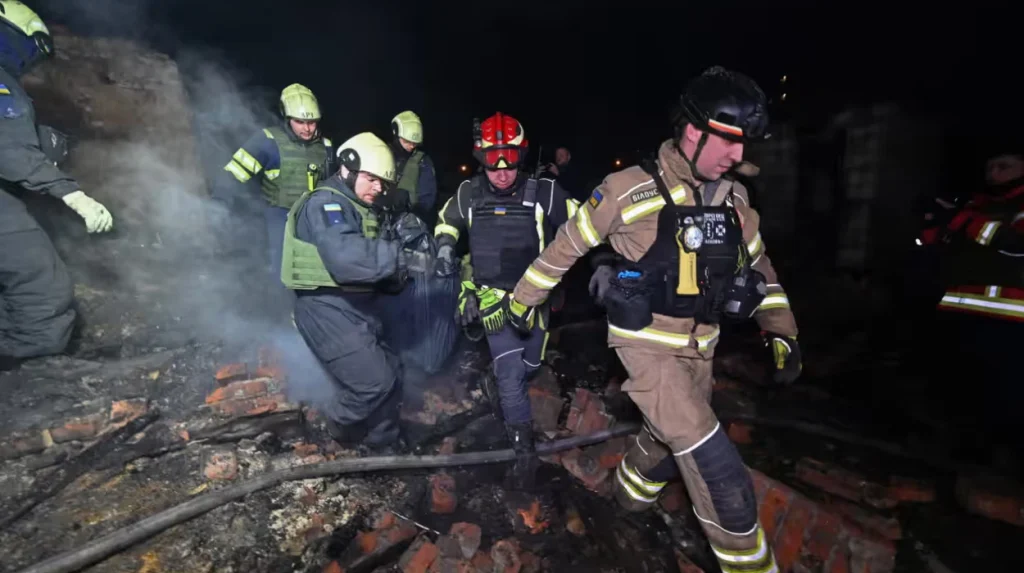
Last week, Ukraine charged that Russian forces shelled energy infrastructure in Kherson on the morning of April 1, resulting in at least 45,000 residents being left without power electricity. Accusations of violations persist from both sides, as Moscow clarifies its ceasefire position, indicating that any perceived shift in its demands regarding Ukraine is merely an illusion.
These “root causes” illustrate Moscow’s persistent maximalist stance: last month, their subtly expressed demands urged external parties to establish a “temporary global administration” in Ukraine organized by the United Nations. Change of government, in any other name.
Dmitriev’s position as a prominent disruptor for Putin has not been overlooked, having gained an invitation from Trump’s special team envoy, Steve Witkoff seems to have been caught off guard by Putin and his close associates at every juncture.
In this context, Russian officials have been alluding to the possibility of joint US-Russian rare earth mining projects to counteract Trump’s proposed rare earth deal Ukraine. If Russia’s strategies appear recognizable – employing the pretense of a ceasefire to further its military and diplomatic goals – analysts note that this is due to their resemblance to the negotiations that took place in Minsk ten years ago, as well as during Syria’s civil war.
On March 25, Trump admitted that Russia might be “dragging their feet” in peace negotiations to enable its forces to seize additional territory. However, many observers feel that Trump is more focused on appealing to Russia than on seeking a fair and enduring peace.